Your feet do much more than carry you around all day. They can sometimes provide clues about what is happening elsewhere in your body.
Changes such as persistent swelling, numbness, burning, unusual color changes, or wounds that do not heal can have many different causes. Some are minor, while others may need medical attention.
That is why unusual or persistent changes in your feet should not simply be ignored.
Here are 9 foot symptoms worth paying attention to and what they may sometimes indicate.
1. Persistent Swelling
Swollen feet or ankles can happen after standing or sitting for a long time, especially in hot weather.
However, swelling that keeps returning or does not improve can have other causes, including circulation problems, certain medications, or conditions affecting the heart, kidneys, or liver.
If swelling is sudden, severe, or affects only one leg—particularly when accompanied by pain or warmth—seek medical attention promptly.
2. Numbness or Loss of Sensation
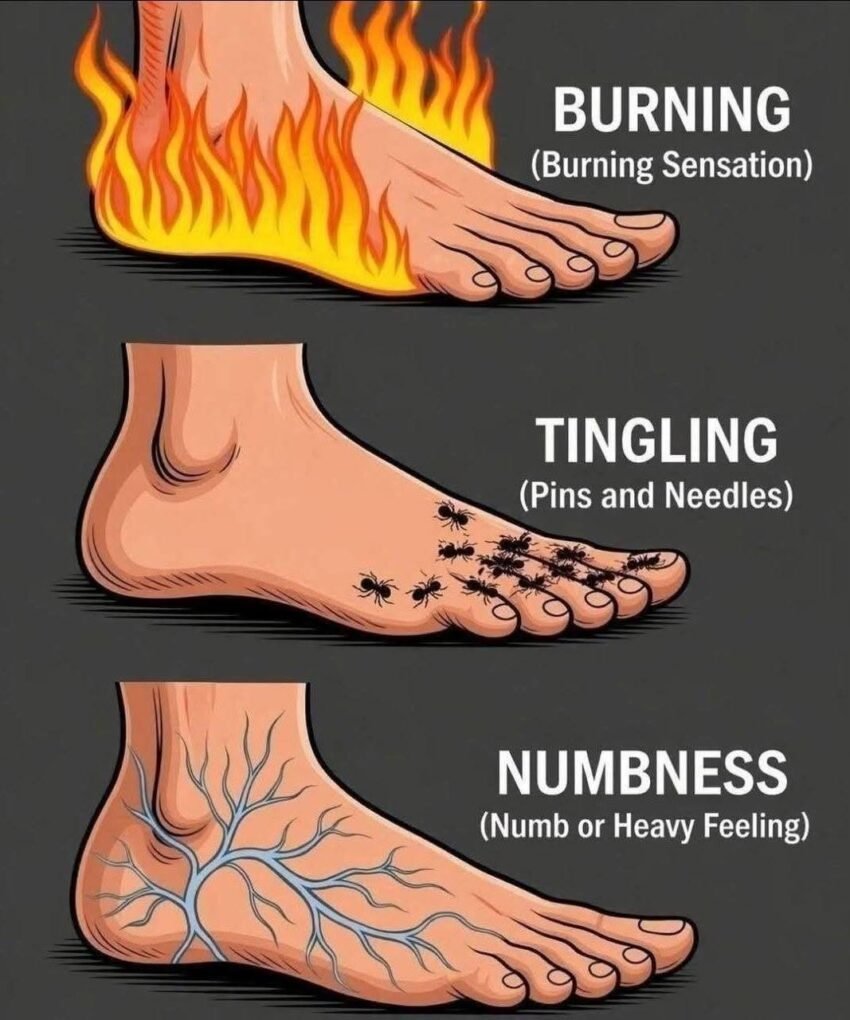
Feeling numbness, tingling, or “pins and needles” in your feet can happen temporarily when you sit in an awkward position.
Persistent numbness is different.
It can sometimes be associated with nerve problems, diabetes, vitamin deficiencies, certain medications, or other neurological conditions.
Reduced sensation is especially important to address because you may not notice small cuts, burns, or injuries.
3. Burning or Tingling Feet
A persistent burning sensation in the feet can be uncomfortable and may sometimes be related to nerve irritation or peripheral neuropathy.
Diabetes is one possible cause, but it is not the only one.
Vitamin deficiencies, alcohol use, certain medications, and other medical conditions can also affect the nerves.
If burning or tingling continues, a healthcare professional can help determine the underlying cause.
4. Feet That Feel Unusually Cold
Cold feet are common, particularly in cold weather.
But if your feet remain unusually cold even when the surrounding environment is warm, it may be worth discussing with a doctor.
In some cases, persistent coldness can be associated with reduced blood circulation, thyroid problems, anemia, or nerve-related issues.
5. Changes in Skin Color
Pay attention to significant changes in the color of your feet.
Very pale, bluish, purple, or unusually red skin can sometimes be associated with circulation or inflammation.
A sudden change in color, especially when accompanied by severe pain, numbness, or a cold foot, requires prompt medical evaluation.
6. Wounds That Are Slow to Heal
A small cut or blister on the foot should normally begin healing over time.
If a wound remains open, repeatedly becomes irritated, or takes unusually long to heal, it should be checked by a healthcare professional.
Poor circulation and diabetes can contribute to slow wound healing, but there are several other possible causes.
Never ignore a wound simply because it does not hurt. Reduced sensation can sometimes make foot injuries difficult to notice.
7. Persistent Foot Pain
Foot pain can result from something as simple as uncomfortable shoes, overuse, or an injury.
But pain that persists without an obvious explanation deserves attention.
Depending on the location and type of pain, possible causes can include joint problems, nerve irritation, inflammation, circulation issues, or musculoskeletal conditions.
A healthcare professional can help identify the cause rather than relying on a symptom alone.
8. Changes in the Toenails
Toenails can change for many reasons.
Thickened, brittle, discolored, cracked, or unusually shaped nails may be caused by fungal infections, repeated injury, aging, or other conditions.
A dark streak or new pigmentation under a toenail should be evaluated by a healthcare professional, particularly if it changes over time or extends onto the surrounding skin.
9. Burning, Swelling, and Numbness Together
When several symptoms occur at the same time—such as burning, numbness, swelling, or changes in sensation—it is particularly important not to dismiss them.
A combination of symptoms can have many possible explanations, including nerve or circulation problems.
This does not automatically mean you have a serious disease, but persistent combinations of symptoms deserve proper evaluation.
When Should You See a Doctor?
Not every foot symptom is a sign of a serious health problem.
However, you should consider getting medical advice if a symptom:
- Continues for several days or keeps returning
- Is getting worse
- Causes significant pain
- Comes with persistent numbness or weakness
- Involves a wound that is not healing
- Causes major swelling
- Produces a significant or unexplained color change
Seek urgent medical care for sudden severe swelling or pain in one leg, a cold or blue foot, severe pain with numbness, or a wound showing signs of serious infection.
The Bottom Line
Your feet can sometimes reflect problems involving your nerves, circulation, skin, joints, or overall health—but one symptom alone usually cannot diagnose a specific disease.
Persistent changes such as numbness, burning, swelling, unusual color, or slow-healing wounds are worth discussing with a healthcare professional.
Instead of trying to diagnose yourself from a list online, pay attention to changes and get appropriate medical advice when symptoms persist or become concerning.