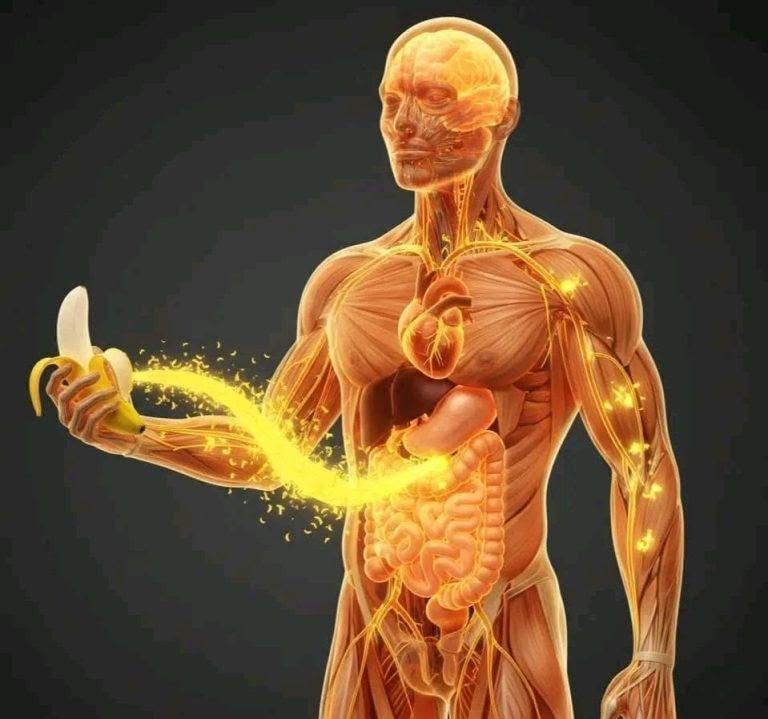
You may have heard the claim that eating a banana at night increases melatonin and may help you sleep better. Others say bananas can raise serotonin, improve digestion, prevent nighttime muscle cramps, or even cause unwanted weight gain if eaten before bed.
So, what is actually true?
The answer is more interesting than a simple yes or no.
Bananas provide several nutrients—including vitamin B6, magnesium, potassium, carbohydrates, and small amounts of melatonin and serotonin-related compounds. Some of these nutrients participate in processes involved in sleep and relaxation.
However, it is important to distinguish between a food containing a nutrient and proving that eating that food produces a major physiological change.
Let’s take a closer look.
Does Eating a Banana in the Evening Increase Melatonin?
This is probably the question behind the popular claim.
Bananas contain melatonin, a hormone involved in regulating the body’s sleep-wake cycle. Melatonin production naturally increases in the evening as the body prepares for sleep.
Bananas also contain compounds and nutrients involved in pathways related to melatonin production, including vitamin B6.
But there is an important qualification:
Eating a banana does not necessarily produce a large increase in your blood melatonin level.
The amount of melatonin found naturally in foods can vary, and research on whether eating specific foods produces meaningful changes in human sleep is still limited.
So rather than saying:
“Eating a banana at night dramatically increases melatonin.”
A more accurate statement is:
“Bananas contain melatonin and nutrients involved in normal sleep-related processes, making them a potentially nutritious evening snack.”
That distinction matters when discussing nutrition scientifically.
Vitamin B6: One Reason Bananas Get Attention
One medium banana provides a useful amount of vitamin B6.
Vitamin B6 is involved in numerous reactions in the body, including neurotransmitter metabolism.
It also participates in the conversion of tryptophan into compounds involved in serotonin and melatonin pathways.
This has led to the popular idea that bananas can directly “boost serotonin and melatonin.”
The biology is more complicated.
Eating a banana supplies vitamin B6, but that doesn’t mean your brain will suddenly produce large amounts of serotonin or melatonin.
Nevertheless, getting adequate vitamin B6 is important for normal nervous-system function and overall health.
What About Serotonin?
Bananas contain serotonin, but dietary serotonin does not simply cross the blood-brain barrier and increase brain serotonin.
This is a common misconception.
The body regulates neurotransmitters through complicated metabolic pathways. Eating a food containing serotonin isn’t equivalent to taking a medication that directly changes brain serotonin.
Bananas do, however, provide vitamin B6, which is involved in neurotransmitter metabolism.
So the more scientifically accurate takeaway is that bananas provide nutrients that support normal biochemical processes rather than acting as a direct serotonin “booster.”
Can a Banana Help You Sleep Better?
Possibly—but the evidence should not be overstated.
A banana can make a reasonable evening snack because it is:
- Naturally sweet
- Relatively easy to digest for many people
- A source of carbohydrates
- A source of vitamin B6
- A source of potassium
- A source of magnesium
- Convenient and inexpensive
Some people may find that a small, satisfying snack helps them avoid going to bed hungry.
However, there isn’t strong evidence that eating one banana before bed is a reliable treatment for insomnia.
If you regularly struggle to fall asleep or stay asleep, the cause may involve stress, anxiety, sleep apnea, medications, caffeine, alcohol, an irregular sleep schedule, or another health condition.
A banana cannot address those underlying causes.
Bananas and Magnesium
Magnesium is another reason bananas are sometimes recommended as a nighttime food.
Magnesium is involved in:
- Normal muscle and nerve function
- Energy metabolism
- Electrolyte balance
- Protein synthesis
Because magnesium is important for normal nervous-system and muscle function, it is sometimes described online as a “natural sleep mineral.”
However, a banana contains only a modest amount of magnesium.
If someone has a significant magnesium deficiency, eating a banana alone is unlikely to correct it.
Foods such as nuts, seeds, legumes, whole grains, and leafy green vegetables can provide substantially more magnesium.
What About Potassium?
Bananas are well known for their potassium content.
Potassium is an essential electrolyte involved in:
- Normal muscle contraction
- Nerve signaling
- Fluid balance
- Normal heart function
This is one reason bananas are popular among athletes.
But potassium isn’t specifically a “nighttime” nutrient.
Your body needs potassium throughout the day, not just before bedtime.
Eating a banana in the evening can contribute to your overall potassium intake, but there is no special nighttime effect that makes potassium work differently after sunset.
Can a Banana Prevent Nighttime Leg Cramps?
You’ve probably heard:
“Eat a banana before bed to prevent leg cramps.”
This sounds logical because bananas contain potassium.
But nighttime leg cramps have many possible causes, and potassium deficiency is not necessarily the explanation.
Leg cramps may be associated with factors such as:
- Muscle fatigue
- Dehydration
- Certain medications
- Nerve problems
- Circulation problems
- Electrolyte abnormalities
- Age-related changes
For someone who is not potassium deficient, simply eating more potassium may not eliminate cramps.
If you experience frequent, severe, or unexplained nighttime cramps, it’s worth discussing them with a healthcare professional.
Does Eating a Banana at Night Cause Weight Gain?
Another popular claim is:
“Never eat bananas at night because they make you gain weight.”
This is misleading.
A banana doesn’t automatically cause weight gain because it is eaten in the evening.
Weight change is influenced primarily by overall energy intake, energy expenditure, diet quality, physical activity, and numerous other factors.
If you eat a banana as a reasonable snack within your overall calorie needs, the time of day does not magically turn it into body fat.
On the other hand, if someone adds large amounts of calorie-dense food to their diet every evening without accounting for total energy intake, weight gain can occur.
The issue is the overall eating pattern—not the clock.
What Happens to Blood Sugar?
Bananas contain carbohydrates, including naturally occurring sugars.
As a result, eating a banana can raise blood glucose.
How much it raises blood sugar depends on:
- The size of the banana
- How ripe it is
- What else you eat with it
- Your individual metabolism
- Whether you have diabetes or insulin resistance
A ripe banana generally contains more readily available sugars than a less-ripe banana.
For most healthy people, a banana can fit comfortably into a balanced diet.
However, people with diabetes may want to consider portion size and the carbohydrate content of their overall evening meal or snack.
Pairing a banana with a source of protein or healthy fat—such as plain yogurt or a small portion of nuts—can make a more balanced snack.
Is a Banana Before Bed Good for Older Adults?
For many older adults, a banana can be a convenient nutrient-rich snack.
It provides carbohydrates and several micronutrients without requiring preparation.
However, older adults often have individual medical considerations.
Someone with chronic kidney disease, for example, may be advised to monitor potassium intake depending on their kidney function and blood potassium level.
Similarly, someone with diabetes may need to consider the carbohydrate content.
Therefore, “healthy food” doesn’t necessarily mean “appropriate in unlimited amounts for everyone.”
What Is the Best Time to Eat a Banana?
There is no universally best time.
You can eat a banana:
- With breakfast
- Before exercise
- After exercise
- As an afternoon snack
- With lunch
- In the evening
The best time depends largely on your dietary needs and preferences.
If you enjoy a banana in the evening and it doesn’t cause digestive discomfort or interfere with your blood-sugar management, there is generally no nutritional reason to avoid it simply because it is nighttime.
Should You Eat a Banana Immediately Before Bed?
You don’t have to.
If you’re hungry before bed, a small snack may be appropriate.
But if eating immediately before lying down causes reflux, bloating, or discomfort, you may prefer to eat earlier.
People with acid reflux may particularly benefit from avoiding large meals close to bedtime.
Try These Healthy Banana Evening Snacks
If you want to include bananas in your evening routine, you don’t have to eat them plain.
Banana + Plain Yogurt
Add sliced banana to unsweetened Greek yogurt for a combination of carbohydrates and protein.
Banana + Nuts
A small banana with a modest serving of almonds or walnuts can provide a more filling snack.
Banana + Oatmeal
A small bowl of oats topped with banana can be a satisfying evening option, although a larger serving may be too filling for some people before bed.
Banana + Cinnamon
Sliced banana with a little cinnamon is a simple option when you want something sweet without adding a large amount of added sugar.
What If You Have Diabetes?
A banana isn’t automatically off-limits if you have diabetes.
However, portion size matters because bananas contain carbohydrates.
A smaller banana may be easier to fit into your carbohydrate target than a very large one.
You can also pair it with protein or healthy fat to make the snack more balanced.
If you use insulin or other glucose-lowering medications, follow your individualized dietary and medication plan.
What If You Have Kidney Disease?
This is an important exception.
Bananas are relatively rich in potassium.
People with advanced kidney disease or certain potassium abnormalities may be advised to limit high-potassium foods.
That doesn’t mean every person with kidney disease must avoid bananas. Dietary recommendations depend on kidney function, blood potassium levels, medications, and individual circumstances.
If you’ve been told to follow a low-potassium diet, ask your healthcare professional or renal dietitian whether bananas fit into your meal plan.
So, What Does Eating a Banana in the Evening Actually Increase?
The viral answer is usually:
“Melatonin.”
But that’s an oversimplification.
A banana contains small amounts of melatonin and provides vitamin B6 and other nutrients involved in normal metabolism. It may therefore be a nutritious evening food, but there is not strong evidence that one banana causes a dramatic increase in melatonin or reliably improves sleep.
The bigger benefit is that bananas can contribute useful nutrients as part of an overall balanced diet.
Final Takeaway
Eating a banana in the evening is generally perfectly reasonable for most healthy people.
Bananas provide vitamin B6, potassium, magnesium, carbohydrates, fiber, and small amounts of compounds involved in sleep-related pathways.
While they contain melatonin and nutrients involved in its metabolism, the claim that an evening banana significantly boosts melatonin and guarantees better sleep is stronger than the available evidence supports.
Think of a banana as a nutritious food—not a sleeping pill.
If you enjoy one before bed, pair it with an overall healthy diet, maintain a consistent sleep schedule, and avoid relying on any single food as a treatment for insomnia.
And if you have diabetes, kidney disease, or another condition requiring dietary restrictions, your ideal portion and timing may be different.
The healthiest approach isn’t about finding one magical nighttime food. It’s about building a consistent eating pattern that supplies your body with the nutrients it needs every day.