A sudden episode of weakness, numbness, dizziness, or difficulty speaking can disappear within minutes—and that’s exactly why some people ignore it.
A transient ischemic attack (TIA), sometimes called a “mini-stroke,” occurs when blood flow to part of the brain is temporarily disrupted. Unlike many strokes, the symptoms may resolve completely. But that does not mean the event is harmless.
A TIA can be a warning that a more serious stroke may occur.
9 Symptoms You Should Never Ignore
1. Sudden Weakness or Numbness
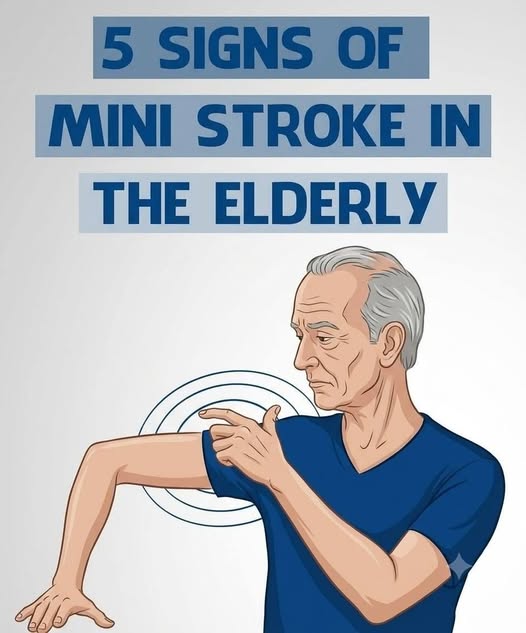
Unexpected weakness or numbness, particularly on one side of the body, is a classic warning sign.
It may affect the face, arm, leg, or several areas at once.
2. A Drooping Face
One side of the face may suddenly feel weak or appear to droop.
If you notice this, ask the person to smile. Uneven movement can be an important warning sign.
3. Trouble Speaking
Speech may suddenly become slurred, confused, or difficult to produce.
A person may also know what they want to say but have trouble finding or understanding words.
4. Difficulty Understanding Others
A sudden inability to understand ordinary speech can occur during a TIA or stroke.
Even if understanding returns to normal, the episode shouldn’t simply be dismissed.
5. Sudden Vision Problems
Temporary loss of vision, blurred vision, or double vision—particularly when it appears suddenly—can be a warning sign.
Vision changes affecting one eye can also occur.
6. Sudden Dizziness or Loss of Balance
A sudden loss of coordination, difficulty walking, severe unsteadiness, or unexplained dizziness may sometimes occur with a stroke or TIA.
These symptoms are especially concerning when they appear suddenly.
7. A Sudden, Severe Headache
A sudden and unusually severe headache can accompany certain types of stroke.
A new severe headache—especially when combined with neurological symptoms—requires urgent medical attention.
8. Sudden Trouble Swallowing
Difficulty swallowing that appears suddenly can be another neurological warning sign.
Choking, coughing while trying to swallow, or suddenly being unable to swallow normally should not be ignored.
9. Sudden Confusion
A person may suddenly become confused, disoriented, or unable to perform a familiar task.
Even if the confusion clears, it can still warrant urgent evaluation.
Remember FAST
A simple way to recognize common stroke warning signs is FAST:
F — Face: Does one side of the face droop?
A — Arms: Is one arm weak or numb?
S — Speech: Is speech slurred or unusual?
T — Time: Call emergency medical services immediately.
Other sudden symptoms—such as vision loss, severe dizziness, confusion, or difficulty walking—can also require emergency assessment.
Don’t Wait for Symptoms to Disappear
One of the most dangerous mistakes is thinking, “I’m fine now, so there’s no need to go to the hospital.”
A TIA can last only a few minutes, but it may signal an increased risk of a future stroke. Doctors can evaluate possible causes and identify risk factors that may need treatment.
If someone develops sudden symptoms that could indicate a stroke or TIA, seek emergency medical care immediately, even if the symptoms disappear.
Bottom Line
A “mini-stroke” isn’t something to watch at home. Sudden weakness, numbness, facial drooping, speech or vision problems, confusion, severe dizziness, or other new neurological symptoms deserve urgent attention.
When stroke symptoms appear, every minute matters.