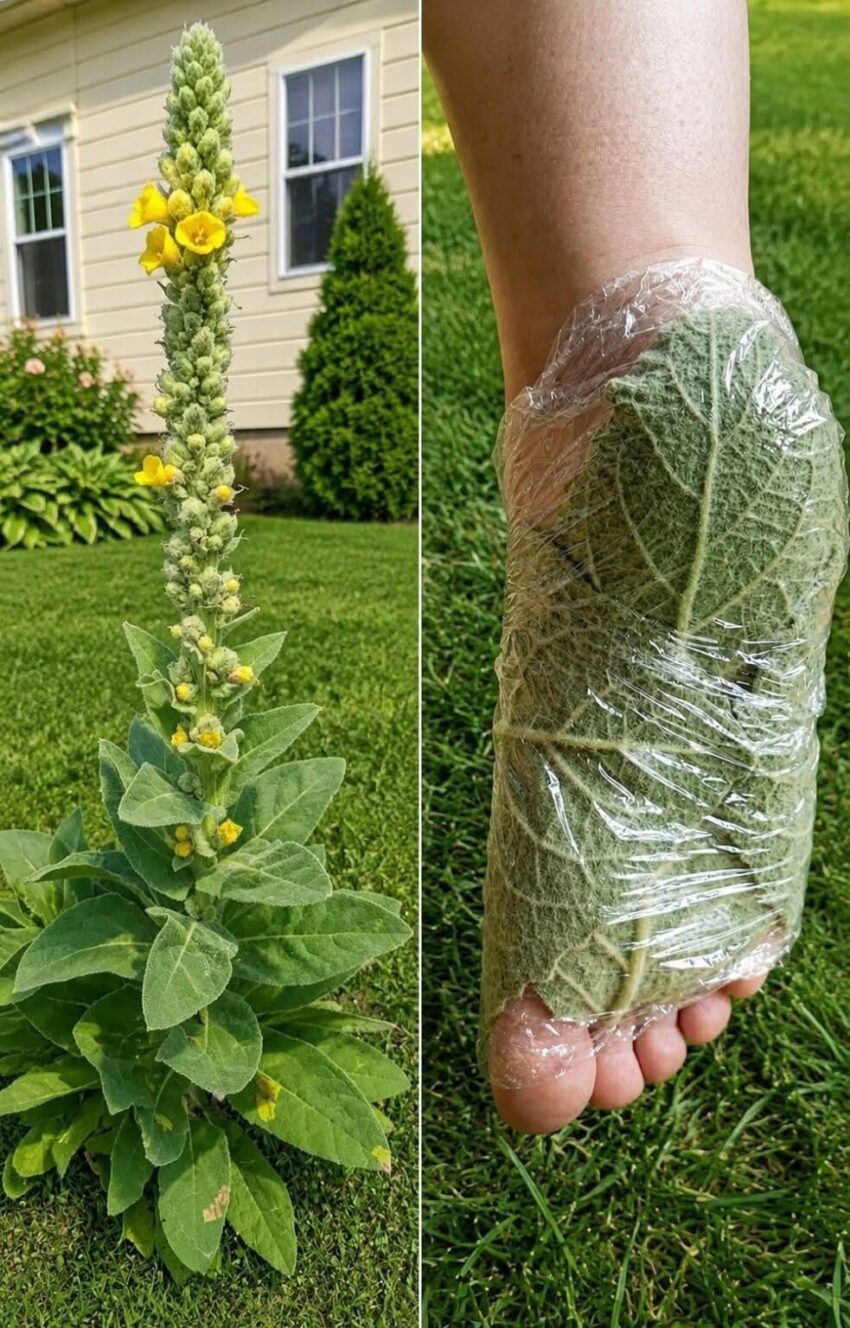
It grows tall, stands out with its soft, fuzzy leaves, and can look almost ordinary when you pass it on a roadside, in a field, or around a garden.
But great mullein (Verbascum thapsus) has a long history in traditional herbal practices, and one of its most interesting features is hidden in those unusual leaves and yellow flowers.
For generations, people have used mullein preparations in traditional remedies, particularly for coughs and respiratory discomfort.
But here’s the important part: traditional use doesn’t automatically mean that a plant has been scientifically proven to treat a disease.
So what makes this familiar-looking plant so interesting?
What Is Great Mullein?
Great mullein is a tall biennial plant recognizable by its:
- Large, soft, fuzzy leaves
- Tall upright flower stalk
- Small yellow flowers
- Gray-green or silvery appearance
Its leaves are covered with tiny hairs called trichomes, which give the plant its characteristic velvety texture.
During its second year of growth, it can produce a striking flower stalk that rises well above the surrounding vegetation.
That unusual appearance has helped make mullein easy to recognize for centuries.
The “Secret” Is in Its Traditional Use
Mullein has traditionally been used in herbal preparations for respiratory complaints.
People have historically prepared its leaves or flowers as teas, infusions, or other herbal preparations.
Traditional herbalists have particularly associated mullein with soothing the throat and supporting comfortable breathing during coughs.
However, modern scientific evidence for mullein’s effectiveness is still limited.
That distinction matters.
Mullein is an interesting traditional herb—not a proven cure for respiratory disease.
Why Are the Leaves So Fuzzy?
Those soft leaves aren’t just a strange botanical feature.
The fine hairs covering mullein leaves help protect the plant and contribute to its distinctive texture.
But they also explain why raw mullein leaves aren’t particularly pleasant to chew.
If someone prepares mullein as a tea, the liquid should generally be carefully strained because the tiny hairs can irritate the throat.
This is one reason traditional preparations often involve filtering the finished infusion.
Mullein and the Respiratory System
Mullein is often promoted online as a natural remedy for everything from coughs to lung problems.
That’s where it’s important to separate traditional claims from established medical evidence.
Some compounds found in mullein have been investigated in laboratory or preliminary research, and the plant has a long history of traditional respiratory use.
But there isn’t strong clinical evidence showing that ordinary mullein tea can treat serious lung diseases, infections, asthma, pneumonia, or other major respiratory conditions.
If you’re experiencing persistent coughing, difficulty breathing, chest pain, coughing up blood, or other concerning symptoms, medical evaluation is much more important than relying on an herbal remedy.
Mullein Flowers Are Also Traditionally Used
The bright yellow flowers are another part of the plant that has been used traditionally.
They have appeared in various herbal preparations, including infused oils and teas.
Mullein flower oil is sometimes marketed for ear discomfort.
However, putting herbal oils or other substances into the ear isn’t automatically safe.
If you have ear pain, drainage, a perforated eardrum, ear tubes, or an unexplained hearing problem, you should have the ear evaluated rather than putting an herbal preparation into it without professional guidance.
How People Traditionally Prepare Mullein
One traditional approach is making a tea from dried mullein leaves or flowers.
The general process involves:
- Using properly identified, clean, dried plant material.
- Steeping it in hot water.
- Carefully filtering the liquid to remove the plant’s tiny hairs.
- Allowing it to cool to a comfortable temperature before drinking.
However, homemade herbal preparations aren’t standardized. The concentration of active compounds can vary considerably depending on the plant, harvesting conditions, storage, and preparation method.
That’s another reason not to assume that “natural” means predictable or risk-free.
Don’t Confuse Mullein With a Miracle Lung Cleanse
Social media has helped spread dramatic claims that mullein can “clean” the lungs, remove years of toxins, repair damaged lung tissue, or reverse smoking-related damage.
Those claims go far beyond what current evidence supports.
Your lungs have their own natural defense and clearance mechanisms, and no herbal tea has been established as a way to physically “scrub” toxins from them.
If you smoke or use tobacco, the most meaningful step for lung health is reducing exposure and quitting—not relying on a cleansing herb.
Is Mullein Safe?
Using an herb safely depends on how it’s prepared, how much is used, and the individual taking it.
A few practical precautions are worth remembering:
- Don’t consume unidentified wild plants.
- Make sure the plant has been correctly identified as great mullein.
- Strain mullein tea carefully because the leaf hairs may irritate the throat.
- Be cautious with concentrated extracts and supplements.
- Don’t substitute mullein for prescribed treatment.
- Discuss herbal products with a healthcare professional if you’re pregnant, breastfeeding, taking medications, or managing a chronic condition.
And never assume that an herb is safe simply because it grows naturally.
How to Recognize Great Mullein
If you’re curious about the plant itself, look for a combination of features rather than relying on one characteristic.
Great mullein typically has:
Large fuzzy leaves: The leaves feel soft and woolly because of their dense hairs.
A tall flower stalk: Mature plants can develop a prominent vertical stalk.
Yellow flowers: Small yellow flowers appear along portions of the tall stalk.
A silvery-green appearance: The dense hairs can give the plant a pale, almost silver color.
Because other plants can look similar, proper identification is important before using any wild plant medicinally.
The Fascinating Lesson Behind This Plant
Great mullein is a good reminder that traditional knowledge and modern science don’t have to be treated as identical things.
A plant can have a fascinating history of traditional use while researchers are still determining exactly what benefits, if any, it provides.
That’s the case with mullein.
Its unusual leaves, traditional respiratory applications, and long history in herbal practices make it worth learning about—but extraordinary claims require extraordinary evidence.
Final Thoughts
Great mullein may look like an ordinary roadside plant, but its long history makes it anything but ordinary.
Its soft leaves, striking yellow flowers, and traditional use for respiratory and throat discomfort have made it a familiar herb in folk and herbal traditions.
Its real “secret power,” however, isn’t a guaranteed cure or a magical ability to detox the lungs.
It’s the fascinating combination of botany, traditional knowledge, and plant chemistry that has kept people interested in this humble plant for generations.
If you encounter great mullein, appreciate it—but if you’re considering using it medicinally, make sure the plant is correctly identified, prepare it appropriately, and remember that traditional herbal use is not a substitute for evidence-based medical care.