Sleeping With Eye Makeup On: The Hidden Risks to Your Eyelids and Eyelashes
Sleeping with eye makeup can contribute to eyelid irritation, crusting, blocked glands, and blepharitis. Learn what can happen, how to clean your eyelids safely, and when to see an eye specialist.
Sleeping With Eye Makeup On: What Really Happens to Your Eyes?
After a long day, removing mascara and eyeliner can feel like one more chore. But regularly going to bed with eye makeup on may contribute to irritation and buildup around the eyelashes.
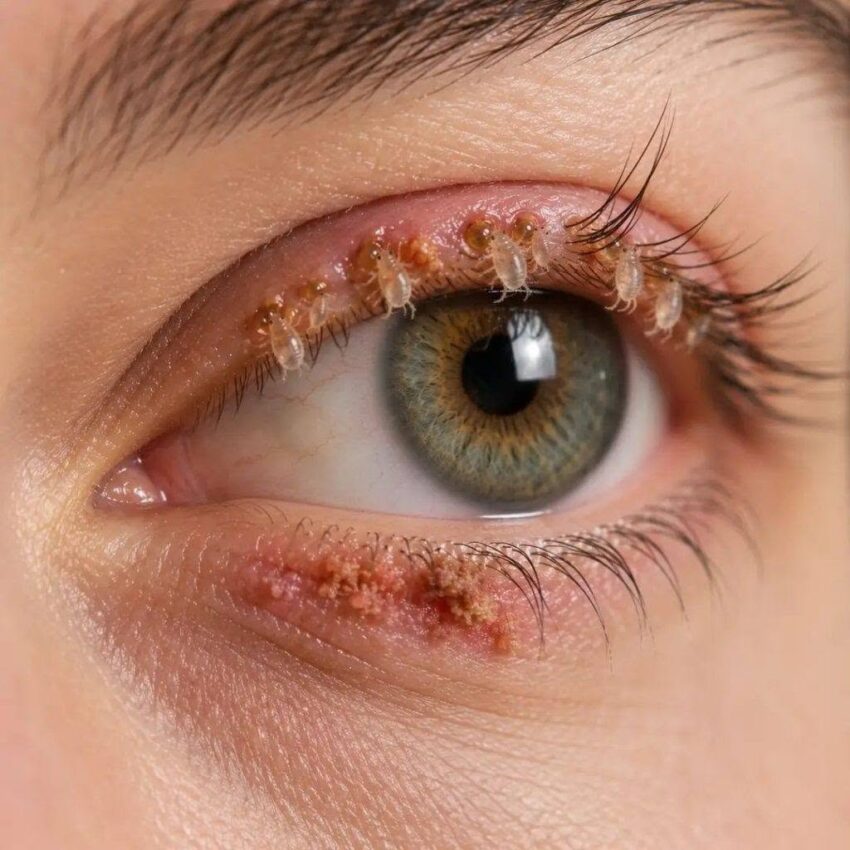
The photograph above shows marked crusting and material around the eyelash roots. Although an image cannot establish a diagnosis, this type of appearance can occur with conditions such as blepharitis, an inflammation of the eyelid margins.
It is also important not to assume that the material visible in a photograph is necessarily “eyelash mites.” Demodex can be associated with blepharitis and characteristic cylindrical debris around the lashes, but confirming the cause requires an eye examination.
What Happens When Makeup Is Left on Overnight?
Eye makeup can mix with natural oils, tears, skin cells, and other debris around the eyelid margin. Over time, this may contribute to irritation and accumulation around the eyelashes.
Possible symptoms include:
- Red or irritated eyelids
- Itching or burning
- A gritty sensation
- Crusts or flakes at the roots of the eyelashes
- Eyelids sticking together after sleeping
- Watery or dry eyes
- Increased sensitivity to light
- Temporary blurred vision
These are recognized symptoms associated with blepharitis and other eyelid conditions.
Could It Cause Blepharitis?
It can contribute to irritation, but makeup is not the only cause of blepharitis.
Blepharitis can be associated with bacteria on the eyelid, problems with the oil-producing meibomian glands, dandruff or seborrheic dermatitis, rosacea, and other skin conditions.
This means that someone can develop eyelid inflammation even if they never sleep wearing makeup.
What About the “White Tubes” Around the Eyashes?
One possibility is cylindrical dandruff, a characteristic type of debris that can surround the roots of eyelashes in people with symptomatic Demodex infestation. However, similar-looking crusts can occur with other forms of blepharitis, so a photograph alone isn’t enough to identify the cause.
Demodex mites can normally live in human hair follicles, and their presence does not automatically mean that someone has a disease. Problems arise when they are associated with inflammation and symptoms.
How to Keep Your Eyelids Clean
If you frequently experience eyelid crusting, gentle eyelid hygiene can help.
1. Remove Eye Makeup Before Bed
Use a gentle eye-makeup remover and avoid aggressively rubbing the eyelids.
If your eyes are already irritated, it’s generally advisable to avoid mascara and eyeliner until the symptoms settle.
2. Use a Warm Compress
Close your eyes and place a clean, comfortably warm—not hot—cloth over them for around 5–10 minutes.
Warmth can soften crusts and help loosen thickened oils around the eyelid glands.
3. Gently Clean the Eyelid Edges
After the warm compress, gently wipe away loosened debris from the eyelid margins using a clean cloth or an appropriate eyelid-cleaning product.
Avoid scraping or pulling crusts forcefully from the eyelashes.
4. Keep Makeup Products Clean
Don’t share mascara, eyeliner, or other eye cosmetics. If an eye product becomes contaminated or is past its recommended use period, replacing it is safer than continuing to use it.
What You Should NOT Do
Avoid putting household substances, essential oils, alcohol, vinegar, or undiluted soaps near or inside your eyes.
Also, don’t attempt to pull suspected mites or debris from the eyelashes with tweezers. The eyelid margin and eye surface are delicate, and injury can make the problem worse.
When Should You See an Eye Doctor?
Make an appointment with an eye-care professional if eyelid crusting keeps returning, doesn’t improve with gentle eyelid hygiene, or is accompanied by persistent irritation.
Seek urgent medical attention for significant eye pain, changes or loss of vision, or a very red eye. These symptoms can indicate a more serious eye problem.
Final Takeaway
Sleeping with eye makeup on isn’t guaranteed to cause an eye disease, but regularly leaving cosmetics and debris around the eyelids can contribute to irritation and may aggravate existing eyelid problems.
The safest habit is simple: remove eye makeup before sleeping and keep the eyelid margins clean. If you have persistent crusting like that shown in the photograph, an eye professional can determine whether the cause is blepharitis, Demodex-associated inflammation, blocked eyelid glands, infection, or something else.