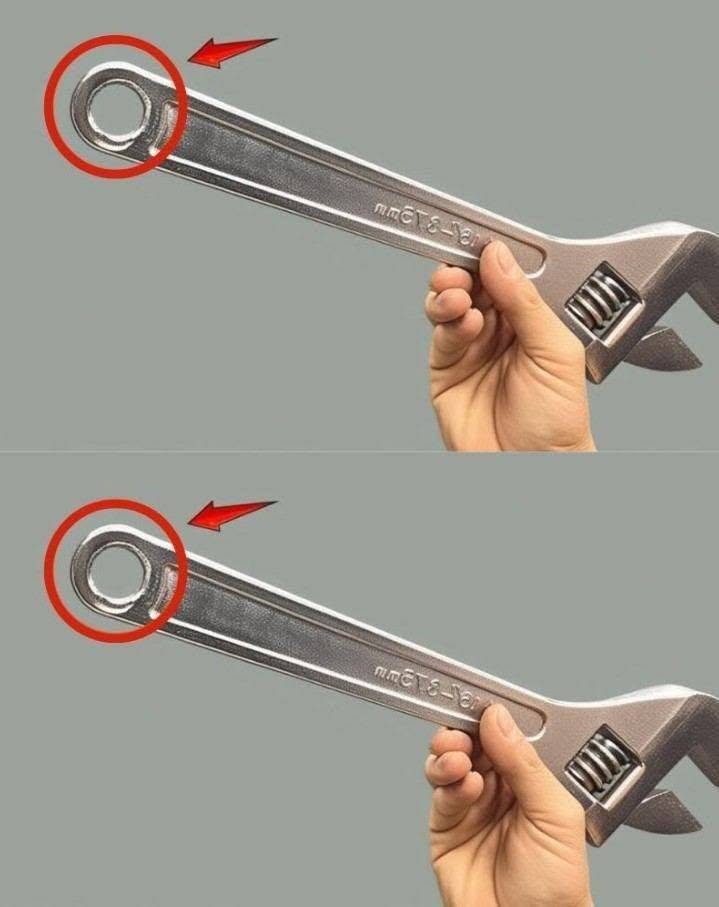
Ever wondered about the small hole at the end of an adjustable wrench? Discover what this often-overlooked feature is designed for and how it can make tool storage easier.
Millions of People Around the World Don’t Know the Secret of This Tool
At first glance, an adjustable wrench looks like one of the simplest tools in a toolbox. You adjust the movable jaw, fit it around a nut or bolt, and turn.
But take a closer look at the small opening at the end of the handle. It may look like a simple design detail, but many people wonder what it is actually for.
The answer is surprisingly practical.
What Is the Hole at the End of an Adjustable Wrench For?
The opening at the end of an adjustable wrench is primarily a hanging or storage hole.
It allows the wrench to be hung on a pegboard, tool hook, nail, or workshop organizer. This keeps the tool off the workbench and makes it easier to find when needed.
For people who keep several hand tools together, this little feature can make organizing a toolbox or workshop much easier.
Why Is the Hole Designed This Way?
Tool manufacturers often add hanging holes because wrenches are frequently stored vertically on tool racks.
The opening also keeps the handle relatively streamlined while providing a convenient place to hang the tool.
Depending on the wrench design, the hole may also be useful for attaching a tool tether or retaining strap when working in locations where dropping a tool could be dangerous.
Can the Hole Be Used for Anything Else?
In some situations, the opening can be useful for attaching the wrench to a storage hook, tool belt system, or suitable tether.
However, it should not be treated as a second gripping point or as a place to insert another tool for extra leverage unless the manufacturer specifically designed it for that purpose. Using a hole in an unintended way could damage the wrench or cause it to slip and injure someone.
The Real “Secret” Is Easy to Miss
The interesting thing about everyday tools is that many of their small design features have practical purposes that aren’t immediately obvious.
The adjustable jaw gets most of our attention because that’s the part that actually grips the nut or bolt. The hole at the opposite end is much easier to overlook.
So, while it isn’t a hidden mechanism that dramatically changes how the wrench works, it is a useful feature designed primarily for storage and, on suitable tools, tethering.
A Handy Tool With a Simple Design
An adjustable wrench combines several useful features into one compact tool:
- Adjustable jaw for different nut and bolt sizes
- Long handle for turning fasteners
- Hanging hole for convenient storage
- Compact design for carrying in a toolbox
Sometimes the “secret” of a tool isn’t a complicated trick at all. It’s a small feature that has been there the whole time—waiting for someone to notice it.