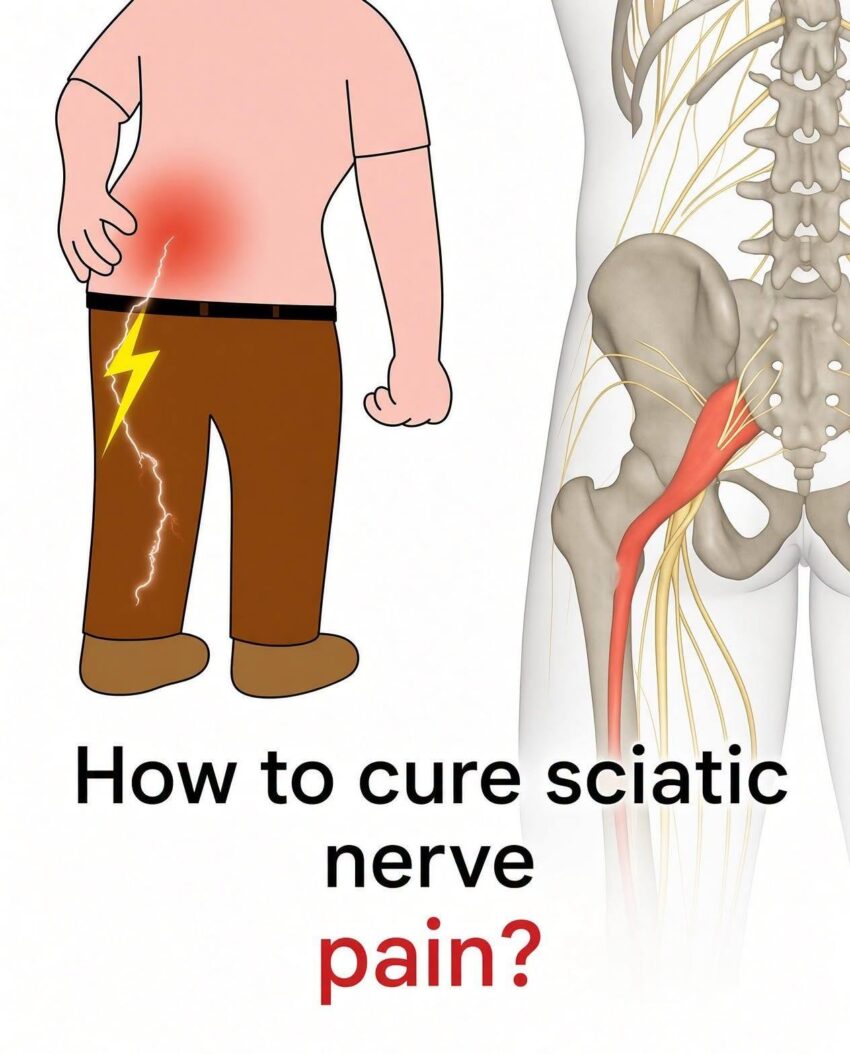
Discover 3 gentle exercises that may help relieve sciatica leg pain, improve mobility, and support recovery. Learn how to perform them safely and when to seek medical help.
Introduction: Can Simple Exercises Help Relieve Sciatica Leg Pain?
Sciatica leg pain can make even simple daily activities feel difficult. Walking around the house, sitting at a desk, getting out of bed, or standing for long periods may trigger discomfort that travels from the lower back or buttock down one leg.
Some people describe the pain as sharp, burning, or shooting. Others experience tingling, numbness, or a feeling of weakness in the affected leg.
The good news is that gentle movement and appropriate exercises may help many people manage sciatica symptoms and maintain their mobility. Remaining active within your limits is generally preferable to prolonged bed rest. However, the most suitable exercises depend on what is causing your symptoms and how your body responds to movement. [1, 2]
In this article, we explore three practical exercises that may help relieve sciatica leg pain, explain how to perform them correctly, and share important safety tips to help you exercise more confidently.
Important: These exercises are general suggestions, not a personalized treatment plan. Consult a healthcare professional or physiotherapist if your symptoms are severe, you have significant numbness or weakness, or you are unsure which movements are appropriate for you.
What Is Sciatica?
Sciatica refers to pain caused by irritation or compression of the nerve roots that contribute to the sciatic nerve. This nerve pathway runs from the lower back through the buttocks and down each leg.
A herniated or slipped disc is a common cause, although narrowing of the spinal canal and other conditions can also irritate the nerve.
Common symptoms include:
- Pain that travels from the lower back or buttock into the leg.
- Burning, shooting, or electric-shock-like sensations.
- Tingling or pins and needles.
- Numbness in part of the leg or foot.
- Muscle weakness in more serious cases.
Sciatica commonly affects one side of the body. The symptoms and their severity vary depending on the underlying cause. [2]
Exercise 1: Gentle Knee-to-Chest Stretch
Best for: Gentle lower-back movement and reducing stiffness in people who find this position comfortable.
The knee-to-chest stretch is a simple movement that can gently stretch the muscles around the lower back and buttocks. However, bending the lower back can aggravate symptoms in some people, so it is not suitable for everyone.
How to perform it
- Lie on your back on a comfortable, supportive surface.
- Bend both knees and keep your feet resting on the surface.
- If comfortable, gently bring one knee toward your chest.
- Hold behind your thigh or over your shin without forcing the knee.
- Stay in the position for about 5–10 seconds while breathing normally.
- Slowly lower your leg and repeat on the other side if comfortable.
<text weight=”medium” color=”secondary” size=”sm”>Suggested starting point: 3–5 gentle repetitions on each side.</text>
Why might it help?
Gentle movement can reduce stiffness and help maintain comfortable movement in the lower back. Some people find this position soothing, while others notice that bending increases their leg pain.
There is no single stretch that works for every person with sciatica.
Safety tip
Stop if the stretch increases shooting pain, tingling, or numbness down your leg. Do not pull forcefully on your knee or try to push through sharp pain.
If bending forward consistently worsens your symptoms, ask a physiotherapist which alternative movement may be more appropriate.
Exercise 2: Gentle Piriformis or Figure-Four Stretch
Best for: People who experience buttock tightness and can perform a gentle hip stretch without worsening their leg symptoms.
The piriformis is a small muscle located deep in the buttock. Stretching the hip muscles may improve comfort and mobility in some people, although sciatica is often caused by problems involving the spinal nerve roots rather than the piriformis muscle itself.
How to perform it
- Lie on your back with both knees bent and your feet flat.
- If comfortable, place the ankle of the affected side across the opposite thigh, just above the knee.
- Keep your head and shoulders relaxed.
- If the position feels comfortable, gently bring the supporting thigh toward your body.
- Stop when you feel a mild stretch in the buttock.
- Hold for approximately 10–15 seconds while breathing normally.
- Slowly return to the starting position.
<text weight=”medium” color=”secondary” size=”sm”>Suggested starting point: 2–3 gentle repetitions, provided symptoms remain comfortable.</text>
Why might it help?
A gentle hip stretch may help reduce muscle tightness and improve hip mobility. It can be useful when buttock stiffness contributes to discomfort.
However, this stretch is not a guaranteed way to relieve sciatic nerve compression, and it may aggravate symptoms in some people.
Safety tip
Do not force your knee downward or pull your leg aggressively toward your chest. If you experience increased leg pain, tingling, numbness, or a sharp pulling sensation, stop the movement.
People with recent hip surgery, significant hip pain, or restricted hip movement should seek professional guidance before attempting this stretch.
Exercise 3: Gentle Sciatic Nerve Glide
Best for: Some people whose healthcare professional has recommended gentle nerve-mobility exercises.
A sciatic nerve glide, sometimes called a nerve slider, uses a controlled movement to encourage the nerve to move relative to surrounding tissues. It should not be performed as an aggressive stretch.
How to perform a gentle seated version
- Sit upright in a stable chair with both feet on the floor.
- Slowly straighten the affected knee a little, only within a comfortable range.
- As you straighten your knee, gently lift your toes toward you if this does not increase symptoms.
- Return your foot to the starting position and bend your knee.
- Move slowly and smoothly without holding the leg at its limit.
- Keep your back relaxed and avoid slouching or forcing your head and neck into position.
<text weight=”medium” color=”secondary” size=”sm”>Suggested starting point: 3–5 slow repetitions, ideally after a physiotherapist has confirmed that the movement is suitable for you.</text>
Why might it help?
Nerve-mobility exercises may be used in physiotherapy to address certain movement restrictions and help people gradually tolerate activity.
The technique and range of motion matter. Pulling hard on an irritated nerve can make symptoms worse rather than better.
Safety tip
Stop immediately if the movement produces sharper shooting pain, worsening tingling, numbness, or weakness. Do not continue repeatedly testing the nerve to see how much pain you can tolerate.
A physiotherapist can show you the correct technique and determine whether nerve gliding is appropriate for your particular symptoms.
How Often Should You Do These Exercises?
There is no universal schedule that works for everyone with sciatica. Start with a small amount of comfortable movement rather than trying to complete all the repetitions at once.
A sensible approach is to:
- Begin with one exercise that feels comfortable.
- Move slowly and avoid bouncing or forcing a stretch.
- Increase repetitions gradually only if symptoms remain stable or improve.
- Take short movement breaks throughout the day.
- Continue ordinary activities as tolerated rather than spending prolonged periods in bed.
Use your symptoms as a guide. If an exercise makes pain travel farther down the leg or causes new or worsening numbness, weakness, or tingling, stop and seek advice.
Mild muscular stretching sensations may occur, but sharp or increasing nerve pain should not be pushed through. [1, 3]
Other Ways to Manage Sciatica Leg Pain at Home
Exercises are only one part of managing sciatica. Other practical measures may help you remain comfortable while recovering.
Keep moving gently
Short, manageable walks and regular changes of position may help maintain mobility. Avoid prolonged sitting or lying down when possible, while respecting your current limits.
Try heat or cold
Some people find temporary relief from a wrapped cold pack or a comfortably warm pack applied to the painful area. Protect your skin and follow product instructions.
Adjust your sitting position
Choose a chair that supports your lower back and allows your feet to rest comfortably. Change position regularly rather than remaining seated for long periods.
Avoid heavy lifting during a flare-up
If lifting or twisting aggravates your symptoms, temporarily modify those activities. When you resume lifting, use controlled movements and keep the load close to your body.
Seek professional advice when needed
A doctor or physiotherapist can help identify the likely cause of your symptoms and develop a treatment plan. Depending on the situation, treatment may include tailored exercises, physiotherapy, medication advice, or further assessment.
Many people improve over time, but persistent or worsening symptoms should not be ignored. [2, 3]
When Should You Seek Medical Attention?
Although many cases of sciatica improve without surgery, certain symptoms can indicate a serious problem.
Seek emergency medical care immediately if you develop:
- New difficulty starting urination, inability to urinate, or loss of bladder control.
- Loss of bowel control.
- Numbness around the genitals, buttocks, or inner thighs.
- Severe or worsening weakness or numbness in both legs.
- Severe symptoms affecting both legs, especially with changes in bladder or bowel function.
These symptoms may indicate serious nerve compression that requires urgent assessment. [2]
Arrange a medical appointment if your pain is severe, keeps worsening, interferes with everyday activities, or does not begin to improve with self-care. New weakness in one leg also warrants prompt medical assessment.
Frequently Asked Questions
1. What is the best exercise for sciatica leg pain?
There is no single best exercise for everyone. The right choice depends on the underlying cause, symptom severity, and which movements your body tolerates. A physiotherapist can help select appropriate exercises.
2. Should I stretch when my sciatica hurts?
Gentle movement may help, but not every stretch is suitable during a flare-up. Stop movements that increase shooting pain, tingling, numbness, or weakness.
3. Can walking help relieve sciatica?
Walking may help maintain mobility and reduce the effects of inactivity. Start with short distances and gradually increase as tolerated. Reduce the activity and seek advice if symptoms worsen significantly.
4. How long does sciatica take to improve?
Recovery varies depending on the cause and severity. Many people improve over several weeks, but some experience symptoms for longer. Seek medical advice if pain worsens or fails to improve.
5. Can exercises completely cure sciatica?
Exercises may help manage symptoms, improve mobility, and support recovery, but they cannot guarantee a cure. Treatment depends on the underlying cause, and some conditions require additional medical care.
Conclusion
Sciatica leg pain can interfere with everyday life, but appropriate movement and gradual activity may help many people manage their symptoms.
The knee-to-chest stretch, gentle figure-four stretch, and sciatic nerve glide are three movements that some people may find helpful. However, each has limitations, and a movement that feels comfortable for one person may aggravate another person’s symptoms.
Start gently, avoid forcing stretches, and pay attention to changes in your symptoms. Most importantly, seek professional guidance if you are uncertain which exercises are suitable for you.
Remember: The goal is not to stretch as far as possible. It is to find comfortable movement that supports recovery without aggravating the irritated nerve.
References and Further Reading
- NHS — Exercises for sciatica problems
- NHS — Sciatica: Symptoms, treatment, and when to get help
- Mayo Clinic — Sciatica: Diagnosis and treatment
Medical disclaimer: This article provides general educational information and does not replace an individual assessment by a qualified healthcare professional. Exercise instructions should be adapted to the reader’s symptoms, medical history, and physical abilities.