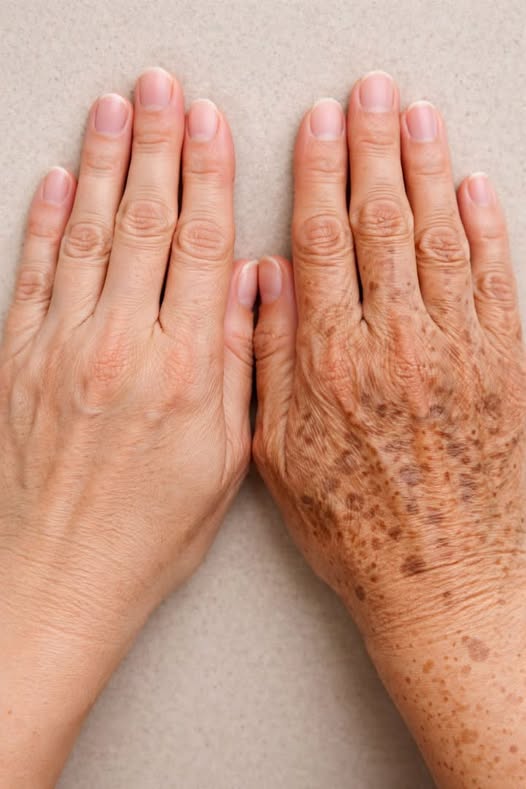
Discover practical ways to care for aging hands, reduce the appearance of age spots, protect against sun damage, and improve crepey skin with dermatologist-informed skincare tips.
Our hands work hard every day, yet they often receive less skincare attention than our faces. Years of sun exposure, frequent washing, household chores, and natural aging can gradually change the appearance of the skin. Brown spots may become more noticeable, fine wrinkles can develop, and the skin may begin to look thin or crepey.
Many online beauty tips promise to reverse these changes with a single homemade remedy. The truth is that no one solution can reliably erase age spots, reverse all sun damage, and restore crepey skin overnight. However, a simple, consistent skincare routine can help improve the appearance of your hands and prevent further damage.
Why Do Hands Develop Age Spots and Crepey Skin?
Several factors contribute to visible changes in the hands as we get older.
1. Sun Exposure
The backs of the hands receive ultraviolet (UV) radiation during everyday activities such as driving, gardening, walking, and hanging laundry outside.
Over time, this exposure can contribute to brown patches known as age spots or solar lentigines. UV radiation also damages collagen and elastin, proteins that help keep skin firm and resilient.
2. Natural Aging
As skin ages, it gradually loses collagen, elasticity, and some of its natural fullness. This can make the skin look thinner and cause fine lines or a crepey texture.
3. Frequent Washing and Household Cleaning
Repeated washing, detergents, cleaning products, and hot water can weaken the skin’s protective barrier. Dryness can make wrinkles and uneven texture more noticeable.
4. Loss of Moisture
When the skin lacks moisture, it may appear rough, flaky, or more wrinkled than usual. A good moisturizer can make a visible difference, although it cannot restore lost collagen completely.
The One Simple Solution: Moisturize and Protect Your Hands Every Day
If you want one practical habit to begin with, use a fragrance-free moisturizer regularly and protect the backs of your hands from the sun.
A cream containing glycerin, ceramides, or petrolatum can help the skin retain moisture and improve the appearance of dryness and fine lines. During the day, sunscreen helps prevent additional UV damage.
How to Follow This Simple Hand-Care Routine
Step 1: Wash gently
Use lukewarm water and a mild cleanser. Avoid unnecessarily hot water and harsh soaps that leave your skin feeling tight.
Step 2: Apply moisturizer
While your hands are slightly damp, apply a rich, fragrance-free hand cream. Reapply after washing whenever your skin feels dry.
Step 3: Apply sunscreen
Use broad-spectrum sunscreen with SPF 30 or higher on the backs of your hands. Reapply approximately every two hours when outdoors, and after washing your hands if the product has been removed.
Step 4: Wear protective gloves
Wear suitable gloves when washing dishes, cleaning, or working with detergents. For prolonged outdoor activities, UV-protective gloves can provide additional protection.
Step 5: Be consistent
Moisturizing may improve dryness quickly, but reducing the appearance of pigmentation takes longer. Sun protection is especially important because continued exposure can cause existing spots to darken and new spots to appear.
Can Home Remedies Remove Age Spots?
Some common kitchen ingredients are promoted as natural skin-lightening treatments, but many lack good evidence and may irritate the skin.
- Lemon juice: Can irritate the skin and increase the risk of a reaction to sunlight.
- Baking soda: May disrupt the skin’s natural protective barrier.
- Toothpaste: Is not designed for skincare and can cause irritation.
- Harsh scrubs: May aggravate sensitive or sun-damaged skin.
Avoid applying these ingredients to your hands in an attempt to bleach or exfoliate age spots.
A gentle moisturizer is useful for dry skin, but it should not be expected to remove established pigmentation.
What Actually Helps Fade Age Spots?
For persistent age spots, dermatologists may recommend treatments depending on the diagnosis and your skin type.
Retinoid Products
Topical retinoids may gradually improve uneven pigmentation, fine lines, and skin texture. They can also cause dryness, redness, and irritation, so they should be introduced carefully with professional guidance.
Important: If you are pregnant or might be pregnant, avoid topical retinoids, including retinol, unless your healthcare professional specifically advises otherwise.
Vitamin C Products
Some topical vitamin C formulations may help improve uneven skin tone and provide antioxidant support. Results vary depending on the formulation and how consistently it is used.
Prescription Treatments
A dermatologist may recommend a suitable prescription treatment for confirmed age spots. These treatments are not appropriate for every skin type and should not be used indiscriminately.
Professional Procedures
Depending on the condition, options may include cryotherapy, chemical peels, laser treatments, or other dermatological procedures. Each has potential side effects, including irritation, scarring, or changes in skin color.
It is important to confirm that a spot is benign before attempting to remove it.
When Should You Have a Spot Checked?
Not every brown spot is an age spot. A new or changing lesion can sometimes indicate skin cancer or another condition that needs medical attention.
Arrange a medical assessment if a spot:
- Changes in size, shape, or color.
- Has an irregular border or several different colors.
- Bleeds, crusts, or develops an open sore.
- Becomes persistently itchy or painful.
- Looks noticeably different from your other spots.
Do not attempt to bleach, burn, or scrape off an unexplained skin lesion at home.
A Simple Daily Routine for Healthier-Looking Hands
Morning
- Wash gently.
- Apply moisturizer.
- Apply broad-spectrum SPF 30+ sunscreen.
During the day
- Reapply moisturizer after washing.
- Protect your hands during cleaning and gardening.
- Reapply sunscreen when needed.
Evening
- Wash away dirt and sunscreen.
- Apply a rich, fragrance-free hand cream.
- Wear cotton gloves overnight if you find them comfortable and your skin tolerates them.
Final Thoughts
Age spots, sun damage, and crepey skin develop for different reasons, so they rarely respond to a single treatment. The most practical starting point is a rich moisturizer combined with consistent sunscreen use.
Moisturizing can make dry, crepey-looking skin appear smoother, while sun protection helps prevent further damage. Established age spots may need a dermatologist’s assessment and a targeted treatment.
The goal is not to promise perfect skin overnight. It is to keep your hands comfortable, protect them from additional damage, and choose treatments that are safe for your skin.