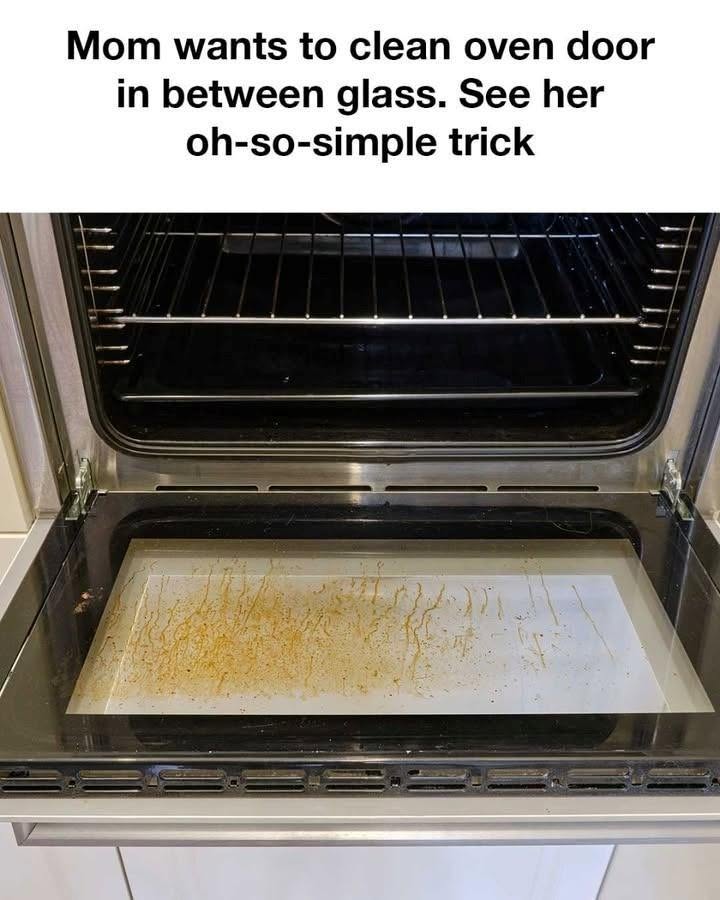
Learn how to clean between oven door glass and remove trapped grease, crumbs, and stubborn stains using practical household cleaning methods without damaging your oven.
Have you ever cleaned your oven door until the outside looked spotless, only to notice brown grease streaks and cloudy marks trapped between the glass panels? It can be frustrating because ordinary glass cleaner cannot reach the dirt hiding inside.
The good news is that many oven doors are designed to allow access between the glass panels for cleaning. Depending on your oven model, you may be able to remove the door or access the gap through openings along the bottom or sides.
Before attempting to clean it, check your oven’s manual because the design and removal procedure vary by manufacturer.
Why Does Grease Get Between Oven Door Glass?
During cooking, grease droplets, food particles, and moisture can enter the gaps around the oven door. Over time, heat causes some of this residue to stick to the glass, creating yellow or brown streaks.
Common causes include:
- Grease splattering during roasting or baking
- Food residue and crumbs entering ventilation openings
- Repeated heating that makes stains more difficult to remove
- Moisture and cooking vapors leaving cloudy marks
Regularly wiping the outside of the door will not remove dirt that has already entered the space between the panels.
Method 1: Clean the Gap Without Removing the Door
<AsyncImageGroup query={[“oven door glass gap bottom vent close up home appliance”,”long flexible microfiber cleaning wand cleaning narrow gap between oven glass”]} aspectRatio=”5:4″ layout=”bento”/>
Some ovens have openings that allow access to the space between the glass panels.
What You’ll Need
- A long, flexible microfiber cleaning wand designed for appliance glass
- A clean microfiber cloth
- A small amount of warm water
- A dry cloth
Step-by-Step Instructions
Step 1: Turn off the oven.
Make sure the oven is completely cool. If it is an electric oven, switch it off and follow the manufacturer’s safety instructions before cleaning.
Step 2: Find the access opening.
Look at the bottom or sides of the oven door for an opening that the manufacturer identifies as an access point. Do not assume every vent or slot is intended for cleaning.
Step 3: Prepare the cleaning wand.
Dampen a thin microfiber cloth with water and attach it securely to a purpose-made flexible wand. The cloth should be damp, not dripping wet.
Step 4: Clean gently.
Insert the wand only through the designated access opening. Move it gently across the accessible glass surface without forcing it or pushing it into the door mechanism.
Step 5: Dry the glass.
Use a clean, dry cloth on the wand to remove remaining moisture and reduce streaks. Allow the door to dry fully before using the oven.
Important: Do not insert metal rulers, knives, coat hangers, or improvised tools into the door. They can scratch the glass, damage insulation, or become trapped.
Method 2: Remove the Oven Door for a Deeper Clean
If the grease is too heavy to remove through an access opening, the door may need to be removed and partially disassembled according to the manufacturer’s instructions.
<AsyncImage query=”oven door removed for cleaning glass panels on work surface home kitchen appliance maintenance” aspectRatio=”5:4″ width=”100%”/>
Step 1: Check the Manufacturer’s Instructions
Find the exact oven model number, usually printed around the door frame or on the appliance label. Consult the manufacturer’s manual for door removal and glass-panel cleaning instructions.
Some doors have locking hinge tabs; others use a different mechanism. Never force the hinges or glass retainers.
Step 2: Remove the Door Safely
Only remove the door if the manufacturer provides a user-accessible procedure and you can handle its weight safely. Oven doors can be heavy, and their glass panels can break if twisted or dropped.
If the instructions require specialist disassembly, contact an appliance technician.
Step 3: Clean the Accessible Glass Panels
Place the door on a flat, padded surface. Use a soft microfiber cloth and a small amount of warm, soapy water on the accessible glass.
For stubborn grease, use a cleaner specifically approved for oven-door glass. Avoid abrasive scouring pads, razor blades unless explicitly permitted by the manufacturer, and harsh chemicals that could damage coatings or seals.
Step 4: Dry and Reassemble
Dry all cleaned surfaces completely. Reassemble the panels in the correct order and orientation, following the manual precisely. Incorrect reassembly can affect the door’s insulation and safe operation.
If you are unsure how the panels fit together, do not guess.
Can You Use Vinegar and Baking Soda?
Vinegar and baking soda are popular household cleaning ingredients, but they are not always the best choice for oven-door glass.
- Warm water and mild dish soap: A good starting point for ordinary grease.
- Diluted vinegar: May help with some residue, but check the manufacturer’s recommendations first.
- Baking soda paste: Can be abrasive and may scratch or damage special glass coatings, so avoid it unless the manufacturer approves it.
- Commercial oven cleaner: Do not use it between glass panels unless the manual explicitly permits it. Chemicals can become trapped and damage seals or coatings.
Never spray liquid directly into door vents or gaps. Excess liquid can enter insulation or electrical components.
How to Prevent Grease From Building Up Again
You can reduce future buildup with a few simple habits:
- Wipe spills from the oven door after the appliance has cooled.
- Use a suitable baking tray or roasting dish to catch splatters.
- Avoid pouring liquids near the door vents.
- Clean the outer glass regularly with a soft cloth.
- Follow the manufacturer’s recommendations for cleaning the door and its ventilation openings.
Frequently Asked Questions
Can I clean between oven glass without taking the door off?
Sometimes. Certain models provide designated access openings for a flexible cleaning wand, while others require door removal. Check your manual before trying either method.
Why is my oven glass still cloudy after cleaning?
The cloudiness may be caused by trapped moisture, grease residue, damaged coatings, or heat-related marks. Let the glass dry completely and avoid using stronger chemicals without checking the manual.
Can I use a regular glass cleaner?
Use one only if the manufacturer approves it for your oven glass. Never spray it into the gaps between the panels.
Is it safe to remove the oven door myself?
It depends on the design. Follow the manufacturer’s instructions and get help with a heavy door. If the glass retainers require complex disassembly, use a qualified technician.
Final Thoughts
Cleaning between oven door glass is possible on many ovens, but the safest method depends on the model. Start by checking for a designated access opening and use a soft, damp microfiber wand only where permitted. If deeper cleaning is needed, follow the manufacturer’s door-removal instructions rather than forcing the panels apart.
A gentle approach will help remove hidden grease while protecting the glass, seals, and insulation that keep your oven working safely.