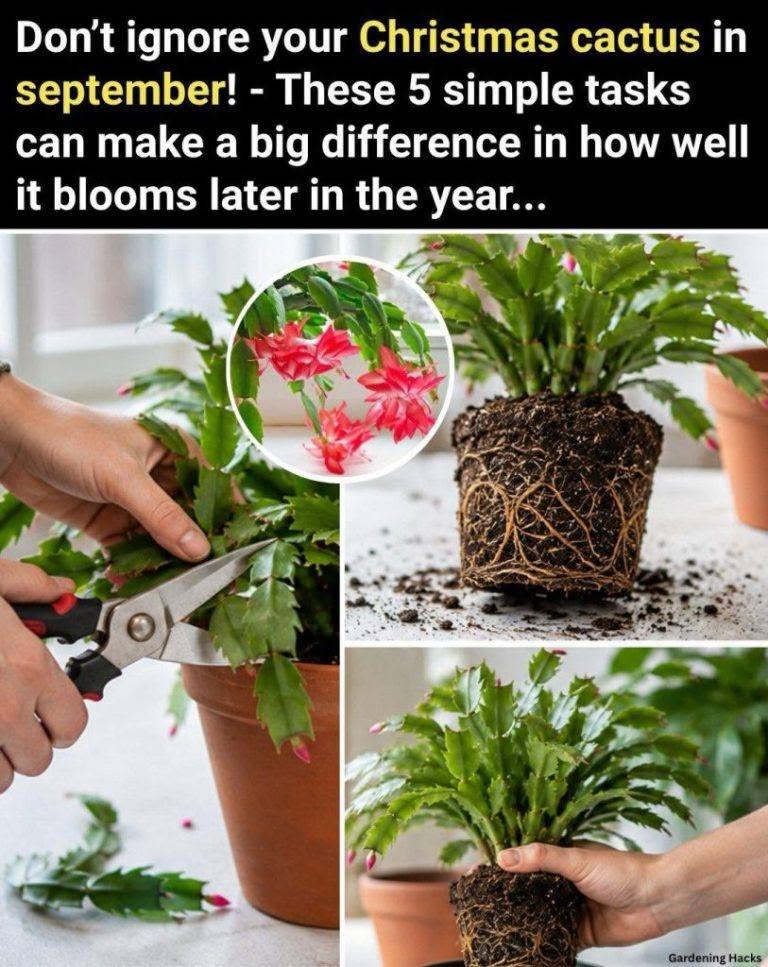
Learn 5 essential things to do with your Christmas cactus in September to encourage more flower buds, healthier growth, and beautiful winter blooms. Follow these simple care tips for a stunning Christmas cactus.
A Christmas cactus can transform an ordinary windowsill into a beautiful display of colorful flowers during the winter months. With its cascading green segments and delicate blooms in shades of pink, red, white, purple, or peach, this popular houseplant is a favorite among indoor gardeners.
However, if you want your Christmas cactus to produce plenty of flowers around the holidays, September is an important month to pay attention to its care. The plant begins responding to seasonal changes, including cooler temperatures and longer nights, that help trigger flower-bud formation.
The good news is that you do not need expensive fertilizers or complicated gardening equipment to encourage blooming. A few simple adjustments to light, watering, temperature, and plant care can make a meaningful difference.
Here are five things to do with your Christmas cactus in September to help prepare it for a beautiful winter display.
1. Give Your Christmas Cactus Longer, Uninterrupted Nights
One of the most important factors in encouraging a Christmas cactus to bloom is providing the right balance of light and darkness.
Christmas cactus is a short-day plant, meaning that long, uninterrupted nights help trigger flower-bud development. Exposure to artificial light late into the evening can interfere with this process.
What to Do
Starting in September, provide your plant with approximately 12–14 hours of uninterrupted darkness each night for several weeks, along with bright, indirect light during the day.
For example, you might keep the plant in a bright room during the daytime and move it to a dark, unused room in the evening. Alternatively, place it somewhere that does not receive artificial light after sunset.
Avoid placing it next to a television, bright lamp, or frequently illuminated window at night.
Why This Helps
The plant responds to the length of the dark period as well as the light it receives during the day. Consistent darkness helps signal that the season is changing and that it is time to prepare for flowering.
Gardening tip: A regular schedule is more helpful than repeatedly moving the plant between different lighting conditions.
2. Adjust Watering to Prevent Root Problems
Watering correctly is essential for a healthy Christmas cactus. Although it is a cactus, this tropical plant naturally grows in humid forest environments, where it often grows on trees rather than in dry desert soil.
It therefore needs a different watering routine from many desert cacti.
What to Do
Check the soil before watering. If the top layer feels dry, water thoroughly until excess water drains from the bottom of the pot.
Empty the saucer or decorative outer pot so the roots are not left sitting in water.
During September, pay attention to how quickly the soil dries. Cooler weather and reduced sunlight may mean that your plant needs water less frequently than it did during summer.
Avoid following a rigid watering schedule without checking the soil first.
Why This Helps
Overwatering can deprive the roots of oxygen and cause root rot, while prolonged dryness can stress the plant and interfere with healthy growth.
A consistent moisture balance supports the plant as it prepares to develop flower buds.
Important: Never leave your Christmas cactus in waterlogged soil. A pot with drainage holes and a well-draining potting mix is essential.
3. Provide Cooler Nighttime Temperatures
Temperature is another important factor in flower-bud development. Christmas cacti often respond well to cooler autumn nights, particularly when these conditions are combined with long periods of darkness.
What to Do
If possible, keep your plant in a location where nighttime temperatures are around 55–65°F (13–18°C) during the bud-forming period.
Daytime temperatures can be somewhat warmer, provided the plant receives suitable light and is not exposed to extreme heat.
Keep it away from heating vents, radiators, cold drafts, and sudden temperature changes.
Do not place the plant outside if temperatures are likely to become too cold for it.
Why This Helps
Cooler nights can help stimulate flowering when the plant also receives an appropriate dark period. However, temperature alone does not guarantee blooms; the plant’s overall health, light exposure, and care also matter.
If your home stays relatively warm at night, consistent long nights may still help encourage flowering, although results can vary.
4. Stop Unnecessary Pruning and Avoid Disturbing the Roots
September is generally a good time to let a mature Christmas cactus settle into its flowering routine.
Heavy pruning, unnecessary repotting, or repeated changes in location can disrupt the plant just as it begins preparing for winter blooms.
What to Do
- Avoid major pruning once the plant is entering its bud-forming period.
- Remove damaged or diseased segments when necessary.
- Avoid repotting unless there is a genuine problem, such as root rot or a damaged container.
- Keep the plant in a stable location with consistent light and temperature.
- Do not repeatedly rotate or move it once flower buds begin to appear.
If your plant needs shaping, pruning is generally best done after flowering has finished.
Why This Helps
Christmas cacti produce flowers at the ends of their segmented stems. Healthy, mature segments provide the growing points where buds can develop.
Unnecessary disturbance can add stress and may cause developing buds to drop, particularly if accompanied by changes in temperature, light, or watering.
Gardening tip: Christmas cacti often flower well when their roots are slightly snug in their pots, so repotting every year is usually unnecessary.
5. Use Fertilizer Carefully and Focus on Healthy Growth
Fertilizer can support healthy foliage and stem development, but adding extra nutrients in September is not a guaranteed way to produce more flowers.
By late summer or early autumn, the plant may be approaching the stage when its main priority is flower-bud formation rather than vigorous new growth.
What to Do
If your plant has been growing actively and has not been fertilized recently, follow the instructions on a balanced, water-soluble houseplant fertilizer. Use it only if the plant needs feeding, and avoid applying more than the label recommends.
As the flowering period approaches, reduce or pause feeding rather than repeatedly applying fertilizer in an attempt to force more buds.
Avoid excessive nitrogen, which can encourage leafy growth instead of helping the plant prepare for flowering.
If your Christmas cactus is already healthy and growing well, additional fertilizer may not be necessary in September.
Why This Helps
Healthy foliage and roots provide the foundation for successful flowering. However, the right light and dark cycle and suitable temperatures are usually more important for triggering flower buds than extra fertilizer.
A plant that receives too much fertilizer may develop stressed roots or excessive growth without producing the expected number of flowers.
Bonus Tip: Do Not Move the Plant Once Buds Appear
When tiny flower buds begin forming, keep your Christmas cactus in a stable environment.
Sudden changes in temperature, watering, or light can cause buds to drop before they open. Moving the plant repeatedly between rooms may also expose it to different environmental conditions.
Continue providing bright, indirect light, water when the soil begins to dry, and maintain a comfortable temperature.
With stable care, the buds can gradually develop into colorful flowers.
Common Mistakes That Can Prevent Christmas Cactus Blooms
Even a healthy-looking Christmas cactus may produce few flowers if its environment does not encourage bud formation.
Here are some common mistakes to avoid:
Too much light at night: Artificial lighting can interrupt the long dark periods needed to trigger flowering.
Overwatering: Constantly wet soil can damage roots and weaken the plant.
Excessive heat: Warm nights may interfere with flower-bud development in some conditions.
Frequent relocation: Moving the plant repeatedly can expose it to sudden environmental changes.
Too much fertilizer: Extra feeding cannot compensate for unsuitable light or temperature conditions.
Pruning at the wrong time: Removing healthy stem tips just before flowering may remove potential flowering sites.
Correcting these problems can improve the chances of a healthy winter display.
When Should You Expect Flowers?
Christmas cactus typically blooms in late autumn or winter, but the exact timing depends on the variety and growing conditions.
If your plant receives suitable darkness, moderate temperatures, and consistent care in September and October, you may begin noticing small buds as the season progresses.
Once buds develop, continue caring for the plant consistently rather than trying to accelerate flowering with additional fertilizer or drastic changes.
Remember that newly purchased plants, young plants, and plants recovering from stress may take longer to bloom.
Final Thoughts
September is an excellent time to prepare your Christmas cactus for its winter flowering season. By providing long, uninterrupted nights, adjusting watering, encouraging cooler nighttime conditions, avoiding unnecessary disturbance, and feeding carefully, you can give your plant a better chance of producing a beautiful display.
The key is consistency. Christmas cacti do not need complicated treatments or expensive products to thrive. They need the right environmental signals, healthy roots, and stable care.
Start with these five simple steps, monitor your plant as autumn progresses, and enjoy the possibility of colorful blooms when winter arrives.