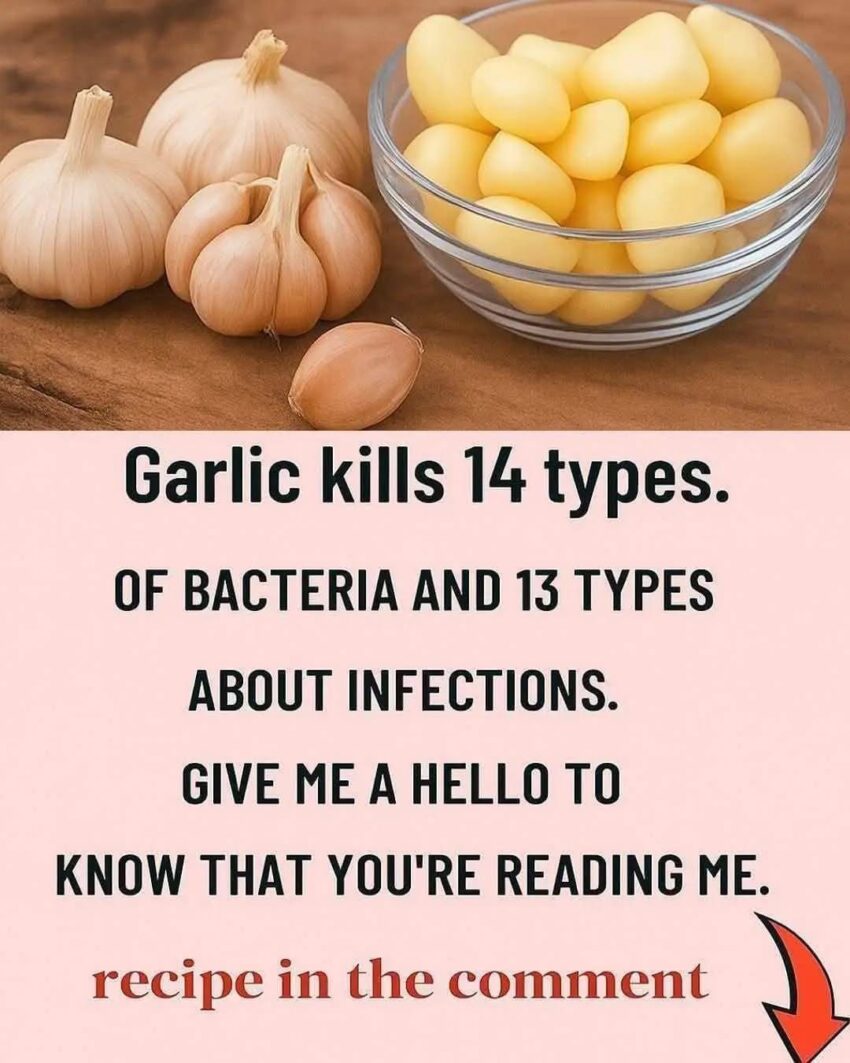
Garlic is more than a popular kitchen ingredient. For centuries, people around the world have used it in traditional remedies, and modern researchers continue to investigate its potential health benefits.
But is it true that garlic kills 14 types of bacteria and fights 13 types of infections? The science is more complicated than this popular claim suggests.
What Makes Garlic Antimicrobial?
The main compound often associated with garlic’s antimicrobial activity is allicin. When a fresh garlic clove is crushed or chopped, an enzyme called alliinase helps convert a compound called alliin into allicin.
Laboratory research suggests that allicin can interfere with important processes in certain microorganisms. Scientists have investigated its activity against bacteria, fungi, and some parasites.
A review published in the journal Microbes and Infection described allicin’s antimicrobial properties, including activity against various Gram-positive and Gram-negative bacteria under experimental conditions.
However, the concentration of allicin, the type of garlic preparation, and the conditions of the experiment all affect the results.
Which Bacteria Have Been Studied?
Research on garlic-derived compounds has examined bacteria such as:
- Escherichia coli (E. coli), some strains of which can cause intestinal or urinary infections.
- Staphylococcus aureus, which can cause skin and other infections.
- Salmonella species, which can cause foodborne illness.
- Certain strains of other Gram-positive and Gram-negative bacteria.
These examples illustrate the scope of laboratory research; they should not be interpreted as proof that eating garlic cures infections caused by these organisms.
Can Garlic Treat Infections?
Garlic’s potential antimicrobial effects have prompted research into its possible role in health. Nevertheless, evidence from laboratory experiments is not the same as evidence that a food or supplement can successfully treat an infection in people.
Researchers have also investigated garlic compounds for antifungal and antiparasitic effects. More high-quality human studies are needed to determine which preparations, if any, offer meaningful benefits for particular medical conditions.
Garlic should not replace prescribed antibiotics, antifungal medicines, or other treatments recommended by a healthcare professional.
How Can You Include Garlic in Your Diet?
For most people, garlic is a nutritious ingredient that can be included in ordinary meals.
- Add chopped garlic to soups, vegetables, sauces, and other cooked dishes.
- Crush or chop fresh garlic before incorporating it into recipes.
- Use garlic as part of a varied, balanced diet rather than as a treatment for illness.
Some garlic compounds change when exposed to heat, so raw and cooked garlic do not have identical chemical compositions. There is not enough clinical evidence to recommend a particular preparation as a treatment for infection.
Is Garlic Safe for Everyone?
Garlic is generally safe in the amounts commonly used in food. However, eating large amounts or taking concentrated supplements can cause heartburn, nausea, abdominal discomfort, and other side effects.
Garlic supplements may also increase bleeding risk, particularly for people taking anticoagulants or certain other medicines. Consult a healthcare professional before using high-dose supplements, especially if you have a medical condition or are preparing for surgery.
Avoid placing raw garlic directly on wounds, skin infections, or sensitive skin because it can cause significant irritation and chemical burns.
Final Thoughts
Garlic contains biologically active compounds, including allicin, that have demonstrated antimicrobial effects in laboratory research. These findings make garlic an interesting subject for further scientific investigation.
However, the claim that garlic kills exactly 14 types of bacteria and treats 13 types of infections is not established by reliable clinical evidence. Garlic can be enjoyed as part of a healthy diet, but it should not be presented as a natural antibiotic that replaces medical care.
Health reminder: If you suspect you have a bacterial or other infection, seek appropriate medical advice rather than relying on garlic alone.