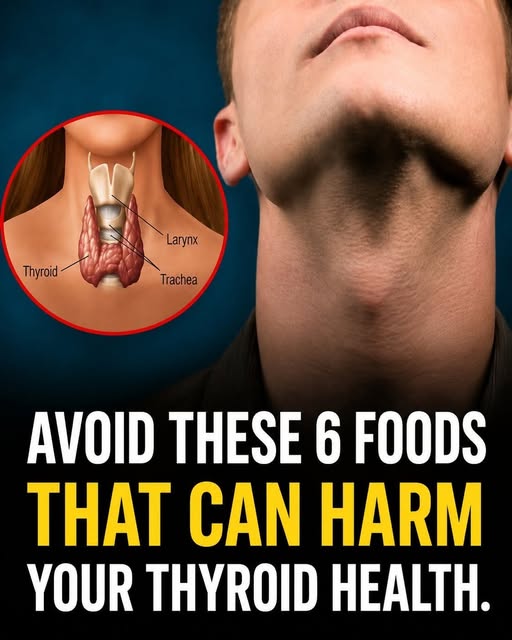
Your thyroid is a small, butterfly-shaped gland in your neck, but it plays a major role in your body. It produces hormones that help regulate metabolism, heart rate, temperature, energy use, and many other functions.
That is why thyroid health matters—and why so many people search for foods that can supposedly “heal” or “damage” the thyroid.
But there is an important reality check: there is no universal list of six foods that every person should completely eliminate to protect their thyroid.
Instead, some foods and eating patterns deserve caution depending on whether you have hypothyroidism, hyperthyroidism, an autoimmune thyroid condition, take thyroid medication, or have an iodine deficiency.
Here are six categories worth understanding.
1. Highly Processed Foods
Highly processed foods such as sugary snacks, processed meats, fast food, and many packaged foods can contribute to an overall unhealthy diet when consumed frequently.
They aren’t necessarily “toxic to the thyroid,” but a diet dominated by highly processed foods may make it harder to maintain a healthy weight and obtain the nutrients your body needs.
A better approach is to build meals around vegetables, fruits, whole grains, legumes, nuts, seeds, and appropriate sources of protein.
Don’t panic over an occasional burger or dessert. Overall dietary pattern matters much more than one food.
2. Excessive Soy Products—Especially Around Thyroid Medication
Soy is not automatically bad for your thyroid.
Foods such as tofu, tempeh, soy milk, and edamame can be nutritious sources of protein.
The bigger issue for some people with hypothyroidism is timing. Soy can interfere with the absorption of levothyroxine in some circumstances.
If you take levothyroxine, follow your healthcare professional’s instructions about when to take it and how to space it from food and other supplements.
You generally don’t need to eliminate soy unless your healthcare professional specifically recommends doing so.
3. Very High-Fiber Meals Taken With Thyroid Medication
Fiber is an important part of a healthy diet and should not be avoided simply because you have a thyroid disorder.
However, consuming large amounts of dietary fiber at the same time as levothyroxine can interfere with its absorption.
This is why medication timing matters.
The goal isn’t to stop eating fiber—it is to take thyroid medication correctly.
If your thyroid blood tests remain abnormal despite taking your medication as prescribed, tell your healthcare professional about your diet, supplements, and medication schedule.
4. Foods and Supplements Containing Excessive Iodine
Iodine is essential because your thyroid uses it to produce thyroid hormones.
But more iodine is not necessarily better.
Excessive iodine intake can contribute to thyroid dysfunction in susceptible people and can worsen some thyroid conditions.
Very high amounts may come from certain supplements, seaweed products, or medications rather than ordinary amounts of iodized salt.
Don’t start taking high-dose iodine supplements simply because you have a thyroid problem.
If you have thyroid disease, ask your doctor before using iodine supplements.
5. Large Amounts of Seaweed
Seaweed can be nutritious, but some varieties contain very large amounts of iodine.
Regularly consuming unusually large quantities of high-iodine seaweed or seaweed-based supplements may therefore be inappropriate for some people with thyroid disorders.
This doesn’t mean you have to fear every sheet of seaweed.
The concern is primarily excessive iodine exposure, especially in people who are sensitive to changes in iodine intake.
6. Excessive Sugary Drinks and Added Sugars
Sugar doesn’t directly “shut down” the thyroid, but consuming large amounts of sugary beverages and foods can contribute excess calories and make overall metabolic health more difficult to manage.
Instead of relying heavily on:
- Soft drinks
- Sweetened energy drinks
- Sugary teas
- Candy
- Cakes
- Sweetened desserts
choose water or other unsweetened drinks more often and emphasize nutrient-dense foods.
Again, moderation matters. You don’t need to treat a piece of cake as a thyroid emergency.
What About Cruciferous Vegetables?
Broccoli, cabbage, cauliflower, kale, Brussels sprouts, and similar vegetables are sometimes placed on lists of “foods to avoid for your thyroid.”
For most people, this is an exaggeration.
These vegetables contain compounds sometimes described as goitrogens, which can interfere with thyroid hormone production under particular circumstances. However, normal amounts of cruciferous vegetables as part of a balanced diet are generally not considered a reason for most people to avoid them.
Cooking can also reduce some of these compounds.
Unless your healthcare professional has given you specific dietary restrictions, there’s generally no reason to eliminate nutritious vegetables simply because you have a thyroid condition.
What Foods Support a Healthy Thyroid?
Rather than focusing entirely on foods to eliminate, consider getting a balanced supply of nutrients involved in normal thyroid function.
Important nutrients include:
Iodine
Found in iodized salt, dairy products, seafood, and some other foods.
Selenium
Found in foods such as seafood, meat, eggs, and some nuts.
Zinc
Found in meat, seafood, dairy products, legumes, nuts, and seeds.
Iron
Found in meat, beans, lentils, and fortified foods.
Protein
Adequate protein intake supports overall health and helps maintain muscle mass.
You don’t necessarily need supplements to obtain these nutrients. In many cases, a varied diet provides what you need.
If You Take Thyroid Medication, Timing Matters
For people taking levothyroxine, how and when the medication is taken can affect how much of it your body absorbs.
Certain foods, supplements, and medications can interfere with absorption.
Common examples include calcium and iron supplements, as well as some foods and beverages.
Follow the instructions provided with your medication and ask your pharmacist or doctor if you’re unsure about timing.
Never change your thyroid medication dose because of something you read online.
What If You Have Hashimoto’s Disease?
Hashimoto’s thyroiditis is an autoimmune condition that can cause an underactive thyroid.
There is currently no single “Hashimoto diet” proven to cure the disease.
Some people report feeling better after eliminating particular foods, but individual experiences aren’t the same as strong clinical evidence.
If you suspect that a food is causing symptoms, speak with a healthcare professional or registered dietitian before eliminating major food groups. Unnecessary restriction can create nutritional deficiencies and make eating unnecessarily difficult.
What If You Have an Overactive Thyroid?
Hyperthyroidism is different from hypothyroidism.
If your thyroid produces too much hormone, treatment may involve medication, radioactive iodine, or surgery depending on the cause.
Diet alone generally cannot replace appropriate medical treatment.
If you have hyperthyroidism, don’t attempt to manage the condition by dramatically changing your iodine intake without professional guidance.
The Bottom Line
Your thyroid doesn’t need a trendy “detox diet.”
There are no six foods that everyone with thyroid disease must immediately stop eating.
Instead:
- Avoid excessive iodine and high-dose iodine supplements unless medically recommended.
- Be aware that large amounts of seaweed can provide very high iodine levels.
- Take thyroid medication according to professional instructions.
- Consider the timing of soy, high-fiber meals, calcium, and iron around levothyroxine.
- Limit highly processed foods and excessive added sugars.
- Don’t unnecessarily eliminate healthy vegetables such as broccoli and cabbage.
- Focus on a varied, nutrient-rich diet.
Most importantly, thyroid disease should be diagnosed and treated medically—not by an internet food list.
If you have persistent fatigue, unexplained weight changes, a racing or unusually slow heartbeat, heat or cold intolerance, neck swelling, or other symptoms that concern you, talk to a healthcare professional and ask whether thyroid testing is appropriate.
Your thyroid doesn’t need fear—it needs the right diagnosis, appropriate treatment, and a balanced diet.