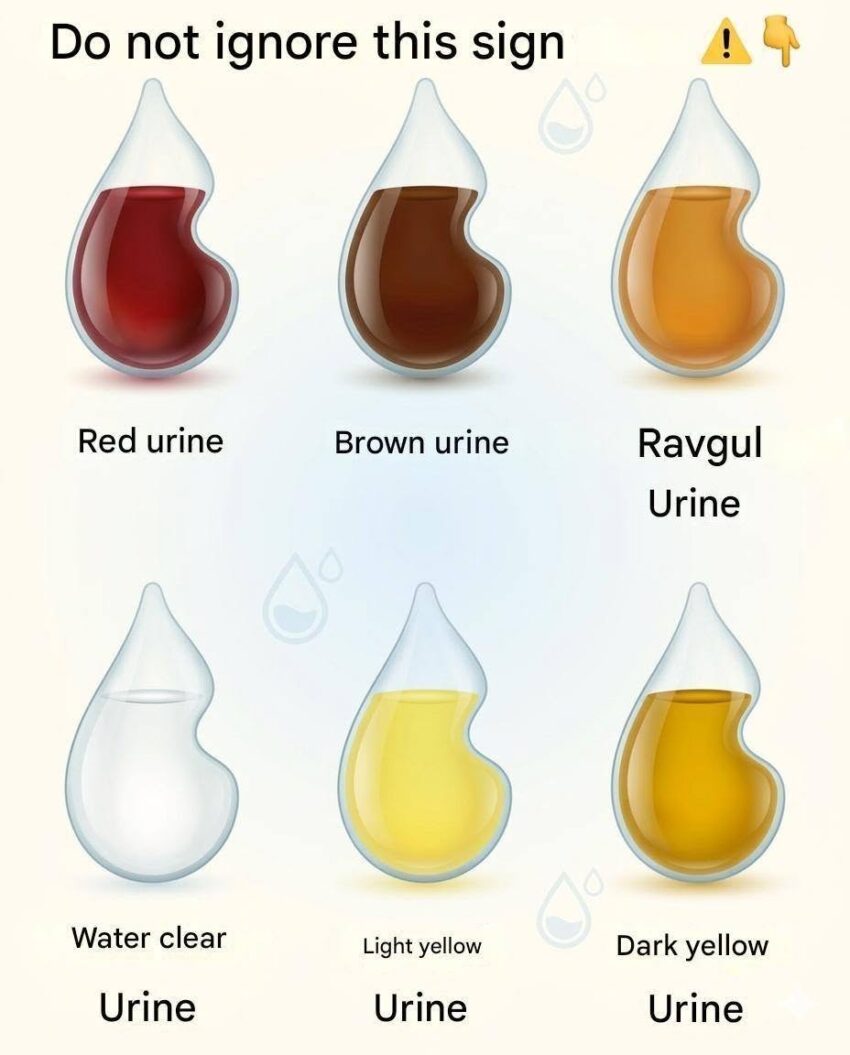
Urine can range from almost completely clear to deep yellow, and its appearance can change throughout the day. Hydration, foods, medications, supplements, and certain medical conditions can all influence urine color.
Although urine color can sometimes provide a useful clue about hydration or health, it is not a diagnosis by itself.
Here’s what different colors may mean—and when a change deserves medical attention.
1. Clear or Almost Colorless Urine
Very clear urine often means that you’re drinking plenty of fluids.
Occasionally having clear urine is usually not a problem. However, if your urine is consistently completely clear and you’re drinking unusually large amounts of water, you may be taking in more fluid than you need.
Excessive water consumption can dilute sodium in the blood and, in extreme cases, become dangerous.
The goal isn’t to make your urine completely colorless. Pale yellow is generally a reasonable sign of hydration for many healthy adults.
2. Pale Yellow Urine
Pale yellow urine is generally considered a normal appearance.
The yellow color comes largely from a pigment called urochrome, produced as the body processes substances from normal metabolism.
When you are adequately hydrated, urine tends to be lighter because it is more diluted.
3. Dark Yellow Urine
Dark yellow urine commonly means that your urine is more concentrated.
This can happen when you haven’t had enough fluids, especially after:
- Sleeping overnight
- Exercising
- Sweating heavily
- Spending time in hot weather
- Experiencing vomiting or diarrhea
Drinking fluids regularly will often cause the urine to become lighter.
However, persistently dark urine shouldn’t automatically be blamed on dehydration, particularly if you have other symptoms.
4. Amber or Honey-Colored Urine
Amber-colored urine can indicate concentrated urine and possible dehydration.
If you’ve been sweating heavily or haven’t been drinking much, increasing fluids may return your urine to a lighter color.
But amber or unusually dark urine that persists despite adequate hydration deserves attention.
5. Orange Urine
Orange urine can have several possible explanations.
Certain medications can turn urine orange, and concentrated urine can sometimes appear orange or dark yellow.
However, orange urine can also be associated with bilirubin, a substance that increases with certain liver or bile-duct problems.
If orange or dark urine occurs together with yellow skin or eyes, pale stools, abdominal pain, or significant itching, seek medical advice promptly.
6. Pink or Red Urine
Pink, red, or reddish-brown urine can sometimes indicate blood in the urine, known as hematuria.
Possible causes include:
- Urinary tract infections
- Kidney stones
- Kidney or bladder problems
- Prostate conditions
- Certain medications
- Strenuous exercise
Some foods, particularly beets, can also make urine appear reddish.
Nevertheless, visible blood in the urine should not simply be assumed to be caused by food.
Unexplained pink, red, or cola-colored urine should be medically evaluated.
7. Brown or Cola-Colored Urine
Brown urine can occur with severe dehydration, certain medications, or foods.
It can also be associated with problems involving the liver or kidneys.
Another important cause is significant muscle injury, which can release a substance called myoglobin into the bloodstream and urine.
If urine suddenly becomes brown or cola-colored—especially after intense exercise or muscle injury, or when accompanied by weakness, muscle pain, jaundice, or reduced urination—seek medical attention.
8. Blue or Green Urine
Blue or green urine is unusual but doesn’t always mean something dangerous.
Possible causes include:
- Certain medications
- Food dyes
- Some medical dyes
- Particular urinary infections
If the color change cannot be explained by something you’ve eaten or a medication you’re taking, discuss it with a healthcare professional.
9. Cloudy or Milky Urine
Cloudy urine can occur for relatively harmless reasons, including dehydration or mineral crystals.
However, it may also be associated with:
- A urinary tract infection
- Kidney stones
- Certain urinary abnormalities
If cloudy urine is accompanied by burning during urination, frequent urination, pelvic pain, fever, or a strong unpleasant odor, a urinary infection may be possible and should be assessed.
10. Foamy or Very Bubbly Urine
A few bubbles after urinating are usually not concerning.
Foam can result from the speed of the urine stream or the toilet water itself.
However, persistent, unusually frothy urine can sometimes indicate increased protein in the urine.
Proteinuria can occur with kidney disease and certain other conditions.
If persistent foamy urine is accompanied by swelling around the eyes, ankles, or legs, high blood pressure, or other symptoms, medical evaluation is appropriate.
What About Urine Smell?
Although color is the focus here, smell can also change.
Strong-smelling urine can occur after eating certain foods or when urine is concentrated.
A strong or unusual odor accompanied by burning, urgency, pelvic pain, fever, or cloudy urine may occur with a urinary tract infection.
A sweet or fruity smell can sometimes occur with elevated ketones, particularly in people with diabetes.
Again, smell alone cannot establish a diagnosis.
What Foods and Supplements Can Change Urine Color?
Urine color isn’t always a sign of disease.
Foods, vitamins, and medications can produce dramatic changes.
For example, some B vitamins can make urine appear bright yellow or almost fluorescent.
Certain foods and food dyes can also change its appearance.
This is one reason it is useful to consider what you’ve eaten, what supplements you’ve taken, and what medications you’re using before assuming that an unusual color represents a disease.
Does Dark Urine Always Mean You Need More Water?
No.
Dark yellow urine after waking up or after exercise is commonly related to concentration.
But urine that remains unusually dark despite normal hydration may have another explanation.
If the urine is brown, reddish, orange, or tea-colored, particularly when accompanied by other symptoms, don’t simply keep drinking water and hope it goes away.
When Should You Contact a Doctor?
Seek medical advice if you notice a persistent or unexplained change in urine color, especially if you also have:
- Blood in the urine
- Pain or burning during urination
- Fever or chills
- Pain in your side or back
- Severe abdominal pain
- Yellow skin or eyes
- Very little urine
- Swelling of the legs or face
- Persistent foamy urine
- Unexplained brown or cola-colored urine
When Is It an Emergency?
Some combinations of symptoms require urgent care.
For example, severe flank pain with blood in the urine may occur with a kidney stone, while fever and urinary symptoms can sometimes indicate a serious infection.
Very dark urine with severe muscle pain or weakness after strenuous exercise can also require urgent evaluation.
And if you are unable to urinate, have severe pain, become confused, faint, or feel seriously unwell, seek emergency medical care.
A Simple Way to Think About Urine Color
As a general guide:
| Urine appearance | Possible explanation |
|---|---|
| Almost clear | High fluid intake |
| Pale yellow | Often normal hydration |
| Dark yellow | Concentrated urine/dehydration |
| Amber | Concentrated urine or other causes |
| Orange | Medication, concentrated urine, or bilirubin-related causes |
| Pink/red | Food, medication, or possible blood |
| Brown/cola | Dehydration, medication, liver problems, or muscle injury |
| Blue/green | Rare; medication, dyes, or infection |
| Cloudy | Dehydration, crystals, infection, or other urinary conditions |
| Persistently foamy | Possible protein in urine |
This table is a general guide, not a diagnostic chart.
The Bottom Line
Your urine can provide useful clues about what’s happening in your body, but color alone cannot tell you whether you’re healthy or sick.
For many people, pale-yellow urine is a normal sign of adequate hydration. Darker yellow urine often means the urine is more concentrated, while red, brown, orange, cloudy, or persistently foamy urine may have a range of causes that sometimes require medical evaluation.
Don’t panic over a one-time unusual color—especially if you’ve recently eaten strongly colored foods, taken vitamins, or started a medication.
But if an unusual change persists, has no obvious explanation, or occurs with pain, fever, blood, jaundice, swelling, or changes in urination, it’s worth getting checked.
Think of urine color as a clue—not a diagnosis.