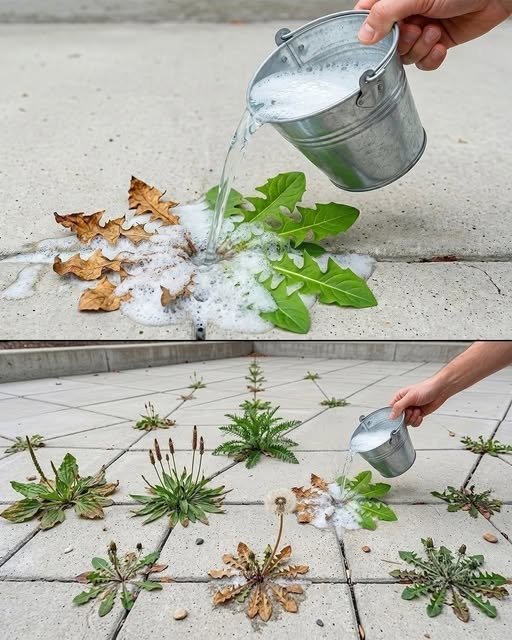
Looking for an easy way to control weeds? Learn how common household weed-control methods work, what to avoid, and how to prevent unwanted weeds from quickly returning.
This Simple Weed Trick Can Dry Out Weeds in Just One Day — But They May Grow Back
Weeds can appear almost overnight, growing between paving stones, along garden paths, around fences, and in cracks where you least expect them.
Once they become established, simply pulling them out may not always be enough. Some weeds can regrow from roots that remain in the soil, making weed control feel like a never-ending task.
That is why many gardeners look for quick and inexpensive ways to dry out unwanted weeds.
One popular approach involves using a strong household solution to dehydrate the leaves. While it can make some weeds look brown and dried out quickly, there is an important catch: killing the leaves does not always kill the roots.
Why Do Weeds Come Back?
Many weeds are surprisingly resilient.
If you remove only the visible leaves and stems, the underground roots may remain alive. The plant can then produce new growth.
Some perennial weeds are particularly difficult because they have extensive root systems.
This means that a method that makes a weed brown within a day isn’t necessarily a permanent solution.
The Goal: Attack the Weed at the Right Stage
For small weeds growing through cracks or paving, removing them while they are young can be much easier.
Pull the plant out carefully and try to remove as much of the root as possible.
For larger weeds, loosening the surrounding soil first can make root removal easier.
A Household Method People Commonly Try
Some people use vinegar-based solutions to dry out weeds.
Acetic acid can damage plant tissue when it comes into direct contact with foliage. This is why leaves may begin to wilt or brown after treatment.
However, ordinary household vinegar is not necessarily strong enough to kill established perennial weeds permanently.
It can also damage desirable plants if it drifts or splashes onto them.
Use Caution
If you choose a commercial weed-control product, always read and follow its label.
Do not mix household chemicals together in an attempt to create a stronger weed killer. Certain chemical combinations can create hazardous fumes or other dangerous reactions.
What About Salt?
Salt is sometimes recommended online as a “permanent” weed killer.
Although salt can damage plants, putting large amounts of salt into soil can also harm desirable vegetation and interfere with soil conditions.
For that reason, salt is generally a poor choice for areas where you eventually want healthy plants to grow.
The Best Way to Stop Weeds From Returning
If your goal is long-term weed prevention, killing existing weeds is only part of the solution.
You also need to reduce the conditions that allow new weeds to establish.
1. Remove Weeds Before They Produce Seeds
This is one of the easiest ways to reduce future weed problems.
Regularly remove weeds before they flower and produce seeds.
2. Cover Bare Soil
Bare soil gives weed seeds an opportunity to germinate.
Mulch can help reduce sunlight reaching the soil surface and can make it harder for new weeds to establish.
3. Keep Garden Beds Healthy
Healthy, densely planted garden beds leave less open space for weeds.
Appropriate plants, mulch, and regular maintenance can all help reduce weed pressure.
4. Deal With Weeds in Cracks
Weeds growing between paving stones are often easier to manage when they’re still small.
Pulling them out by the root and regularly brushing or cleaning the area can prevent small plants from becoming established.
Can Weeds Really Be Gone Forever?
Usually, you shouldn’t expect a single home remedy to guarantee that weeds will “never grow again.”
New weed seeds can arrive through wind, birds, animals, soil movement, or contaminated materials.
Even after an existing weed is successfully removed, another seed can germinate in the same area later.
The most effective strategy is therefore a combination of removal + prevention + regular maintenance.
A Simple Weed-Control Routine
For a low-maintenance garden or yard, try this routine:
Step 1: Remove visible weeds while they’re young.
Step 2: Pull or dig out roots where practical.
Step 3: Clear away dead plant material and seed heads.
Step 4: Use mulch in suitable garden areas.
Step 5: Check paths, cracks, and borders regularly.
Step 6: Repeat the process before weeds become established.
This approach may not sound as dramatic as a “one-day miracle,” but it is much more realistic for long-term weed management.
Final Thoughts
Some weed-control methods can make weeds wilt or turn brown surprisingly quickly, but fast browning doesn’t necessarily mean the roots are dead.
If you want fewer weeds in the long run, focus on removing plants before they establish themselves and preventing new growth with proper garden maintenance.
And remember: never mix cleaning products or chemical weed killers together. If you use a commercial herbicide, follow the product label carefully and keep people, pets, and desirable plants away from treated areas as directed.