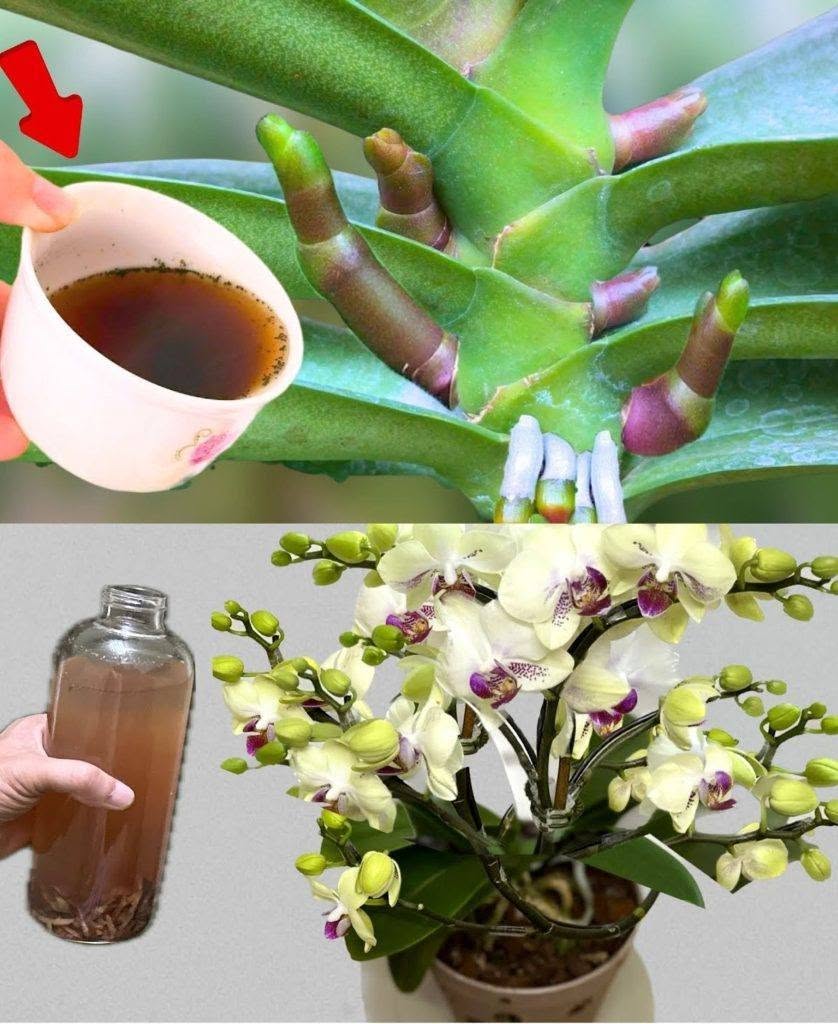
If your orchid has plenty of green leaves but isn’t looking its best, you may have seen the viral claim that one special liquid can make it “10 times more beautiful.”
The truth is less magical—but much more useful.
There is no homemade watering ingredient proven to make an orchid 10 times more beautiful. However, proper watering with clean, suitable water can make a major difference to the plant’s roots, leaves and overall appearance.
The Best “Ingredient”: Clean Water
For most orchids, especially popular Phalaenopsis orchids, the simplest approach is often the safest: water thoroughly, then let excess water drain away.
Don’t treat the orchid like a normal houseplant by leaving its roots constantly wet.
When watering:
- Take the orchid to a sink or suitable drainage area.
- Water the growing medium thoroughly.
- Allow all excess water to drain.
- Empty any water trapped in the decorative outer pot.
- Wait until the potting medium has begun to dry before watering again.
The exact frequency depends on temperature, humidity, pot size, potting medium and airflow.
Why Overwatering Can Ruin a Beautiful Orchid
An orchid can have impressive leaves while its roots are already struggling.
Constantly wet conditions can reduce oxygen around the roots and contribute to root rot. Once roots become damaged, the plant may develop yellowing leaves, weak growth or poor flowering.
That’s why more water is not necessarily better.
What About Rice Water, Banana Water or Sugar Water?
These are popular online orchid remedies, but they aren’t necessary for healthy growth.
Homemade mixtures can have unpredictable nutrient concentrations and may encourage microbial growth or leave unwanted material in the potting medium.
Adding sugar to the water is particularly unnecessary. Orchids don’t need sugary water to produce beautiful flowers.
If your orchid genuinely needs additional nutrients, use a proper orchid fertilizer according to its label, rather than guessing with kitchen ingredients.
The Real Secret to a Leafy Orchid
Water is only one piece of the puzzle.
Bright, Indirect Light
Give the orchid plenty of bright light without exposing it to intense direct sunlight that can scorch the leaves.
Insufficient light can contribute to poor flowering.
Good Airflow
Gentle air movement helps the growing environment dry appropriately and reduces the chance of prolonged moisture around the leaves and roots.
The Right Potting Medium
Most commonly grown orchids are not meant to sit in ordinary garden soil.
An appropriate orchid medium, such as bark-based material, allows air to reach the roots and provides suitable drainage.
Healthy Roots
Healthy orchid roots are a much better sign than simply having lots of leaves.
Depending on the orchid and growing medium, healthy roots are generally firm rather than mushy or collapsing.
Fertilize Carefully
During active growth, a suitable orchid fertilizer can provide nutrients the plant needs.
Follow the product’s dilution and frequency instructions. Concentrated fertilizer can damage roots.
If You Want More Flowers, Don’t Just Water More
A very leafy orchid that isn’t flowering may need better light, appropriate nutrition, temperature changes or simply time.
Instead of searching for a miracle liquid, look at the entire growing environment.
Healthy roots + appropriate light + careful watering + suitable nutrition = a much better chance of vigorous growth and flowering.
A Simple Orchid-Watering Rule
Before reaching for another homemade recipe, check the orchid itself.
If the potting medium is still very wet, don’t add more water just because a schedule says it’s watering day.
If it has begun to dry and the orchid needs water, water thoroughly and let it drain completely.
That simple habit can prevent one of the most common orchid-care mistakes.
Final Takeaway
There is no secret liquid that can guarantee an orchid will become “10 times more beautiful.”
But you can dramatically improve its appearance by giving it what it actually needs: appropriate light, good drainage, healthy roots, careful watering and balanced nutrition.
When it comes to orchids, simple and consistent care usually beats viral kitchen remedies.