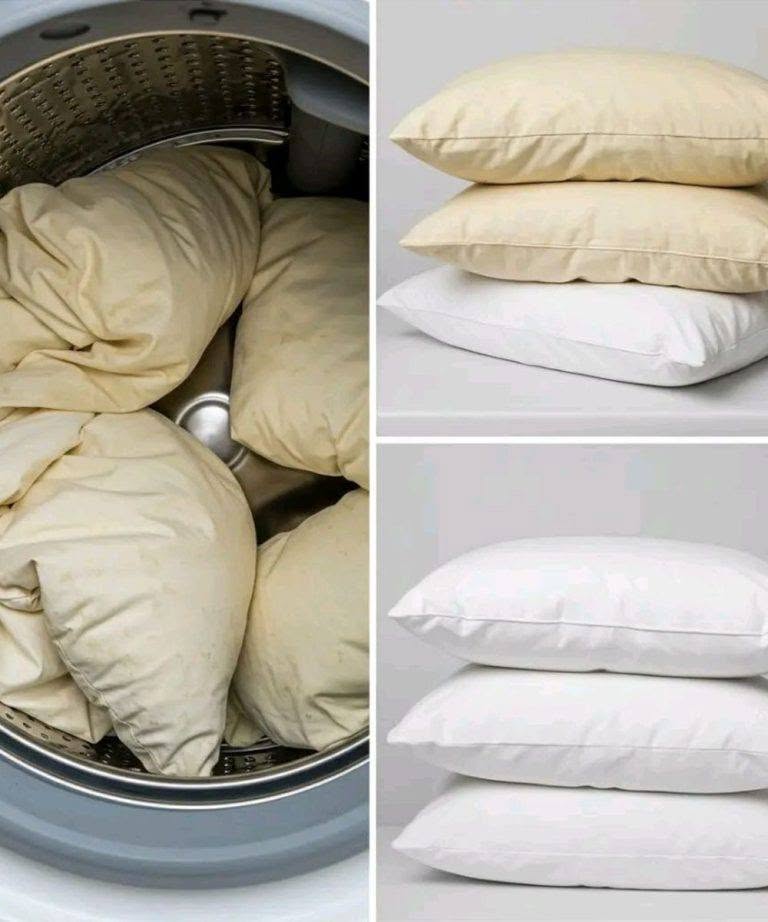
Over time, even clean pillows can develop yellow stains. Sweat, body oils, skin products, moisture and everyday use can gradually leave white pillow covers looking dull or yellow.
The good news is that many washable pillows can be refreshed at home. The key is choosing a method that matches the pillow’s material and following the care label.
1. Wash With a Gentle Whitening Boost
For washable white pillows, a regular laundry detergent combined with oxygen bleach can help remove stubborn yellowing.
What you need:
- Regular laundry detergent
- Oxygen bleach, following the product instructions
- Warm water, if permitted by the care label
How to do it:
- Check the pillow’s care label first.
- Remove the pillowcase and protector.
- Place two washable pillows in the machine if possible to help balance the load.
- Add your normal amount of detergent.
- Add oxygen bleach according to its package directions.
- Run the warmest appropriate cycle allowed for the pillow.
- Run an additional rinse if detergent remains.
- Dry the pillow completely.
Oxygen bleach is generally preferable to repeatedly using chlorine bleach, which can weaken some fabrics and fibers.
2. Try a Baking Soda and Detergent Wash
Baking soda can help freshen laundry and reduce odors while detergent does the actual cleaning.
For a washable pillow, add your normal detergent and a modest amount of baking soda to the wash, following the machine and detergent instructions.
Avoid making an extremely concentrated paste and scrubbing aggressively. Pillow fabrics and fillings can be damaged by harsh treatment.
For particularly stubborn stains, pre-treat the removable pillow cover separately when possible.
3. Don’t Forget the Drying Step
A pillow can look clean after washing but still develop an unpleasant smell if moisture remains trapped inside.
After washing:
- Dry according to the manufacturer’s instructions.
- Make sure the filling is completely dry.
- Fluff the pillow periodically during drying when appropriate.
- Don’t put a damp pillow back on the bed.
- Check the center of the pillow, not just the outside, before storing or using it.
For down, feather and some synthetic pillows, incomplete drying can encourage mildew or musty odors.
What About Vinegar?
White vinegar is sometimes recommended as a natural whitening solution. It can help with odors and mineral residue in some laundry situations, but it isn’t a guaranteed stain remover.
More importantly, never mix vinegar with chlorine bleach. The combination can produce dangerous chlorine gas.
If you’re using a commercial laundry product, follow its label rather than combining multiple cleaning chemicals.
Before You Wash: Check the Pillow
Not every pillow should go into a washing machine.
Some memory-foam, latex and specialty pillows should not be machine-washed because the filling can become damaged or retain water.
If the pillow itself isn’t washable, clean the removable cover according to its care instructions and spot-clean the pillow only as recommended by the manufacturer.
Why Do Pillows Turn Yellow?
Yellowing doesn’t necessarily mean your pillow is dirty.
Common causes include:
- Sweat and body oils
- Saliva
- Skin-care and hair products
- Humidity
- Moisture trapped inside the pillow
- Natural aging of fabrics and fillings
A washable pillow protector underneath the pillowcase can help prevent future staining.
How to Keep White Pillows Looking New
Once your pillows are clean, prevention is easier than trying to remove years of buildup.
Use a pillow protector. It creates an extra washable barrier against sweat and oils.
Wash pillowcases regularly. Don’t wait until visible stains appear.
Keep pillows dry. Avoid going to bed with wet hair when possible and maintain good ventilation in humid rooms.
Don’t overuse bleach. Strong chemicals can weaken fabric and some fillings over time.
Replace very old pillows when necessary. Washing cannot restore a pillow whose filling has permanently broken down or become heavily soiled.
When It’s Better to Replace the Pillow
If a pillow remains badly discolored after appropriate washing, smells musty even after thorough drying, has visible mold, or has lost its shape and support, cleaning may no longer be enough.
In those cases, replacement is often the better option.
Bottom Line
Yellow pillows are usually the result of accumulated sweat, oils, moisture and everyday use—not simply a lack of cleaning.
For washable pillows, the three most useful steps are:
- Wash with detergent and an appropriate oxygen-bleach product when permitted.
- Use baking soda as a gentle laundry freshener rather than harsh DIY chemicals.
- Dry the pillow completely before using it again.
Always check the care label first. The safest whitening method is the one that cleans the pillow without damaging its fabric or filling.