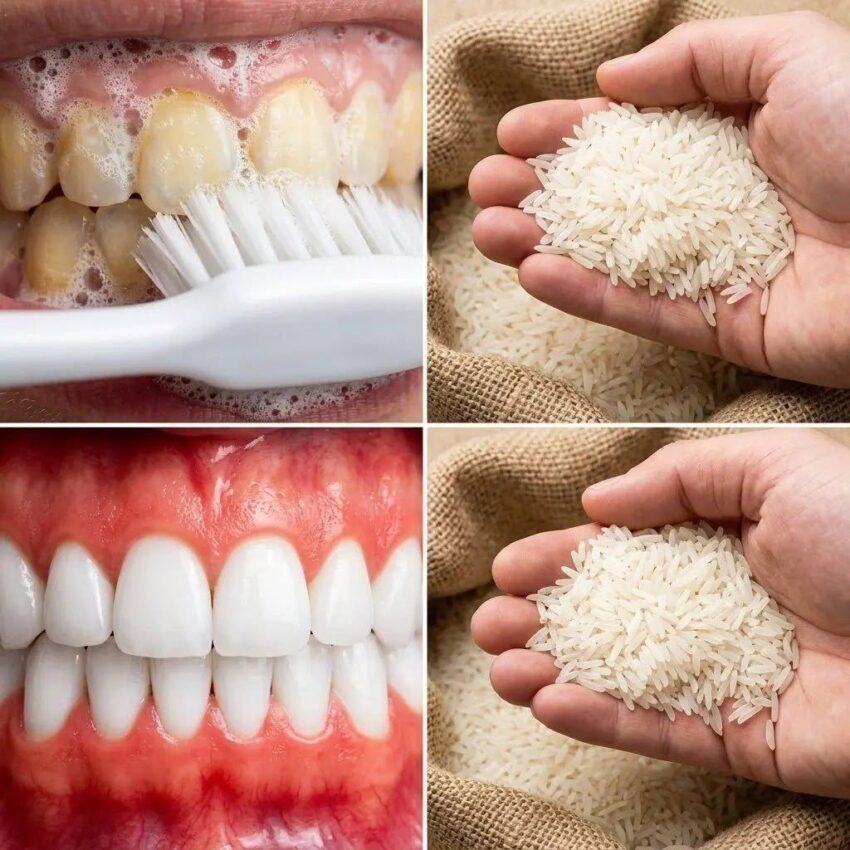
A bright smile is something almost everyone wants, and social media is full of quick home remedies promising dramatically whiter teeth.
One of the newer trends involves rice water—often described as a simple one-minute secret for a brighter smile.
But there is an important distinction between freshening your mouth and actually whitening tooth enamel.
Rice water is not a proven tooth-whitening treatment, and there is no good evidence that rinsing with it for 60 seconds can dramatically change the natural color of your teeth.
Still, if you enjoy rice water as a food or beverage, there is a simple way to use it without damaging your teeth.
What Is the Rice-Based Method?
Rice water is simply water in which rice has been soaked or cooked.
For a basic version:
- ½ cup uncooked rice
- 1–2 cups clean water
Rinse the rice first, then soak it in clean water for about 20–30 minutes. Strain the liquid and use it as a food ingredient or drink if desired.
There is no established dental dosage or 60-second formula that has been shown to whiten teeth.
Can Rice Water Whiten Teeth?
This is where viral claims go too far.
Tooth color is influenced by the natural color of the enamel and dentin, as well as staining from foods, drinks, tobacco and aging.
There is no strong clinical evidence that rice water removes intrinsic tooth discoloration or bleaches enamel.
If your teeth look brighter after using a homemade rinse, the effect may simply be temporary removal of loose debris or changes in how the teeth appear—not true bleaching.
Why You Shouldn’t Scrub Teeth With Rice
Some DIY recipes recommend rubbing uncooked rice, rice powder or rice flour directly onto the teeth.
That’s not a good idea.
Repeatedly scrubbing teeth with abrasive substances can wear away or roughen the surface of enamel. Once enamel is lost, it doesn’t grow back.
Avoid turning a harmless food ingredient into a homemade dental scrub.
A Safer 60-Second Smile Routine
If you want a genuinely useful one-minute routine, try this instead:
1. Rinse Your Mouth
After eating, rinse with plain water for several seconds.
This can help wash away food particles and dilute acids left behind by food and drinks.
2. Clean Between Your Teeth
If food is trapped between your teeth, use dental floss or an appropriate interdental cleaner.
3. Don’t Brush Immediately After Acidic Foods
If you’ve just consumed something acidic, such as citrus or soda, waiting before brushing can help avoid brushing softened enamel.
4. Brush Twice Daily
The most important routine for a clean, healthy smile is brushing twice a day with fluoride toothpaste.
A rice rinse cannot replace this.
What Actually Helps With Whiter Teeth?
If your goal is genuine whitening, evidence-based options include:
- Professional dental whitening
- Dentist-supervised whitening products
- Appropriate over-the-counter whitening products
- Regular removal of plaque and surface stains
Whitening products containing peroxide can lighten certain types of tooth discoloration, but they can also cause temporary tooth sensitivity or gum irritation.
A dentist can determine whether whitening is appropriate for you.
Watch Out for “Natural Whitening” Tricks
Be careful with recipes involving:
- Lemon juice
- Vinegar
- Baking soda used aggressively
- Charcoal powders
- Undiluted acids
- Abrasive powders
“Natural” doesn’t automatically mean safe for enamel.
Acidic ingredients can contribute to enamel erosion, while excessive abrasion can physically wear the tooth surface.
When Yellow Teeth Need a Dentist
Not every change in tooth color is a simple surface stain.
Darkening, a single discolored tooth, persistent spots, pain, sensitivity or changes following an injury may require a dental examination.
A professional can determine whether the discoloration comes from surface staining, enamel changes, decay, trauma or another cause.
The Bottom Line
The viral “rice water for 60 seconds” trick is not a scientifically established tooth-whitening treatment.
Rice water can be consumed as part of a normal diet, but there is no reason to expect it to bleach your teeth or dramatically transform your smile overnight.
For a brighter and healthier smile, focus on what actually works:
fluoride toothpaste, regular brushing, cleaning between the teeth, limiting frequent sugary or acidic drinks, and professional whitening when appropriate.
A radiant smile doesn’t need a miracle ingredient—it needs consistent dental care.