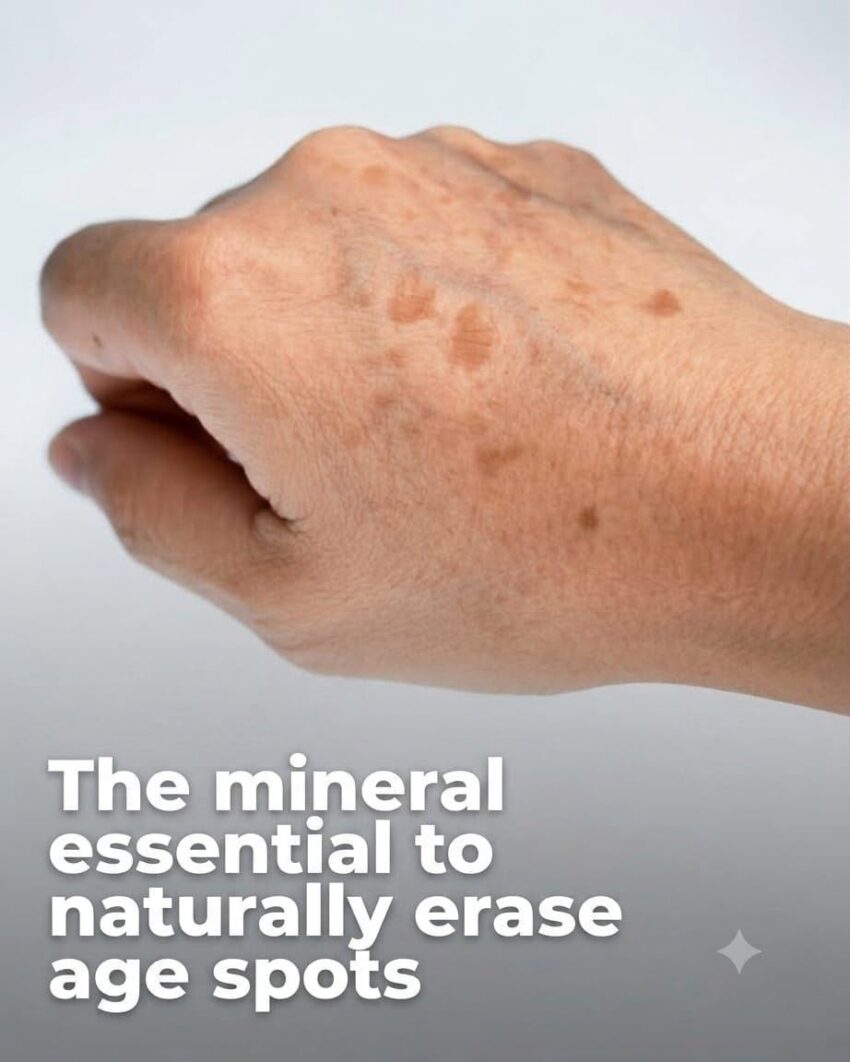
Age spots, also called sun spots or solar lentigines, are flat areas of darker pigmentation that commonly appear on sun-exposed skin such as the face, hands, shoulders, and arms. They become more common with age because years of ultraviolet (UV) exposure can stimulate increased production of melanin.
You may have seen claims that one particular mineral can “remove age spots.” However, no mineral has been proven to erase age spots on its own. Minerals such as zinc, copper, and selenium play important roles in normal skin function, but getting more of a mineral does not necessarily make existing pigmentation disappear.
Why Do Age Spots Develop?
The main contributor to age spots is cumulative exposure to ultraviolet radiation. Sunlight can stimulate pigment-producing cells in the skin, leading to areas of increased pigmentation over time.
Other factors can influence pigmentation as well, including genetics, skin type, and repeated sun exposure.
What About Zinc?
Zinc is an essential mineral involved in many processes in the body, including normal immune function, wound healing, and skin health. However, zinc supplements should not be promoted as a proven treatment for removing existing age spots.
If you have a zinc deficiency, correcting that deficiency is important for overall health. But taking extra zinc when you already get enough does not mean that age spots will disappear.
Too much zinc can also cause adverse effects and can interfere with the absorption of other nutrients, such as copper.
What Actually Helps Fade Age Spots?
For people who want to reduce the appearance of age spots, evidence-based options are more appropriate than relying on a mineral supplement.
Depending on the individual and the type of pigmentation, dermatologists may recommend treatments such as topical medications or procedures including chemical peels, cryotherapy, laser treatment, or other pigment-targeting treatments.
Daily sun protection is also essential. A broad-spectrum sunscreen can help reduce additional UV exposure and may help prevent existing pigmentation from becoming darker.
Protect Your Skin Every Day
One of the most important steps for preventing additional age spots is limiting UV exposure.
Consider:
- Using broad-spectrum sunscreen regularly
- Reapplying sunscreen as directed, particularly during prolonged outdoor activity
- Wearing protective clothing and a hat
- Seeking shade when the sun is strongest
- Avoiding intentional tanning
Don’t Assume Every Dark Spot Is an Age Spot
A new or changing dark spot should not automatically be assumed to be an age spot. Some skin cancers and other skin conditions can resemble harmless pigmentation.
Have a dermatologist or other qualified healthcare professional examine a spot if it is:
- New or rapidly changing
- Asymmetrical
- Irregular around the edges
- Uneven in color
- Bleeding, crusting, or persistently itching
- Noticeably different from your other spots
The Bottom Line
There is no “number one mineral” that has been scientifically proven to remove age spots. Minerals such as zinc are important for normal skin health, but treating existing pigmentation generally requires appropriate sun protection and, when desired, evidence-based dermatological treatments.
If you are considering supplements for skin health, it is best to focus on meeting your nutritional needs rather than taking high doses of a particular mineral without medical advice.