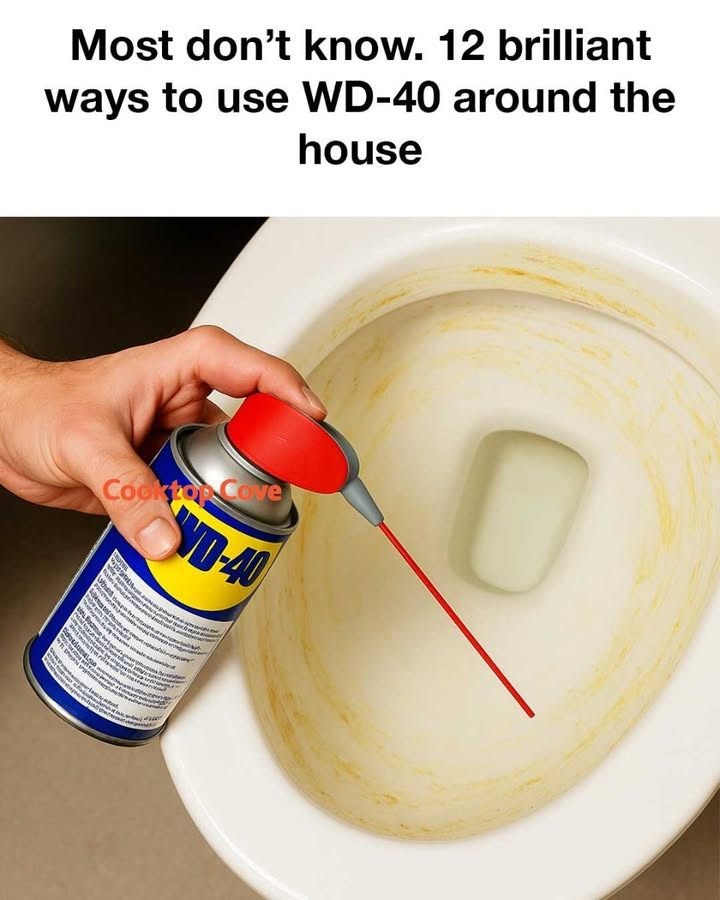
Most people keep a can of WD-40 somewhere in the garage or workshop, but many don’t realize just how useful it can be around the house.
The familiar spray is designed to displace moisture, loosen stuck parts, lubricate moving components, protect metal against rust and corrosion, and help remove grease and grime. The manufacturer lists thousands of potential uses, ranging from squeaky hinges to removing adhesive residue.
That doesn’t mean WD-40 is the right product for every household job. Some surfaces and applications require a different lubricant or cleaner, and you should always check the product label and test an inconspicuous area first.
Here are 12 useful ways to put WD-40 Multi-Use Product to work around your home.
1. Silence Squeaky Door Hinges
Few household noises are more annoying than a door that squeaks every time you open it.
A small amount of WD-40 Multi-Use Product can help lubricate the hinge and quiet the noise.
How to do it:
- Open the door so you can access the hinge.
- Apply a small amount of product to the hinge area.
- Move the door back and forth several times.
- Wipe away excess product.
WD-40 specifically lists squeaky hinges among its common uses.
Tip: Don’t saturate the hinge. A little product is usually enough.
2. Remove Sticky Sticker and Adhesive Residue
Have you ever peeled a label from a jar, piece of furniture, window, or household item only to discover a stubborn layer of sticky glue underneath?
WD-40 can help loosen adhesive residue.
Apply a small amount to the affected area, allow it to work for a short time, and then wipe away the residue.
The manufacturer’s household-use list includes removing stickers and adhesive residue from a variety of surfaces.
Important: Always test the surface first, particularly on painted, finished, or delicate materials.
3. Get Rid of Scuff Marks
Dark scuff marks can make otherwise clean floors, furniture, and other surfaces look worn.
WD-40 can help loosen certain scuff marks.
Apply a small amount to a cloth rather than flooding the surface, gently work on the mark, and then wipe the area clean.
The manufacturer lists scuff-mark removal from surfaces including ceramic tile and lawn furniture.
Don’t forget: After using WD-40 on a surface, wipe away the residue so you aren’t left with a slippery or oily film.
4. Loosen Rusty Screws and Fasteners
This is one of WD-40’s classic jobs.
Rust and corrosion can cause nuts, bolts, screws, and other metal parts to become stubbornly stuck.
WD-40 Multi-Use Product can penetrate and help loosen corroded parts. For particularly difficult rusted hardware, the manufacturer also offers specialized penetrating products designed specifically for stuck components.
Try this:
Spray the affected connection, give it time to penetrate, and then attempt to loosen the fastener.
If necessary, repeat the process rather than immediately applying excessive force.
5. Protect Metal Tools From Rust
Garden tools, hand tools, metal hardware, and other equipment can develop corrosion when exposed to moisture.
A light coating of WD-40 Multi-Use Product can help provide a barrier between metal and moisture.
The manufacturer recommends the product for protecting metal from rust and corrosion.
This can be particularly useful for tools stored in:
- Garages
- Sheds
- Workshops
- Damp basements
- Outdoor storage areas
Before applying it, clean and dry the metal.
6. Clean Grease and Grime From Certain Surfaces
WD-40 isn’t simply useful for lubrication.
Its manufacturer says the Multi-Use Product can also help remove grease, grime, adhesive residue, and other unwanted substances from many surfaces.
For a stubborn greasy spot, apply a small amount to a cloth and work on the area carefully.
Then wipe the surface clean.
Remember that WD-40 isn’t a substitute for a food-safe kitchen cleaner, and surfaces that come into contact with food should be cleaned appropriately afterward.
7. Help Free a Stuck Window or Track
Windows, sliding mechanisms, and tracks can become difficult to move because of accumulated grime, corrosion, or mechanical friction.
WD-40’s household guidance includes uses around door and window tracks.
For a stubborn mechanism:
- Remove visible dirt and debris.
- Apply a small amount where appropriate.
- Move the mechanism gently.
- Wipe away excess product.
If the track is designed for a specific type of dry or silicone lubricant, use the lubricant recommended by the manufacturer instead.
8. Remove Rust Stains
Rust stains can appear around metal fixtures, outdoor furniture, tools, bathroom surfaces, and other areas.
WD-40 maintains a range of products for rust-related jobs, and its Multi-Use Product can help with light rust and corrosion and with certain rust stains.
For heavier rust, however, don’t assume that repeatedly spraying the Multi-Use Product is the best solution. Dedicated rust-removal products may be more appropriate.
9. Keep Garden Tools Moving Smoothly
Pruning shears, cutters, hinges, and other garden equipment can become stiff after repeated exposure to moisture and dirt.
A small amount of WD-40 can help lubricate moving metal components and protect them from corrosion.
The manufacturer specifically lists garden tools and pruning shears among its uses.
After application, wipe away excess residue and keep cutting surfaces clean.
10. Remove Tar and Sticky Road Grime
Tar and stubborn greasy deposits can be difficult to remove from certain surfaces.
WD-40’s official use information includes helping remove tar and grease from various materials, with a recommendation to test a small area first.
This can be useful for certain household and outdoor cleanup jobs.
However, because tar-removal jobs often involve painted or finished surfaces, always test an inconspicuous spot first.
11. Help Remove Water Spots and Mineral Buildup
Certain bathroom and household surfaces can develop stubborn water spots or mineral-related deposits.
WD-40’s published use list includes water spots on mirrors and mineral and rust buildup around faucets.
Apply a small amount to a cloth, work carefully on the affected area, and then wipe the surface thoroughly.
For bathroom surfaces, make sure the finished area isn’t left slippery.
12. Give Outdoor Metal Items Some Extra Protection
Outdoor metal objects have to deal with rain, humidity, condensation, and temperature changes.
That constant exposure can accelerate corrosion.
WD-40 Multi-Use Product can be used to help protect appropriate metal surfaces from moisture and corrosion.
Consider it for suitable items such as:
- Metal garden tools
- Hinges
- Hardware
- Outdoor equipment
- Certain metal furniture components
- Bare metal parts
For long-term outdoor protection, choose a product specifically designed for the environment and material when appropriate.
Bonus: Use WD-40 to Free Stubborn Mechanical Parts
Sometimes the problem isn’t rust—it’s simply a part that refuses to move.
WD-40 Multi-Use Product is designed to penetrate and loosen stuck parts, which is why it has applications ranging from household hardware to workshop equipment.
Apply a modest amount, allow it time to work, and then gently attempt to move the component.
Don’t force a part aggressively if doing so could cause it to break or create a safety hazard.
What Should You NOT Use WD-40 On?
This is just as important as knowing where you can use it.
WD-40 Multi-Use Product is suitable for many metals, rubber, wood, painted metal, and most plastics, according to the manufacturer. However, it recommends avoiding polycarbonate plastics and clear polystyrene, which can react poorly with petroleum-based products.
Avoid blindly spraying it on:
- Brake components
- Surfaces where the manufacturer specifies another lubricant
- Electrical equipment while energized
- Food-contact surfaces unless the product is specifically appropriate and the surface is subsequently cleaned as required
- Polycarbonate plastic
- Clear polystyrene
- Anything where an oily residue could create a slipping hazard
And remember: WD-40 Multi-Use Product isn’t the same thing as every product sold under the WD-40 brand.
The company makes specialized lubricants, rust removers, cleaners, and other products designed for particular applications. (WD-40)
Always Test First
Before using WD-40 on an unfamiliar surface, apply a tiny amount to a hidden area.
This is particularly important with:
- Finished wood
- Painted surfaces
- Plastics
- Fabrics
- Decorative surfaces
- Older furniture
The manufacturer itself recommends spot-testing when you’re unsure about compatibility. (WD-40)
Final Thoughts
WD-40 can be surprisingly useful around the house.
From quieting squeaky hinges and loosening rusty hardware to removing adhesive residue, cleaning certain scuff marks, and protecting metal from corrosion, a single can can solve a surprising number of small household problems.
But the trick isn’t to spray it on everything.
Use the right amount, choose the right product for the job, ventilate when appropriate, follow the label, and test unfamiliar surfaces before committing to a larger application.
Sometimes the simplest household solutions are already sitting in the garage.
That little blue-and-yellow can may be far more useful than you thought.
Frequently Asked Questions
What is WD-40 mainly used for?
WD-40 Multi-Use Product is designed to displace moisture, loosen stuck parts, lubricate, and protect metal against rust and corrosion. It can also help remove certain grease, grime, and adhesive residues. (WD-40)
Can WD-40 remove sticker residue?
Yes. The manufacturer lists sticker and adhesive-residue removal among its uses. Test the surface first and wipe it clean afterward. (WD-40)
Can WD-40 remove rust?
It can help with light rust and corrosion and certain rust stains, while dedicated rust-removal products are available for heavier rust. (WD-40)
Can I use WD-40 on plastic?
WD-40 says its Multi-Use Product is safe on most plastics but recommends avoiding polycarbonate and clear polystyrene. When uncertain, test a hidden area first. (WD-40)
Does WD-40 permanently lubricate hinges?
It can provide lubrication and quiet squeaks, but the best lubricant depends on the hinge and application. For specialized or long-term lubrication, a dedicated lubricant may be preferable.
Is WD-40 safe for everything in the house?
No. It is a versatile maintenance product, not a universal cleaner or lubricant. Always check the label, consider the material and application, and use a specialized product when appropriate.
Safety note: Use WD-40 products only as directed on the label. Keep aerosol products away from flames and ignition sources, provide appropriate ventilation, and avoid spraying where an oily residue could create a slip or other safety hazard.