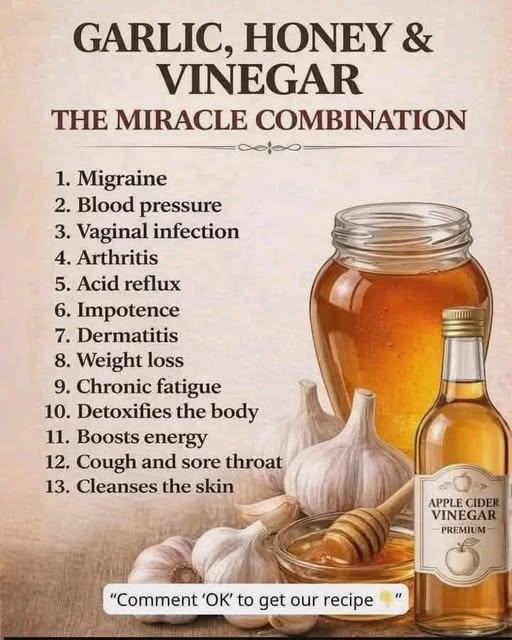
Discover the traditional uses, potential benefits, recipe, and safety considerations of combining garlic, honey, and vinegar. Learn what this popular home remedy can and cannot do.
Garlic, honey, and vinegar are three ingredients that have been used in traditional kitchens and home remedies for generations. Separately, each has interesting properties, and combining them creates a tangy, sweet, and pungent mixture that many people use as a food condiment or traditional wellness preparation.
You may have seen claims that this combination can “clean the arteries,” “boost immunity,” “burn fat,” or prevent serious diseases. Those claims are often much stronger than the available scientific evidence.
Still, there are legitimate reasons these ingredients have attracted so much attention. Garlic contains sulfur-containing compounds, honey contains naturally occurring antioxidant compounds, and vinegar—particularly vinegar containing acetic acid—has been studied for its effects on blood sugar and digestion.
The key is understanding what this combination may realistically offer rather than treating it as a cure-all.
Why Combine Garlic, Honey and Vinegar?
The combination brings together three very different ingredients.
Garlic contains sulfur compounds, including allicin, which forms when fresh garlic is chopped or crushed. Garlic has been studied for potential effects on cardiovascular risk factors, blood pressure, cholesterol, and immune function.
Honey provides natural sweetness along with small amounts of antioxidant and other bioactive compounds. It can also soothe an irritated throat and is commonly used in traditional remedies.
Vinegar contains acetic acid. Some research suggests consuming vinegar with meals may modestly influence post-meal blood glucose, although it should not be considered a treatment for diabetes.
Together, these ingredients make a flavorful mixture that can be used in salad dressings, marinades, sauces, or in small amounts as a traditional tonic.
Potential Benefits of Garlic
Garlic is probably the ingredient in this mixture that has received the most cardiovascular research.
Some studies suggest garlic preparations may have modest effects on blood pressure and cholesterol in certain people. However, the results depend on the type and amount of garlic used, and eating garlic is not equivalent to taking a standardized garlic supplement.
Garlic is also a source of plant compounds with antioxidant and anti-inflammatory properties.
Garlic and Heart Health
Garlic is sometimes promoted as a natural alternative to cholesterol or blood-pressure medication. That is misleading.
Some evidence suggests garlic may produce modest improvements in certain cardiovascular risk factors, but that does not mean it can replace prescribed treatment.
If you have high blood pressure, high cholesterol, diabetes, or established heart disease, garlic can be part of a healthy diet—but prescribed medication should not be stopped without medical advice.
Potential Benefits of Honey
Honey is more than simply a sweetener.
It contains various plant-derived compounds, although its nutritional composition varies depending on the floral source and processing.
One of its best-established traditional uses is for soothing coughs. Honey may help reduce coughing in some people, particularly when taken before bedtime.
However, honey is still high in naturally occurring sugars and calories.
That means adding large amounts of honey to a garlic-and-vinegar mixture does not automatically make the preparation healthier.
Potential Benefits of Vinegar
Vinegar’s main active component is acetic acid.
Research has investigated vinegar consumption in relation to blood glucose, insulin sensitivity, appetite, and cardiovascular risk factors.
Some studies suggest consuming vinegar alongside carbohydrate-containing meals may produce a modest reduction in the rise of blood glucose after eating.
However, the evidence is not strong enough to describe vinegar as a treatment for diabetes or a way to “flush sugar from the blood.”
Vinegar is best viewed as a flavorful food ingredient that may have some metabolic effects—not as medicine.
A Simple Garlic, Honey and Vinegar Mixture
If you want to try this combination as a food or traditional preparation, you can make a small batch.
Ingredients
- ½ cup raw or unfiltered apple cider vinegar
- ½ cup honey
- 8–10 fresh garlic cloves
- A clean glass jar with a lid
Instructions
- Peel the garlic cloves.
- Lightly crush or chop the cloves to release their natural compounds.
- Place the garlic into a clean glass jar.
- Add the vinegar.
- Add the honey.
- Stir or shake gently until combined.
- Close the jar and store it according to safe food-storage practices.
Because homemade mixtures containing fresh garlic can present food-safety concerns, particularly when stored at room temperature, it is better not to assume that a homemade garlic-and-oil or garlic-containing preparation is shelf-stable. Refrigeration and appropriate food-safety practices are important.
For a simple everyday option, you can also prepare the mixture fresh and use a small amount as a salad dressing or marinade instead of storing it for long periods.
How Much Should You Take?
There is no medically established dose of a garlic-honey-vinegar mixture for preventing disease.
Rather than treating it like a medication, consider it a food.
A small amount incorporated into meals is generally a more sensible approach than taking large spoonfuls several times a day.
The concentrated acidity of vinegar can irritate the throat or stomach in some people, while large amounts of honey can significantly increase sugar and calorie intake.
Should You Take It on an Empty Stomach?
You do not need to take garlic, honey, and vinegar on an empty stomach to obtain their potential nutritional benefits.
In fact, people with acid reflux, gastritis, sensitive stomachs, or other digestive problems may find acidic mixtures uncomfortable when consumed before eating.
Using the mixture with food may be gentler.
There is also no good evidence that taking it first thing in the morning causes a special “detox” effect.
Can It Lower Cholesterol?
Garlic has been investigated for its potential cholesterol-lowering effects, but the results are generally modest and vary between preparations.
There is no strong evidence that a homemade garlic, honey, and vinegar mixture can clear cholesterol deposits from arteries.
Healthy cholesterol levels are better supported through an overall lifestyle that includes a balanced diet, physical activity, healthy weight management, avoiding tobacco, and medication when prescribed.
Can It Lower Blood Pressure?
Some garlic preparations have shown modest blood-pressure-lowering effects in clinical research.
But the amount of garlic, preparation method, duration of use, and individual health status all matter.
Someone with hypertension should not substitute this mixture for blood-pressure medication.
If you regularly measure high blood-pressure readings, speak with a healthcare professional rather than relying on a home remedy.
Can It Help With Weight Loss?
This is another area where online claims frequently go too far.
Vinegar may have modest effects on appetite or post-meal glucose in some circumstances, but there is no evidence that garlic, honey, and vinegar “melts belly fat.”
Honey itself contains calories and sugar, so adding large quantities can actually increase calorie intake.
If weight loss is the goal, the overall eating pattern matters much more than one drink or mixture.
Possible Side Effects
Although these ingredients are common foods, concentrated amounts can cause problems for some people.
Digestive irritation
Garlic and vinegar can both irritate the stomach. Possible symptoms include:
- Heartburn
- Acid reflux
- Stomach discomfort
- Nausea
- Bloating
Mouth and throat irritation
Undiluted vinegar is highly acidic and can irritate the throat and gradually contribute to dental enamel erosion.
Avoid drinking concentrated vinegar directly.
Blood-thinning effects
Garlic may have antiplatelet effects, particularly in concentrated supplement forms.
People taking blood-thinning or antiplatelet medications should discuss regular high-dose garlic consumption with their healthcare professional.
Blood sugar considerations
Honey contains sugar. People with diabetes or those monitoring blood glucose should account for the honey rather than assuming that the mixture is sugar-free or blood-sugar friendly.
Who Should Be Particularly Careful?
Talk with a doctor or pharmacist before regularly consuming concentrated amounts of this mixture if you:
- Take blood-thinning medication
- Take medication for diabetes
- Take blood-pressure medication
- Have frequent acid reflux
- Have a sensitive stomach or digestive disease
- Have kidney disease
- Are preparing for surgery
- Have allergies to any of the ingredients
Children under one year of age should never be given honey because of the risk of infant botulism.
The Bottom Line
Garlic, honey, and vinegar make an interesting traditional combination, and all three ingredients have properties that have been studied individually.
Garlic may modestly influence certain cardiovascular risk factors, honey can soothe coughs and provides antioxidant compounds, and vinegar may have modest effects on post-meal blood glucose.
But this mixture is not a proven cure, detox treatment, artery cleanser, or replacement for medication.
The healthiest way to use it is as part of an overall balanced diet—such as in a salad dressing, marinade, or small food-based serving—rather than relying on it to treat a medical condition.
Natural does not automatically mean risk-free, and more is not necessarily better. If you take prescription medications or have a chronic condition, check with your healthcare professional before using concentrated amounts regularly.