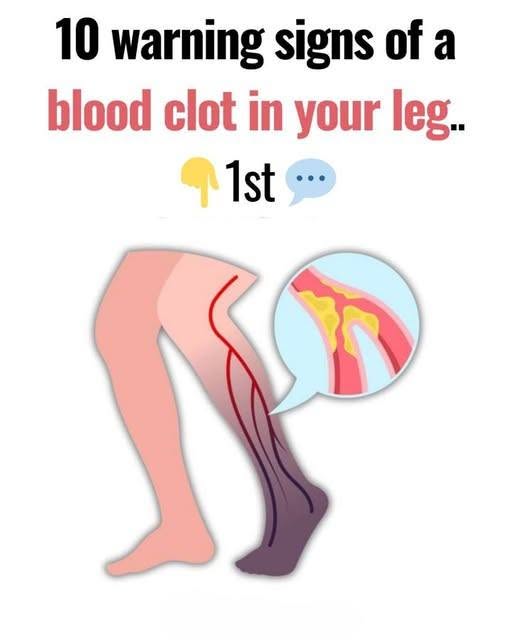
Learn 10 possible warning signs of a blood clot in the leg, including swelling, pain, warmth, skin discoloration, and other symptoms. Discover when a possible DVT requires urgent medical attention.
A blood clot in a deep vein of the leg is called deep vein thrombosis (DVT). It usually develops in a deep vein in the lower leg, thigh, or pelvis and can partially or completely interfere with normal blood flow.
DVT is important to recognize because part of a clot can sometimes break away and travel through the bloodstream to the lungs. This is called a pulmonary embolism (PE) and can be life-threatening.
One of the most difficult things about DVT is that it does not always produce obvious symptoms. The CDC notes that about half of people with DVT have no symptoms at all.
When symptoms do occur, knowing what to watch for can help you seek medical attention promptly.
1. Swelling in One Leg
One of the most recognizable signs of DVT is swelling in the affected leg.
You may notice that one calf, ankle, or entire leg looks larger than the other. The swelling can develop relatively suddenly and may become more noticeable as the day progresses.
Unexplained swelling—particularly when it occurs mainly on one side—should not simply be assumed to be ordinary fluid retention.
The CDC lists swelling of the affected limb as one of the main warning signs of DVT.
2. Leg Pain or Tenderness
A blood clot can cause pain or tenderness in the affected leg.
Some people describe it as an aching, cramping, or sore sensation. It may occur in the calf or thigh and can sometimes feel similar to a pulled muscle.
The important point is that DVT-related pain may occur without an obvious injury.
If you develop unexplained leg pain or tenderness, particularly together with swelling or skin changes, contact a healthcare professional promptly.
3. Unusual Warmth
The area around a DVT may feel warmer than the surrounding skin.
This can occur along with swelling, tenderness, redness, or discoloration.
Warmth by itself does not prove that a blood clot is present because infections, injuries, inflammation, and other conditions can produce similar symptoms.
However, warmth accompanied by other DVT symptoms deserves medical evaluation.
4. Red or Discolored Skin
The skin over the affected area may become red or develop another unusual discoloration.
The change may be easier to notice when comparing one leg with the other.
Again, skin discoloration has many possible causes. A healthcare professional needs to determine whether a clot is actually responsible.
5. A Feeling of Heaviness or Aching
Some people with a DVT experience an uncomfortable sensation of heaviness, aching, or pressure in the affected limb.
It may feel different from normal muscle soreness, especially when there is no recent exercise, injury, or other obvious explanation.
Because symptoms can vary considerably from person to person, persistent unexplained leg discomfort should be discussed with a healthcare professional.
6. Calf Discomfort That Doesn’t Have an Obvious Cause
A sudden or unexplained problem in the calf deserves attention, particularly if it occurs on one side.
It is easy to mistake DVT symptoms for a muscle strain, especially after walking, exercising, or standing for a long period.
However, DVT can occur without an injury. If calf discomfort is accompanied by swelling, warmth, redness, or tenderness, medical assessment is important.
7. Symptoms That Develop Mainly on One Side
DVT commonly affects one limb rather than producing identical symptoms in both legs.
For example, you might notice:
- One calf becoming swollen
- One leg feeling warmer
- One-sided tenderness
- One leg developing discoloration
- One-sided unexplained pain
This doesn’t mean every one-sided leg symptom is a clot. Many other conditions can affect only one leg.
But a new combination of unexplained symptoms should not be ignored.
8. Increasing Swelling or Pain
Symptoms that progressively become worse deserve particular attention.
A leg that becomes increasingly swollen, painful, warm, or discolored should be evaluated rather than repeatedly treated at home as a simple muscle problem.
DVT requires appropriate medical testing for diagnosis; symptoms alone cannot confirm the presence of a clot.
9. No Symptoms at All
This may sound surprising, but one of the important “warning signs” of DVT is sometimes no warning sign.
The CDC reports that approximately half of people with DVT have no symptoms.
That is why risk factors matter so much. Someone who recently underwent major surgery, spent a prolonged period in bed, had a serious injury, traveled for a long time without moving, has cancer, has had a previous DVT, or has certain other risk factors may need medical advice even if symptoms are minimal.
10. Sudden Breathing or Chest Symptoms
This is not actually a symptom of the clot remaining in the leg. It can be a warning sign that a clot has traveled to the lungs and caused a pulmonary embolism.
Seek emergency medical attention immediately if you develop:
- Sudden difficulty breathing
- Chest pain, especially pain that worsens when taking a deep breath or coughing
- Rapid or irregular heartbeat
- Coughing, particularly coughing up blood
- Severe lightheadedness
- Fainting
A pulmonary embolism can be life-threatening and requires immediate medical attention.
Who Is More Likely to Develop a Blood Clot?
DVT can happen to almost anyone, but certain circumstances increase the risk.
Risk factors include:
- Recent major surgery
- Hospitalization
- Prolonged bed rest
- Sitting for long periods
- Long-distance travel
- A previous DVT or pulmonary embolism
- Cancer or cancer treatment
- Certain heart or lung conditions
- Pregnancy and the period after giving birth
- Estrogen-containing medications
- Obesity
- Increasing age
- Certain inherited clotting disorders
- Major injury or fractures
Having several risk factors at the same time can increase the likelihood further.
When Should You Seek Medical Attention?
If you develop unexplained swelling, pain or tenderness, warmth, redness, or discoloration in one leg, contact a healthcare professional as soon as possible.
Do not attempt to diagnose a DVT yourself.
Doctors may use your medical history and physical examination along with tests such as blood testing and imaging to determine whether a clot is present.
If you develop sudden shortness of breath, chest pain, coughing up blood, a rapid heartbeat, severe lightheadedness, or fainting, treat it as an emergency because these can be signs of pulmonary embolism.
Can You Prevent Blood Clots?
Not every blood clot can be prevented, but reducing prolonged immobility can help lower risk in appropriate situations.
After surgery or hospitalization, follow the movement and medication instructions provided by your healthcare team.
During long periods of sitting, such as extended travel, moving your legs and getting up periodically when safe can help maintain circulation. People with additional risk factors should discuss prevention with their healthcare professional.
DVT Is Not the Same as a Heart Attack or Stroke
This distinction is important.
A DVT is a clot in a deep vein, usually in the leg. It does not cause a heart attack or stroke.
A clot that travels to the lungs can cause a pulmonary embolism.
Heart attacks and many ischemic strokes generally involve arterial blood clots, which are a different type of clotting problem.
Final Thoughts
A blood clot in the leg can sometimes be difficult to recognize because symptoms vary, and some people have no symptoms whatsoever.
The classic warning signs to remember are swelling, unexplained pain or tenderness, warmth, and redness or discoloration, particularly when they affect one leg.
Don’t assume that every swollen or painful leg has a blood clot—but don’t ignore new, unexplained symptoms either.
And if leg symptoms are followed by sudden breathing difficulty, chest pain, coughing up blood, rapid heartbeat, severe dizziness, or fainting, seek emergency medical care immediately.