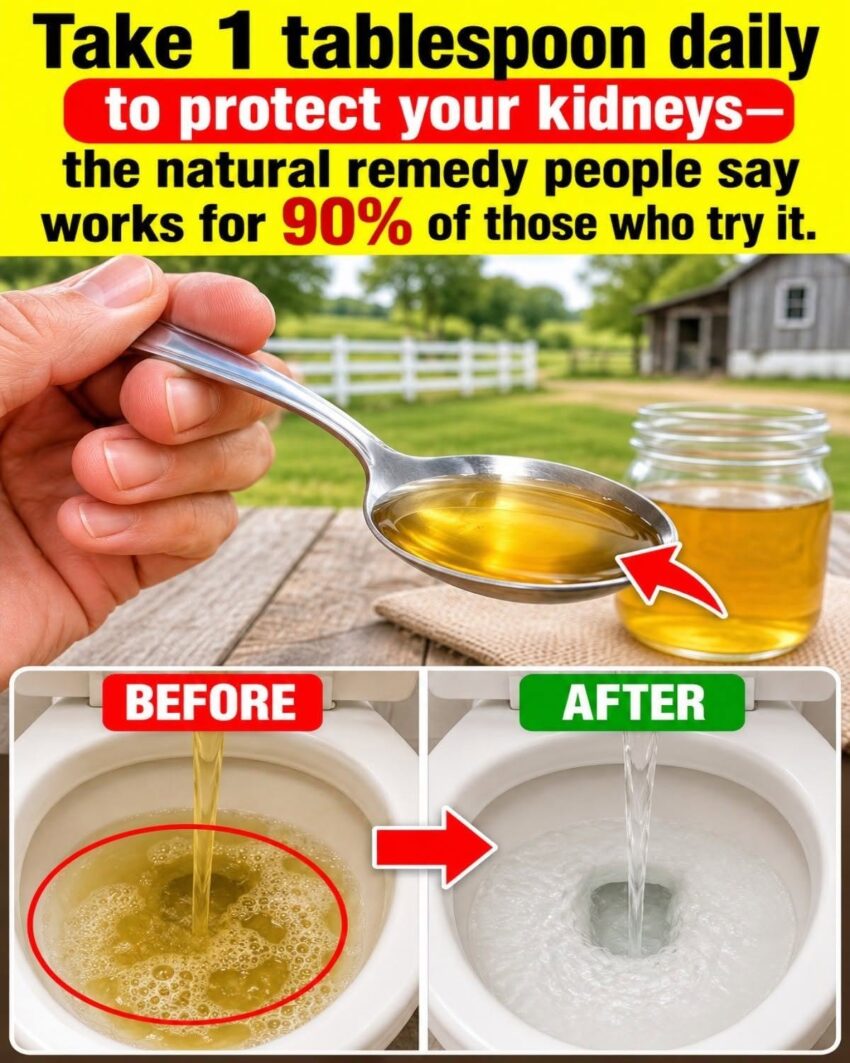
Many natural remedies claim that one tablespoon a day can protect the kidneys. Learn what actually supports kidney health, why herbal remedies can be risky, and which daily habits matter most.
Take 1 Tablespoon Daily to Protect Your Kidneys—But Does It Really Work?
You’ve probably seen the claim online: “Take one tablespoon every day to protect your kidneys.” Some versions even suggest that the remedy works for 90% of people who try it.
It sounds simple, natural, and convincing.
But before adding any homemade mixture, oil, herb, seed, juice, or supplement to your daily routine, there’s an important question to ask:
Is there actually good evidence that this particular remedy protects kidney function?
The answer depends entirely on what the tablespoon contains.
There is no single natural ingredient that has been proven to protect everyone’s kidneys, and the “90% success rate” should not be treated as a medical fact without a properly conducted clinical study. The National Kidney Foundation specifically warns that natural and herbal products are not automatically safe and may sometimes interact with medicines or worsen kidney problems.
Your Kidneys Need Protection Every Day
Your kidneys perform several essential jobs. They remove waste from the blood, help balance fluids and minerals, and play an important role in blood-pressure regulation.
Kidney health is influenced by your overall health—not by one food or drink alone.
Some of the biggest factors that can affect kidney health include:
- High blood pressure
- Diabetes or persistently high blood sugar
- Dehydration
- Excessive salt intake
- Certain medications
- Smoking
- Excess body weight
- Existing kidney disease
For people with diabetes, controlling blood sugar and blood pressure is particularly important because both conditions can damage the kidneys over time.
Why “Natural” Doesn’t Always Mean Safe
This is where viral kidney remedies can become misleading.
An ingredient may be natural and still have powerful effects on the body. Some herbal products can interact with prescription medications, contain unexpected ingredients, or potentially harm the kidneys.
This is especially important for people who already have chronic kidney disease, are receiving dialysis, have received a kidney transplant, or take several medications.
The National Kidney Foundation recommends extra caution with herbal supplements in people with kidney disease because some products can worsen kidney problems or interact with medications.
So a recipe that is harmless for one person isn’t automatically appropriate for everyone.
What Actually Helps Protect Your Kidneys?
Instead of relying on a “miracle tablespoon,” focus on habits that have much stronger medical support.
1. Keep Blood Pressure Under Control
High blood pressure can damage the blood vessels inside the kidneys.
Over time, uncontrolled blood pressure can contribute to declining kidney function. Keeping blood pressure within the range recommended by your healthcare professional is therefore one of the most important ways to protect your kidneys.
2. Manage Blood Sugar
High blood sugar can damage the tiny blood vessels responsible for filtering blood in the kidneys.
If you have diabetes or prediabetes, managing blood glucose through appropriate food choices, physical activity and prescribed treatment can help reduce the risk of kidney complications.
3. Don’t Become Dehydrated
Adequate fluid intake helps the kidneys remove waste through urine.
However, more water isn’t always better. People with certain kidney or heart conditions may need fluid restrictions, so hydration needs are individual. The National Kidney Foundation emphasizes that there is no single amount of water that is appropriate for everyone.
4. Reduce Excess Salt
Eating a lot of sodium can contribute to high blood pressure, which can put additional strain on the kidneys.
Instead of trying to compensate with a daily “kidney cleansing” drink, reducing heavily salted and highly processed foods is a more practical long-term strategy.
5. Be Careful With Painkillers
Some commonly used pain medicines, particularly NSAIDs such as ibuprofen and naproxen, can cause kidney problems when overused or used in people who are at increased risk.
If you regularly need pain medication, it’s worth discussing the safest option with a healthcare professional.
What About Herbal Kidney Remedies?
This is where you should slow down before trying a viral recipe.
A homemade drink containing an ordinary food ingredient may be very different from a concentrated herbal supplement or extract.
People with kidney disease may have to control their intake of certain minerals, including potassium and phosphorus. Some supplements can contain significant amounts of these nutrients, and damaged kidneys may have difficulty maintaining the proper balance.
That’s why a “healthy” green powder, herbal mixture or supplement isn’t automatically kidney-friendly.
The “90% Success Rate” Needs a Reality Check
A claim that a remedy “works for 90% of people” sounds impressive, but it doesn’t tell us enough.
To determine whether a treatment genuinely works, researchers would need to know:
- Who participated in the study?
- How many people were included?
- What exactly did they take?
- How long did they take it?
- What kidney measurement improved?
- Was there a comparison group?
- Were the results independently reviewed?
- Were there any side effects?
Without this information, a percentage circulating on social media is simply a claim—not proof of effectiveness.
Anecdotal reports such as “my neighbor tried it and felt better” cannot establish that a remedy protects kidney function.
What If You Already Have Kidney Disease?
This is particularly important.
If you’ve been diagnosed with chronic kidney disease, don’t start a daily herbal remedy simply because someone online recommends one.
Kidney disease can change how your body handles minerals, vitamins and medications. Some supplements that appear harmless can become problematic when kidney function is reduced.
Before taking a new supplement, herb, concentrated tea or homemade medicinal mixture, discuss it with your doctor, pharmacist or kidney dietitian.
A Better Daily “Kidney Protection” Routine
Rather than depending on one tablespoon of an unproven remedy, build your routine around several evidence-based habits:
Morning:
Start your day normally and drink fluids according to your individual needs.
During meals:
Choose mostly minimally processed foods and avoid excessive salt.
Throughout the day:
Stay appropriately hydrated unless your healthcare professional has told you to restrict fluids.
For blood pressure:
Monitor it if you’ve been advised to do so.
For blood sugar:
If you have diabetes or are at risk, follow your healthcare professional’s monitoring and treatment plan.
For medications:
Avoid unnecessary use of kidney-harming medicines and check before adding supplements.
For long-term protection:
Ask your healthcare provider whether kidney-function testing is appropriate for you, particularly if you have diabetes, high blood pressure or other risk factors.
The National Kidney Foundation emphasizes controlling blood pressure and blood sugar, maintaining appropriate hydration and following a kidney-friendly eating pattern as important parts of kidney protection.
Final Thoughts
The idea of taking one tablespoon a day to protect your kidneys is certainly appealing—but there is no universal tablespoon-sized remedy proven to protect everyone’s kidneys, and the widely repeated 90% success claim should not be assumed to be true without reliable clinical evidence.
Your kidneys don’t need a miracle cure.
They need consistent care: healthy blood pressure, controlled blood sugar, appropriate hydration, sensible nutrition, safe medication use and medical attention when kidney problems are suspected.
And if you’re considering a particular herbal recipe or supplement, remember one important rule:
Natural does not automatically mean kidney-safe.
Especially if you already have kidney disease or take prescription medicines, check with a healthcare professional before making a daily remedy part of your routine.