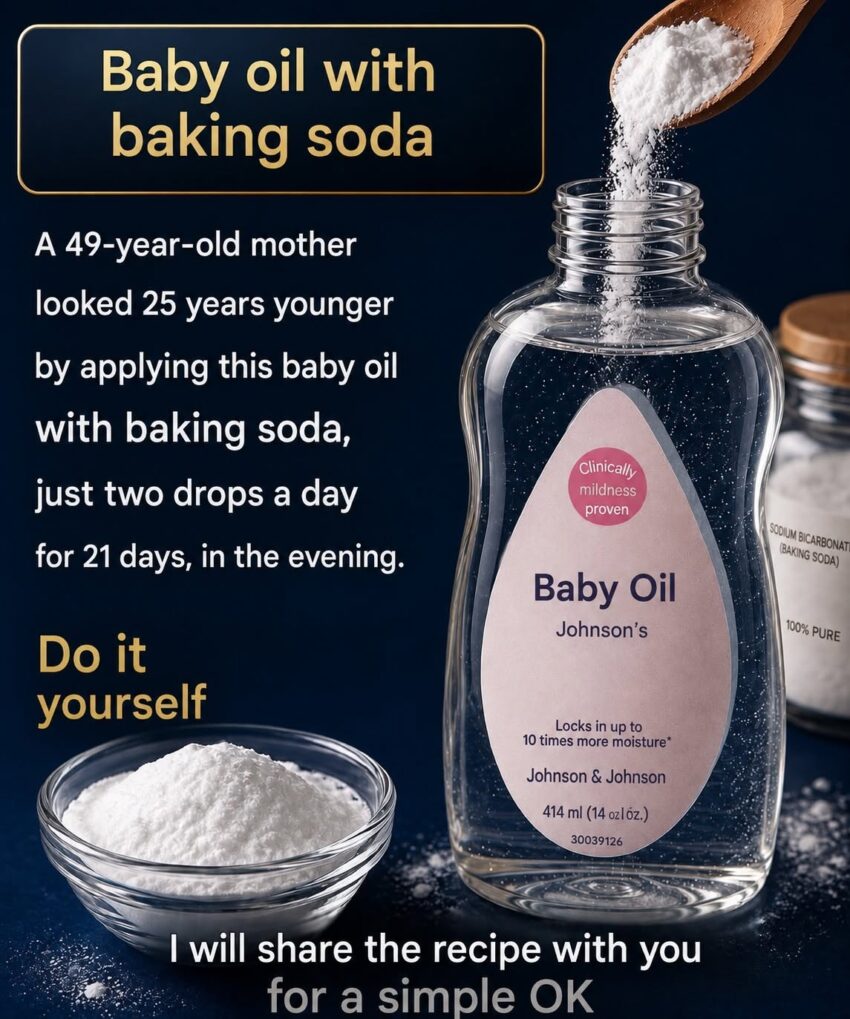
A mixture of baby oil and bicarbonate of soda (baking soda) is sometimes promoted online as a simple homemade treatment for smoother, softer-looking skin. Although both ingredients are inexpensive and easy to find, this combination should be used with caution, especially on sensitive areas of the body.
What Is the Baby Oil and Bicarbonate Mixture?
Baby oil is typically a mineral-oil-based product designed to help reduce moisture loss from the skin. Bicarbonate of soda, also known as baking soda or sodium bicarbonate, is an alkaline powder that can act as a physical exfoliant.
When mixed together, the oil can make the baking soda easier to spread while reducing some of the dry, powdery feel. However, mixing the two does not create a medically proven treatment for skin discoloration, scars, wrinkles, infections, or other skin conditions.
What Are People Using It For?
Homemade recipes online commonly claim that this mixture can:
- Exfoliate rough skin
- Make skin feel temporarily smoother
- Soften dry areas
- Improve the appearance of dark patches
- Remove dead skin cells
The first two effects may be related to simple exfoliation and moisturization, but stronger claims about permanently lightening or treating skin problems aren’t well supported.
How to Use It More Safely
If you still want to try the mixture as a cosmetic exfoliant, keep the application gentle.
- Mix a small amount of baking soda with enough baby oil to form a loose paste.
- Apply a small amount to a limited area of intact skin.
- Rub very gently rather than aggressively scrubbing.
- Rinse thoroughly with lukewarm water.
- Apply a gentle moisturizer afterward.
- Stop if you experience burning, redness, itching, or irritation.
A patch test on a small area is a sensible precaution before applying any homemade mixture more widely.
Avoid Using It on Sensitive Areas
Baking soda can be irritating because it is alkaline and can interfere with the skin’s normal protective barrier.
Avoid applying this mixture to:
- Broken or irritated skin
- Sunburn
- Around the eyes
- Lips
- Genital or intimate areas
- Freshly shaved or waxed skin
- Areas affected by eczema or dermatitis
Do not use it as a treatment for an active rash or skin infection.
Can It Remove Dark Spots?
This is where caution is especially important.
Baking soda may make the skin feel temporarily smoother, but scrubbing dark spots with an irritating substance can actually make discoloration worse. Skin inflammation can trigger or intensify post-inflammatory hyperpigmentation, particularly in people whose skin tends to develop dark marks after irritation.
If you’re trying to address persistent dark spots, a properly formulated skincare product and professional advice are generally safer approaches.
Does Baby Oil Moisturize the Skin?
Baby oil can help reduce water loss from the skin because mineral oil forms an occlusive layer over the skin. It can therefore make dry skin feel softer.
However, baby oil isn’t a substitute for treating an underlying skin condition. If your skin is persistently dry, itchy, cracked, or inflamed, it’s better to identify the cause rather than relying on a homemade mixture.
A Gentler Alternative
If your goal is simply smoother, softer skin, consider using:
- A fragrance-free moisturizer
- A gentle cleanser
- A properly formulated exfoliating product when appropriate
- Sunscreen during the daytime, particularly for areas prone to discoloration
These options are generally more predictable than homemade baking-soda scrubs.
Final Thoughts
Baby oil and bicarbonate of soda may make skin feel temporarily smooth, but there is no strong evidence that the combination provides the dramatic skin-lightening or therapeutic benefits often claimed online. Baking soda can also irritate the skin when used too frequently or scrubbed aggressively.
For healthy skin, gentle cleansing, regular moisturizing, and sun protection are much more reliable foundations than harsh homemade exfoliation.
Important: If you have persistent pigmentation, a rash, itching, pain, or another skin concern, consider speaking with a dermatologist rather than attempting to treat it with baking soda.