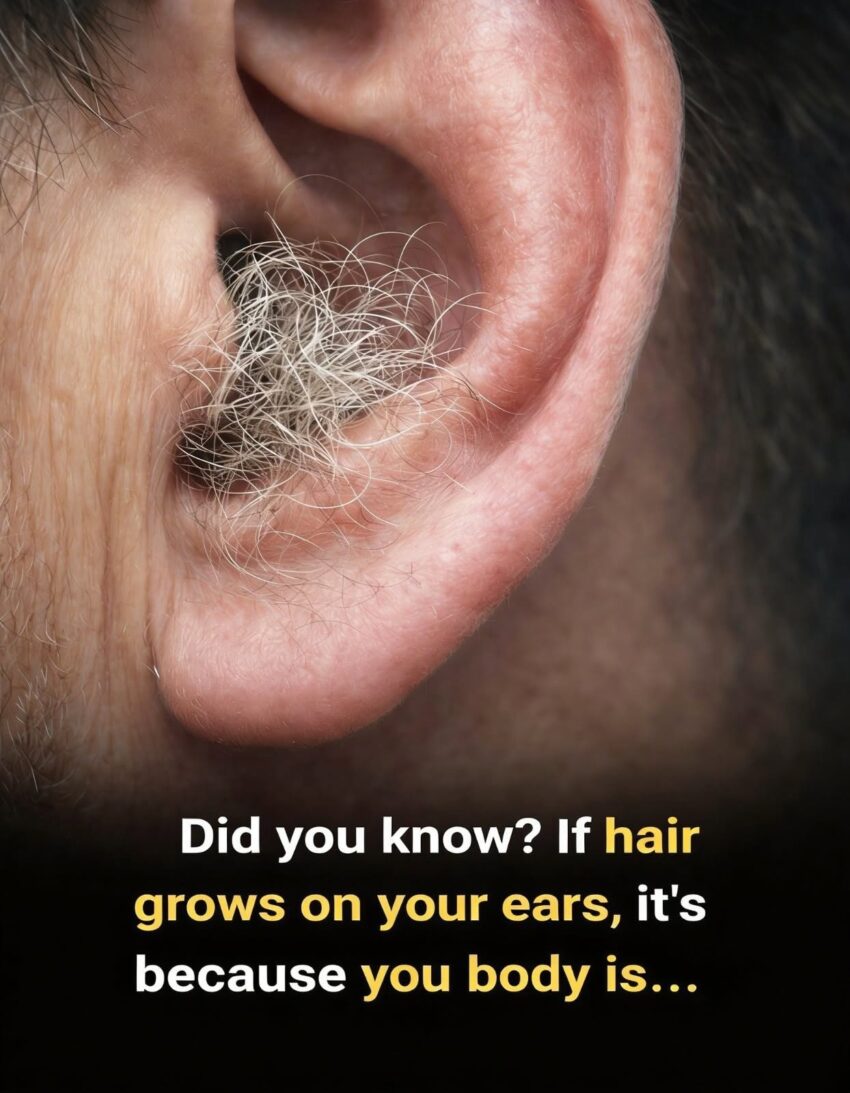
Ear hair is a normal part of getting older, but many people wonder whether unusually thick or excessive hair around the ears could be telling them something about their health.
For some people, a few visible hairs around the outer ear are barely noticeable. For others, ear hair can become thicker, darker, and more prominent with age. Although it may seem like a purely cosmetic issue, changes in body hair can sometimes be influenced by hormones, genetics, aging, and certain medications.
But does ear hair actually indicate a health problem?
The short answer is that ear hair by itself is usually not a reliable sign of disease. However, sudden or unusual changes in hair growth, particularly when they occur alongside other symptoms, may deserve medical attention.
Let’s look at what ear hair means, why it becomes more noticeable, what doctors consider normal, and when excessive hair growth could be associated with an underlying condition.
What Is Ear Hair?
Ear hair refers to hair that grows on or around the ear. It may appear:
- Inside the ear canal
- Around the outer ear
- On the earlobe
- Along the tragus or other parts of the external ear
- Around the skin immediately surrounding the ear
A small amount of hair around the ear is completely normal. Hair follicles are naturally present on much of the skin, including the external ear.
The amount, thickness, color, and growth pattern of ear hair vary considerably between individuals.
Genetics, age, sex hormones, ethnicity, and individual differences in hair follicles can all influence how much hair a person develops.
Why Does Ear Hair Become More Noticeable With Age?
One of the most common reasons ear hair becomes more noticeable is aging.
As people get older, changes in hormone levels can affect hair follicles. Some follicles may produce thicker or darker hairs in areas where hair was previously fine and barely visible.
This can happen not only around the ears but also on other parts of the face and body.
In men, changes in androgen activity over time can contribute to increased growth of coarse hair in areas such as the ears, nose, eyebrows, and other parts of the face.
Women can also experience changes in facial and body hair as they age, particularly around and after menopause when hormone levels change.
Therefore, noticing a few more ear hairs as you get older is generally not unusual.
Is Ear Hair a Sign of High Testosterone?
This is a common question, particularly among men.
Androgens, including testosterone, influence the growth of certain types of body hair. However, the amount of ear hair a person has cannot be used as a simple measurement of testosterone levels.
Two people with similar hormone levels can have very different amounts of ear hair because hair growth is also influenced by genetics and the sensitivity of individual hair follicles to hormones.
Therefore, having prominent ear hair does not automatically mean that someone has unusually high testosterone.
If you are experiencing other symptoms that suggest a hormonal imbalance, a healthcare professional can determine whether hormone testing is appropriate.
Does Ear Hair Mean You Have a Heart Problem?
You may have seen claims that hair on the ears is associated with heart disease.
Some observational studies have reported associations between certain patterns of external ear hair and cardiovascular disease. However, an association does not prove tha