Nine common foot symptoms can sometimes signal circulation, nerve, skin, joint, or other health problems. Learn when foot changes deserve medical attention.
Your feet carry you through almost everything you do, yet they are often one of the most overlooked parts of the body.
Changes in the feet can sometimes be caused by something simple, such as uncomfortable shoes or dry skin. But persistent or unusual symptoms may occasionally point to an underlying problem that deserves attention.
Here are nine foot symptoms you should not automatically ignore.
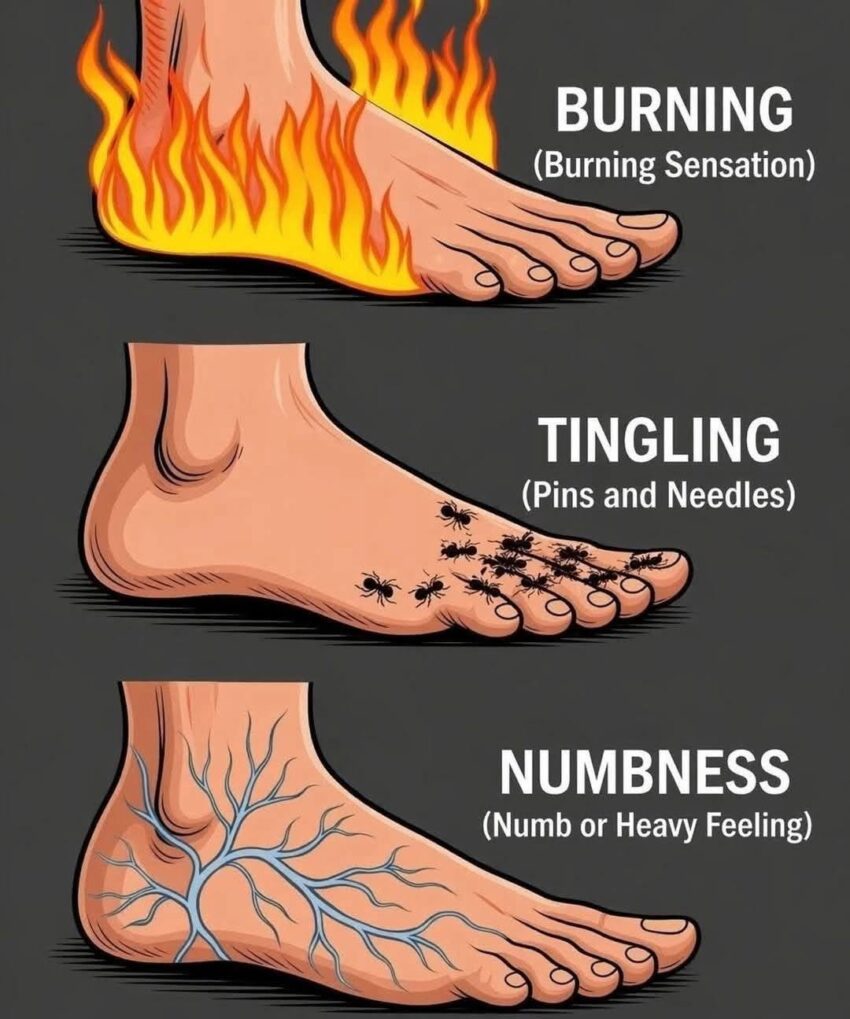
1. Persistent Numbness or Tingling
A “pins and needles” feeling after sitting in an awkward position is usually temporary. However, numbness or tingling that keeps returning or doesn’t go away can sometimes be associated with nerve irritation or damage.
Diabetes, certain vitamin deficiencies, medications, nerve compression, and other conditions can contribute to these sensations.
If numbness is persistent, especially if it is affecting both feet, talk with a healthcare professional.
2. Burning Feet
A burning sensation in the feet can have several possible causes.
Nerve problems are one possibility, but burning can also occur because of skin irritation, certain infections, nutritional problems, or other medical conditions.
Don’t assume that burning feet automatically means diabetes. If the sensation is persistent or getting worse, it is worth having the cause investigated.
3. Swelling in the Feet or Ankles
Feet and ankles can become swollen after standing for long periods, during hot weather, or after certain activities.
Persistent or unexplained swelling, however, deserves attention.
Swelling can have many causes, including medication effects, vein problems, injuries, and conditions affecting the heart, kidneys, or liver.
Sudden swelling—particularly if it affects one leg and is accompanied by pain, warmth, or redness—should be assessed promptly.
4. Cold Feet That Stay Cold
Feet naturally become cold in cool environments.
But if your feet remain unusually cold even when the surrounding temperature is comfortable, circulation or nerve-related problems may sometimes be involved.
Pay attention to additional changes such as unusual skin color, pain when walking, numbness, or sores that heal slowly.
5. Changes in Skin Color
Look at your feet occasionally for unusual changes in color.
Very pale, bluish, reddish, or unusually dark skin can have different causes, ranging from temperature changes and irritation to circulation problems or inflammation.
A sudden or significant color change, especially when accompanied by pain, numbness, swelling, or coldness, should not be ignored.
6. Wounds That Heal Slowly
A small cut or blister should normally begin healing with appropriate care.
If a wound on your foot doesn’t seem to heal, repeatedly opens, or becomes increasingly red, swollen, painful, or produces drainage, it needs medical attention.
People with diabetes should be particularly careful with foot injuries because diabetes can affect sensation and wound healing.
7. Severe Heel or Foot Pain
Foot pain after unusual exercise or prolonged standing can have a straightforward explanation.
But severe, persistent, or unexplained pain may require evaluation.
Heel pain, for example, can occur with plantar fasciitis, while pain elsewhere in the foot may result from an injury, arthritis, nerve problems, or other conditions.
Pain that prevents normal walking or continues despite rest shouldn’t simply be ignored.
8. Changes in Your Toenails
Toenails can provide clues about local foot health.
Thickened, brittle, discolored, crumbly, or separated nails can occur with fungal infections, injuries, repeated pressure from footwear, or other conditions.
A dark streak or new pigmentation under a toenail should also be evaluated rather than automatically assuming it is a bruise.
9. Changes in the Shape of Your Feet or Toes
A gradually changing foot shape can sometimes result from arthritis, bunions, injuries, or other structural problems.
If a toe becomes increasingly crooked, a bump develops near the big toe, or your usual shoes suddenly become uncomfortable, it may be worth having your feet examined.
When Foot Symptoms Need Urgent Attention
Some symptoms require faster medical evaluation.
Seek urgent care for symptoms such as:
- Sudden severe foot pain
- A foot that becomes suddenly cold, pale, or blue
- Rapidly increasing swelling
- A serious or infected-looking wound
- Significant redness, warmth, swelling, or drainage around a wound
- New weakness or loss of sensation
- Severe symptoms following an injury
Don’t Diagnose Yourself From One Symptom
A single foot symptom rarely tells you exactly what is happening inside your body.
For example, cold feet don’t automatically mean poor circulation, and burning feet don’t automatically mean diabetes. Many symptoms have several possible explanations.
The important thing is to notice persistent, worsening, unusual, or multiple symptoms and discuss them with an appropriate healthcare professional.
Take a Few Minutes to Check Your Feet
You don’t need to obsess over every small change.
Simply checking your feet regularly can help you notice cuts, blisters, swelling, color changes, nail problems, or areas of irritation before they become more serious.
Comfortable footwear, good foot hygiene, keeping the skin moisturized, and addressing injuries early can also help maintain healthy feet.
Final Thought
Your feet can sometimes provide useful clues about your overall health, but they are not a diagnostic tool by themselves.
If a symptom persists, keeps returning, becomes painful, or is accompanied by other unusual changes, getting professional advice is much safer than relying on an internet remedy or trying to diagnose the problem yourself.