For many people, the word “colonoscopy” immediately brings to mind an uncomfortable preparation, sedation, and an invasive examination.
But medical technology is changing. Researchers and doctors have been developing less-invasive ways to examine the colon, giving patients alternatives in certain situations.
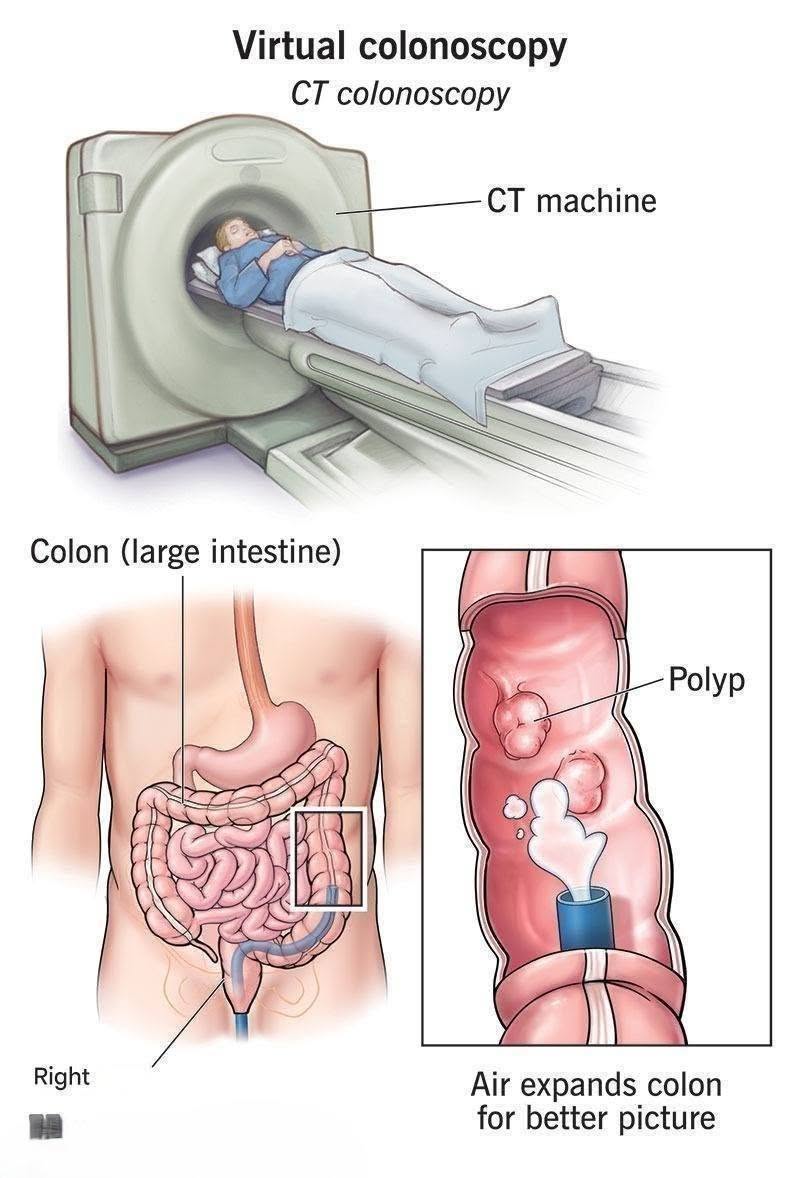
One of the best-known options is CT colonography, sometimes called a virtual colonoscopy. Instead of inserting a long flexible camera through the entire colon, CT imaging is used to create detailed pictures of the large intestine.
What Is a Virtual Colonoscopy?
CT colonography uses computed tomography (CT) scanning to produce images of the colon.
The patient still needs bowel preparation beforehand because stool can make abnormalities difficult to see. The colon also needs to be gently inflated with air or carbon dioxide so that the walls can be examined clearly.
The major difference is that a traditional colonoscope is not passed through the entire colon.
Is It Completely Non-Invasive?
Not exactly.
This is an important distinction that viral headlines often leave out.
Although CT colonography is less invasive than conventional colonoscopy, it still involves bowel preparation and insertion of a small tube into the rectum to inflate the colon.
So it may be less invasive, but it isn’t accurate to describe every alternative as completely non-invasive.
What Happens If a Polyp Is Found?
This is one of the biggest differences between the two approaches.
During a conventional colonoscopy, a doctor can often remove a polyp or take a biopsy during the same examination.
CT colonography cannot remove a polyp. If a potentially important abnormality is detected, the patient may still need a conventional colonoscopy for further examination or removal.
Why Are Researchers Looking for Alternatives?
Colonoscopy can be an extremely valuable procedure, particularly when doctors need to investigate symptoms or remove suspicious growths.
However, some people are reluctant to undergo it because of the preparation, sedation, discomfort, or invasive nature of the procedure.
Less-invasive screening technologies may therefore provide additional options for appropriate patients.
Does This Mean Colonoscopy Is No Longer Necessary?
No.
A new screening method does not mean traditional colonoscopy has suddenly become obsolete.
The appropriate test depends on the person’s age, symptoms, medical history, previous screening results, and risk of colorectal cancer.
If a doctor recommends a colonoscopy, patients shouldn’t cancel it simply because they have seen a headline about a “new method.”
The Future of Colon Screening
The encouraging news is that colorectal screening continues to evolve.
From stool-based screening tests to CT colonography and newer technologies under investigation, researchers are looking for ways to make screening easier and more acceptable while still detecting disease early.
The goal isn’t necessarily to eliminate colonoscopy overnight. Instead, it’s to give doctors and patients more safe and effective options when appropriate.
Meta Description
New colon screening technologies may offer less-invasive alternatives to traditional colonoscopy. Learn how virtual colonoscopy works, its limitations, and why conventional colonoscopy is still important in many cases.