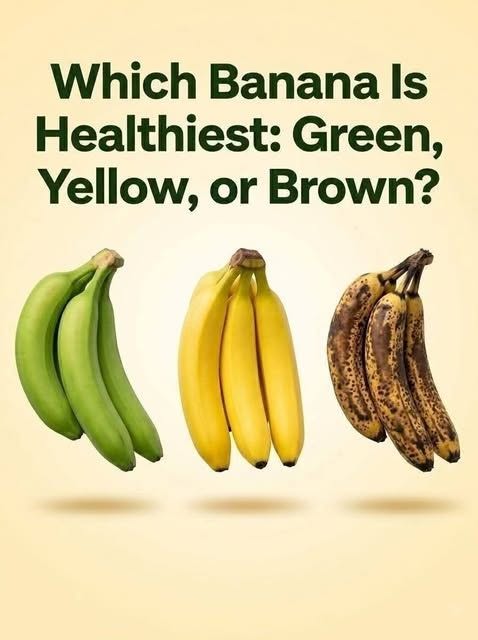
Bananas are all nutritious, but the healthiest choice depends on what you want from them. The biggest difference is usually ripeness, rather than the banana’s color or variety.
🍌 1. Slightly green banana — best for blood-sugar control
A banana that is green or just turning yellow contains more resistant starch. This type of carbohydrate is digested more slowly and can act somewhat like fiber.
Potential benefits:
- Slower digestion
- More filling
- May produce a smaller blood-sugar rise than a very ripe banana
- Resistant starch can support beneficial gut bacteria
Best choice: If you’re trying to manage blood sugar or stay fuller for longer.
🍌 2. Yellow banana — best all-around choice
A yellow banana with little or no brown spotting provides a good balance of sweetness, fiber, potassium and other nutrients.
It is an excellent everyday fruit and doesn’t need to be avoided simply because it contains natural sugar.
Best choice: For general health and everyday eating.
🍌 3. Very ripe, spotted banana — easiest to digest
As bananas ripen, some of their starch converts into simpler sugars, making them sweeter and softer.
They’re particularly useful for:
- Smoothies
- Oatmeal
- Baking
- Quick energy before activity
However, if you’re specifically trying to minimize rapid blood-sugar increases, a very ripe banana isn’t usually the best option.
🏆 So which one wins?
For most people: a yellow banana that’s ripe but not heavily spotted is the best overall choice.
For blood-sugar management: slightly green → yellow banana.
For quick energy: ripe banana.
For maximum sweetness/baking: heavily spotted banana.
For potassium: all bananas provide potassium; the difference between ripeness levels isn’t large enough to make one dramatically superior.
And one important point: there is no special banana that “detoxes” the body, melts belly fat, or dramatically lowers blood pressure. Bananas are simply a nutritious fruit that can be part of a balanced diet.