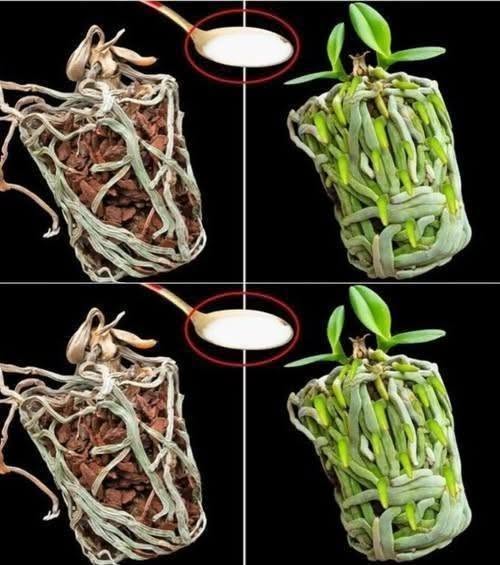
Seeing an orchid with dry roots, wrinkled leaves, and little sign of new growth can be discouraging. However, a struggling orchid is not always a lost orchid. With the right care, many orchids can gradually produce fresh, healthy roots and begin growing again.
You may have come across gardening tips claiming that a single spoonful of a household ingredient can bring a dried orchid back to life. While some homemade orchid-care remedies may be useful in specific situations, there is no universal one-spoon treatment that guarantees new roots. The condition of the plant, the remaining healthy roots, moisture level, light, and growing medium all play important roles.
Start by Checking the Roots
Before adding anything to the pot, carefully inspect the orchid’s root system. Healthy orchid roots are generally firm and may appear green when wet or silvery when dry. Dead roots are often brown, black, mushy, hollow, or papery.
Use clean, sterilized scissors to remove roots that are clearly dead or rotten. Avoid cutting healthy roots simply because they look pale or silver.
Give the Orchid the Right Moisture
One of the biggest mistakes in orchid care is assuming that a weak plant needs constant watering. Orchids need moisture, but their roots also need access to air.
After watering, allow excess water to drain completely. Never leave the orchid sitting in stagnant water for long periods. A pot with good drainage and a loose, airy orchid mix can make a major difference.
Light Matters for New Root Growth
Place the orchid somewhere with bright, indirect light. Too little light can slow growth, while strong direct sunlight can scorch the leaves.
A healthy balance of light, moisture, warmth, and airflow gives the plant a better environment for producing new roots.
Can a Homemade Spoonful Remedy Help?
Some gardeners use diluted natural ingredients or commercial orchid supplements as part of their plant-care routine. These products may provide nutrients or other compounds, depending on what they contain. However, more is not necessarily better.
Before using any homemade mixture, identify the ingredient, understand its concentration, and check whether it is appropriate for orchids. Applying an overly concentrated solution can damage already-stressed roots rather than helping them.
For a severely dehydrated orchid, the most important first step is usually improving the plant’s growing conditions rather than relying on a single remedy.
Be Patient With a Recovering Orchid
New root growth does not happen overnight. Depending on the orchid’s species, season, temperature, and overall condition, recovery can take weeks or even months.
Look for small signs of progress: a firming leaf, a tiny green root tip, or new growth emerging from the plant. These are much more reliable signs of recovery than expecting an instant transformation after one application.
Final Thoughts
A dried-out orchid may still have plenty of life left in it. Instead of searching for a guaranteed miracle treatment, focus on the basics: remove dead roots, provide suitable light, maintain careful watering, ensure good drainage, and give the plant time to recover.
A simple spoonful of the right product may be useful in some circumstances, but healthy orchid growth ultimately comes from consistent care and the right growing environment.