Your feet can sometimes provide clues about your overall health. Changes such as persistent swelling, unusual color, numbness, or changes in the skin and nails may have many possible causes—from everyday problems to conditions that deserve medical attention.
Here are nine foot symptoms you should not simply ignore.
1. Persistent Swelling
Swollen feet can occur after standing or sitting for a long time, but swelling that keeps returning or does not improve may have several possible causes. It is worth discussing persistent swelling with a healthcare professional.
2. Numbness or Tingling
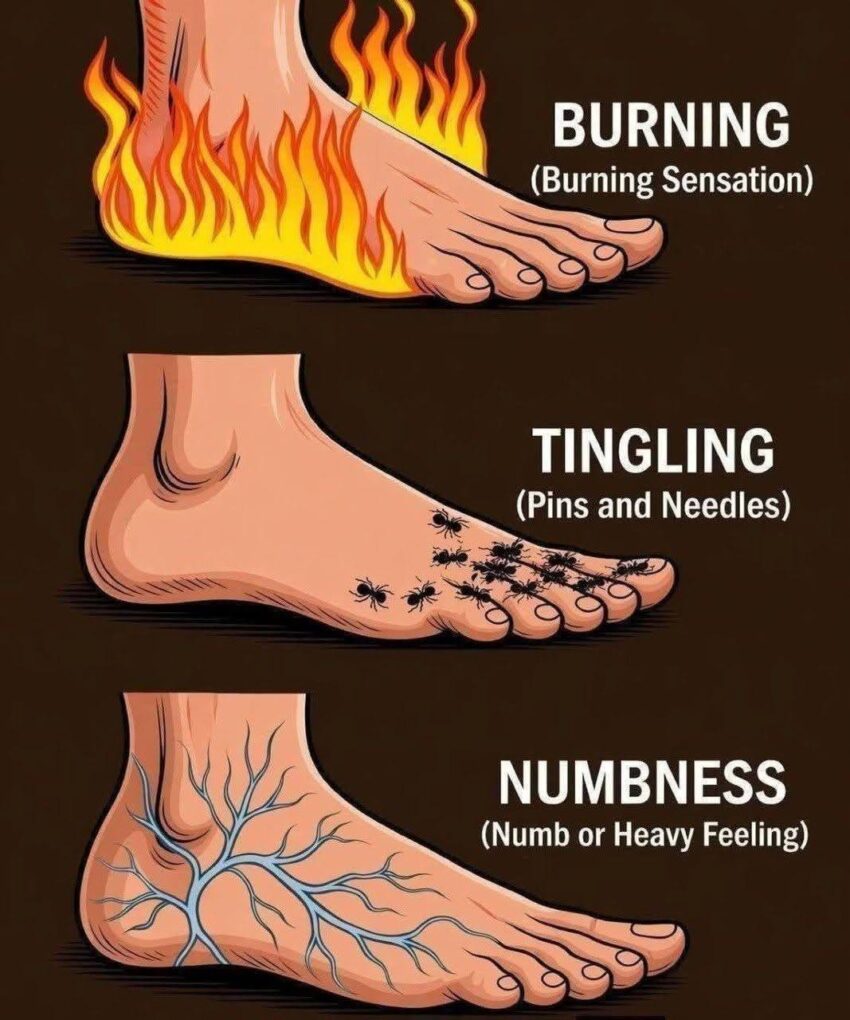
A “pins and needles” sensation can happen temporarily after sitting in an awkward position. Frequent or persistent numbness, however, may be related to nerve problems or other health conditions.
3. Cold Feet
Occasionally having cold feet is usually not concerning. But feet that remain unusually cold, particularly when accompanied by changes in skin color or pain, deserve attention.
4. Changes in Skin Color
Blue, purple, unusually pale, or very red feet can sometimes indicate circulation or other problems. Sudden or severe changes should be assessed promptly.
5. Slow-Healing Cuts or Sores
A small cut that takes an unusually long time to heal should not be ignored. This can be particularly important for people who have diabetes or circulation problems.
6. Burning or Sharp Pain
Persistent burning, shooting, or unusual pain in the feet may have several causes, including nerve irritation. If the sensation continues or interferes with daily activities, consider seeking medical advice.
7. Cracked or Very Dry Skin
Dry skin is common, especially during colder weather, but deep cracks can become painful and provide an opening for infection. Regular moisturizing and appropriate foot care can help.
8. Changes in the Toenails
Thickened, brittle, discolored, separated, or unusually shaped toenails can have different causes, including fungal infections or repeated trauma. A healthcare professional can help determine the cause.
9. Sudden Changes in Foot Size or Shape
A noticeable change in the shape or size of one or both feet should be evaluated, especially if it occurs with swelling, pain, redness, or difficulty walking.
When Should You Seek Medical Advice?
Not every foot symptom means that something serious is wrong. Many common foot changes have simple explanations. What matters is how persistent, severe, or unusual the symptom is and whether it occurs alongside other changes.
Seek prompt medical attention for severe or sudden foot pain, significant swelling, a rapidly changing color, an open wound that appears infected, or sudden loss of sensation.
Takeaway
Your feet deserve more attention than they often receive. Paying attention to persistent changes can help you identify problems early and decide when professional medical advice is appropriate.
Remember: a foot symptom alone usually cannot diagnose a specific disease. If you are concerned about a persistent or worsening change, speak with a qualified healthcare professional.