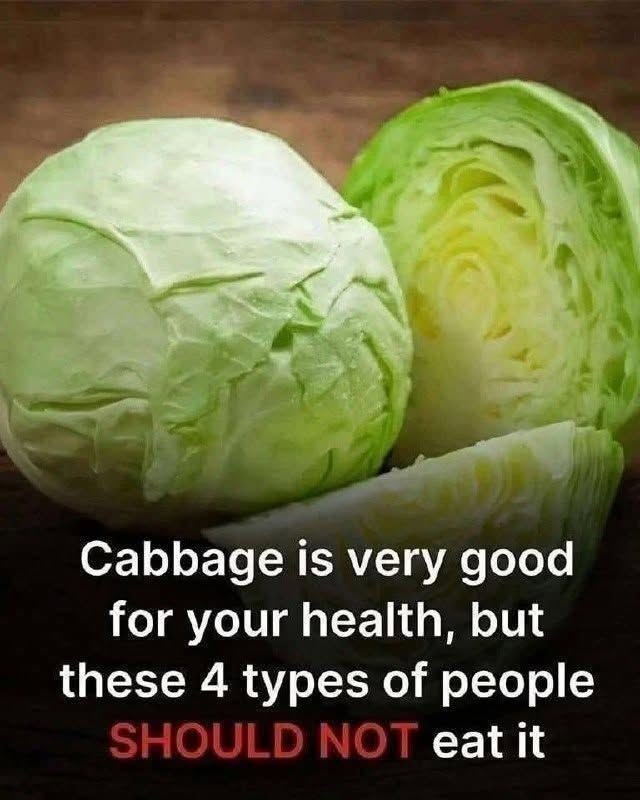
Cabbage is nutritious for most people, but certain individuals may need to limit or carefully manage their intake. Learn who should use caution and why.
4 Types of People Who May Need to Be Careful With Cabbage
Cabbage is a nutritious vegetable that provides fiber, vitamin C, vitamin K, and other beneficial nutrients. For most people, it can be a healthy part of a balanced diet.
However, cabbage isn’t equally comfortable or appropriate for everyone. Certain people may need to watch how much they eat because of digestive symptoms, medication considerations, or specific medical conditions.
Importantly, most people do not need to completely eliminate cabbage from their diet. The right approach depends on the individual and the reason for limiting it.
1. People Who Experience Significant Gas and Bloating
Cabbage belongs to the cruciferous vegetable family. It contains fiber and certain carbohydrates that can be fermented by gut bacteria.
For some people, eating a large serving can lead to:
- Gas
- Bloating
- Abdominal discomfort
- Feeling unusually full
- Changes in bowel movements
If you regularly notice these symptoms after eating cabbage, try reducing the portion rather than automatically eliminating vegetables altogether.
Cooking cabbage thoroughly may make it easier for some people to tolerate than eating large amounts of raw cabbage.
2. People With Sensitive Digestive Systems
People with certain digestive conditions may find that cabbage triggers symptoms, particularly during periods when their digestive system is already irritated.
If cabbage consistently causes abdominal pain, excessive gas, diarrhea, or other symptoms, keeping a food diary can help identify whether the vegetable is actually responsible.
A healthcare professional or registered dietitian can also help determine whether you need to limit particular foods.
3. People Taking Warfarin
Cabbage contains vitamin K, a nutrient involved in normal blood clotting.
If you take the blood thinner warfarin, the important issue isn’t necessarily that you must never eat cabbage. Instead, your vitamin K intake should generally remain consistent.
Suddenly making a large increase or decrease in vitamin K intake can affect warfarin’s effectiveness. The NIH recommends discussing significant dietary changes with your healthcare professional and keeping vitamin K intake consistent.
So, if you take warfarin, don’t suddenly start eating very large amounts of cabbage every day—or completely stop eating vitamin-K-containing foods—without discussing the change with your healthcare team.
4. People With Certain Thyroid Concerns Who Eat Very Large Amounts
You may have heard that people with hypothyroidism should avoid cabbage because it belongs to the cruciferous vegetable family.
That claim is often exaggerated.
Cruciferous vegetables contain compounds sometimes described as goitrogens, which can interfere with iodine utilization. However, for people who receive adequate iodine, eating reasonable amounts of cabbage and other cruciferous vegetables is generally not considered a problem.
Mayo Clinic also notes that there is no evidence that people with hypothyroidism need to avoid specific foods to improve thyroid function.
The situation can be different if someone has an iodine deficiency and consumes unusually large amounts of cruciferous vegetables. In that situation, it’s worth discussing the diet with a healthcare professional rather than eliminating cabbage on your own.
Should You Stop Eating Cabbage Completely?
For most people, no.
Cabbage can be a nutritious addition to meals, and avoiding it unnecessarily may mean missing out on fiber and other nutrients.
Instead, pay attention to your individual response.
If cabbage causes digestive discomfort, try a smaller serving or a well-cooked preparation. If you’re taking warfarin, focus on consistency in your vitamin K intake. And if you have thyroid concerns, talk with your healthcare professional before making major dietary changes.
Raw vs. Cooked Cabbage
Raw cabbage can be more difficult for some people to tolerate because it is crunchy and contains substantial fiber.
Cooking softens the vegetable and may make it easier to digest for people who experience bloating or discomfort.
You don’t need to cook cabbage until it becomes completely soft, though. Light steaming, sautéing, or cooking it in a meal can be enough to change its texture.
When Should You Talk to a Doctor?
Don’t assume cabbage is the cause of persistent digestive symptoms.
If you repeatedly experience severe abdominal pain, unexplained weight loss, persistent diarrhea or constipation, blood in your stool, vomiting, or other concerning symptoms, seek medical advice.
Likewise, if you’re taking warfarin or another medication affected by dietary changes, speak with your healthcare professional before making major changes to your diet.
Final Thoughts
Cabbage is healthy for most people, but individual tolerance matters.
The four groups who may need particular caution are people who experience significant gas or bloating, people with sensitive digestive systems, people taking warfarin, and people consuming unusually large amounts of cabbage while dealing with iodine or thyroid-related concerns.
The key is not to fear cabbage or automatically eliminate it. Instead, consider portion size, preparation method, medications, and your individual health needs.
For most people, enjoying cabbage as part of a varied and balanced diet is perfectly reasonable.