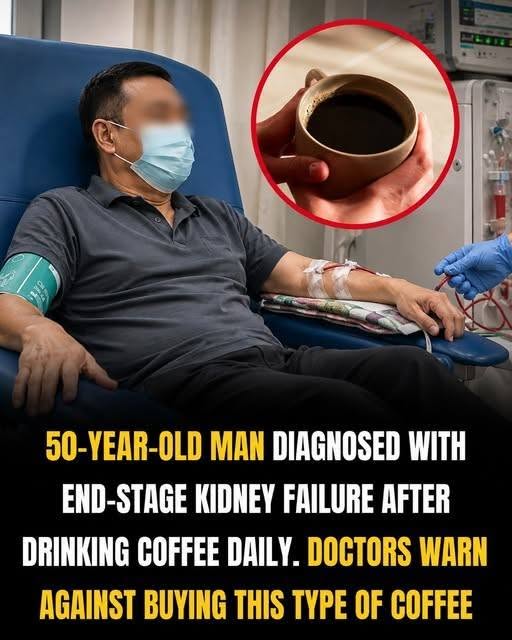
A story about a 50-year-old man being diagnosed with end-stage kidney failure after drinking coffee every day may sound alarming, especially for people who begin their mornings with a cup of coffee.
But does drinking coffee every day actually cause kidney failure?
The answer is not that simple.
Current research does not establish daily coffee consumption as a direct cause of chronic kidney disease or end-stage kidney failure. In fact, several observational studies have found that coffee drinkers had a lower risk of developing chronic kidney disease. A systematic review and meta-analysis involving more than 500,000 people also found an association between coffee consumption and lower risks of CKD and end-stage kidney disease.
So, if someone who drinks coffee every day develops kidney failure, it is important not to assume that coffee was the cause.
What Could Be Behind Kidney Failure?
Kidney disease usually develops because of underlying medical conditions or other risk factors rather than one particular food or beverage.
Common contributors can include:
- High blood pressure
- Diabetes
- Certain kidney diseases
- Cardiovascular disease
- Repeated kidney injury
- Some inherited conditions
- Certain medications or toxins
- Long-standing obesity and metabolic problems
A person can also have kidney disease for years without obvious symptoms.
That’s why regular medical checkups can be important, particularly for people with diabetes, high blood pressure, or a family history of kidney disease.
What Does Research Say About Coffee?
The relationship between coffee and kidney health is more complicated than many headlines suggest.
A 2020 systematic review found that coffee consumption was associated with a lower risk of developing CKD. The same analysis reported a lower incidence of end-stage kidney disease among coffee users. However, these studies were largely observational, meaning they can show associations but cannot prove that coffee itself prevents kidney disease.
Another large cohort study followed more than 14,000 adults for a median of 24 years and found that higher categories of coffee consumption were associated with lower risk of incident kidney disease.
Other research has produced more neutral findings. A 2022 analysis using observational data, meta-analysis, and Mendelian randomization found no significant association between coffee consumption and CKD or estimated kidney function.
More recently, a 2026 review concluded that moderate caffeine intake is probably safe for people with CKD, while emphasizing that stronger evidence is needed before firm clinical recommendations can be made.
Coffee May Not Be the Real Issue
One important point is what people put in their coffee.
A plain cup of coffee is very different from a large specialty drink containing substantial amounts of added sugar, syrups, cream, or other ingredients.
If someone regularly consumes highly sweetened beverages, the overall dietary pattern may matter more to long-term metabolic health than coffee itself.
For people concerned about kidney health, it’s useful to look at the complete picture:
- Blood pressure
- Blood glucose
- Weight and metabolic health
- Salt intake
- Hydration
- Medication use
- Smoking
- Physical activity
- Existing kidney problems
Can Coffee Be Safe for Someone With Kidney Disease?
For many people with kidney disease, moderate coffee consumption may be possible, but individual recommendations can differ.
People with CKD may have specific dietary restrictions involving fluid, potassium, phosphorus, sodium, or caffeine, depending on their kidney function and treatment.
Someone receiving dialysis, for example, may have different nutritional needs from someone with early-stage CKD.
If you already have kidney disease, don’t make major dietary changes based on an online article. Discuss your coffee intake with your doctor or renal dietitian.
Warning Signs of Kidney Disease
Early kidney disease may cause few or no noticeable symptoms.
As kidney function becomes severely impaired, symptoms can include:
- Persistent tiredness
- Swelling in the legs, ankles, or feet
- Changes in urination
- Nausea or loss of appetite
- Shortness of breath
- Difficulty concentrating
- Persistent itching
- Muscle cramps
These symptoms can have many possible causes, so they don’t automatically mean someone has kidney disease.
Blood and urine tests are commonly used to evaluate kidney function.
Protecting Your Kidney Health
Rather than focusing on one particular food or drink, think about kidney health as part of your overall health.
Keep blood pressure and blood sugar under control, follow medical advice, maintain a balanced diet, exercise regularly, avoid smoking, and take medications exactly as prescribed.
If you have risk factors for kidney disease, ask your healthcare professional whether you should have your kidney function checked.
The Bottom Line
A story about a 50-year-old man developing end-stage kidney failure after drinking coffee every day should not be interpreted as proof that coffee causes kidney failure.
Current research does not support that conclusion. In fact, several studies have found either a neutral relationship or an association between coffee consumption and lower CKD risk. The evidence is observational and not strong enough to claim that coffee protects the kidneys, either.
The more important lesson is to pay attention to established kidney-disease risk factors and to seek medical evaluation if kidney problems are suspected.
Coffee may be part of the story in someone’s diet, but a diagnosis of kidney failure requires looking at the person’s complete medical history—not simply the number of cups of coffee they drink.