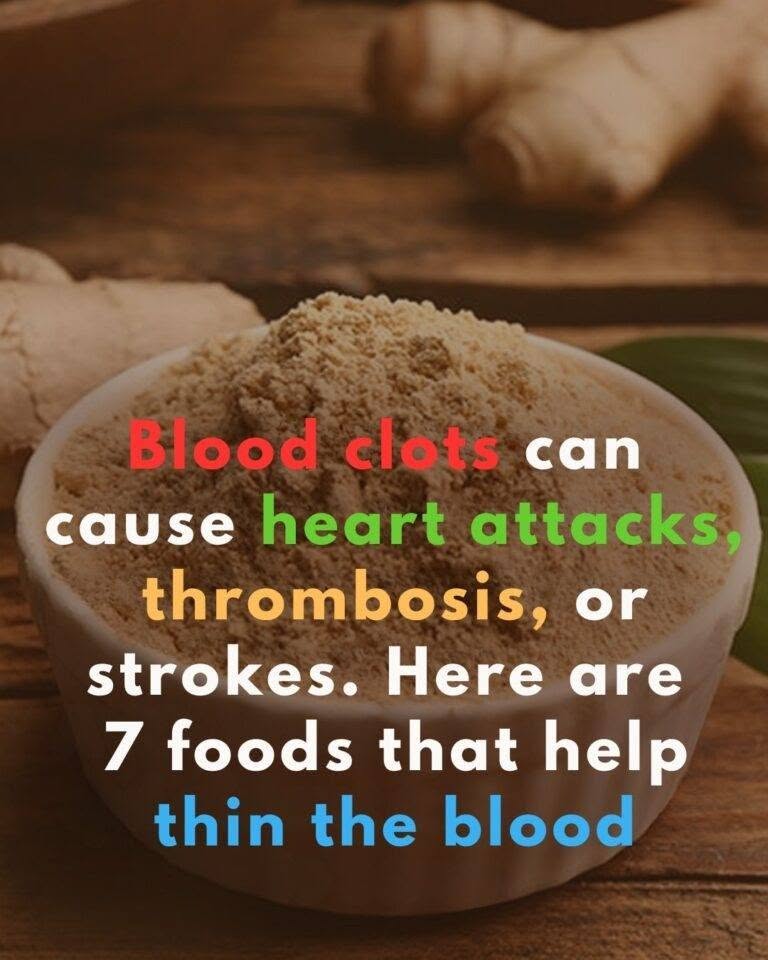
Certain foods contain nutrients and natural compounds that may support healthy circulation and cardiovascular health. However, foods should not be considered substitutes for prescribed blood-thinning medicines.
1. Garlic
Garlic contains compounds that may support cardiovascular health.
Easy recipe: Sauté 2–3 chopped garlic cloves in a little olive oil and add them to vegetables, soup, or whole-grain toast.
2. Ginger
Ginger contains natural compounds that have been studied for their effects on inflammation and platelet activity.
Easy recipe: Simmer fresh ginger slices in hot water for 5–10 minutes. Add lemon for flavor.
3. Fatty Fish
Salmon, sardines, and mackerel are rich in omega-3 fatty acids, which support heart health.
Easy recipe: Bake salmon with lemon, garlic, black pepper, and olive oil at 400°F (200°C) for about 12–15 minutes.
4. Turmeric
Turmeric contains curcumin, a compound known for its anti-inflammatory properties.
Easy recipe: Add turmeric, black pepper, and vegetables to a homemade lentil or vegetable soup.
5. Berries
Blueberries, strawberries, and other berries provide antioxidants and can be part of a heart-healthy diet.
Easy recipe: Combine fresh berries with plain yogurt and oats for a quick breakfast.
6. Leafy Green Vegetables
Spinach, kale, and other leafy greens are rich in nutrients, including vitamin K.
Easy recipe: Sauté spinach with garlic and a small amount of olive oil for a simple side dish.
7. Nuts and Seeds
Walnuts, flaxseeds, and chia seeds provide healthy fats and other nutrients that support cardiovascular health.
Easy recipe: Add a tablespoon of ground flaxseed or chia seeds to oatmeal, yogurt, or a smoothie.
Important If You Take Blood Thinners
If you take warfarin or another anticoagulant, talk to your healthcare professional before making major changes to your diet. Vitamin K-rich foods can affect warfarin management, and some foods or supplements may interact with medicines.
Never stop or replace prescribed blood-thinning medication with food.
The Bottom Line
A balanced diet rich in fish, vegetables, fruits, nuts, seeds, and healthy fats can support overall heart and blood-vessel health. These foods are part of a healthy lifestyle, not a replacement for medical treatment.