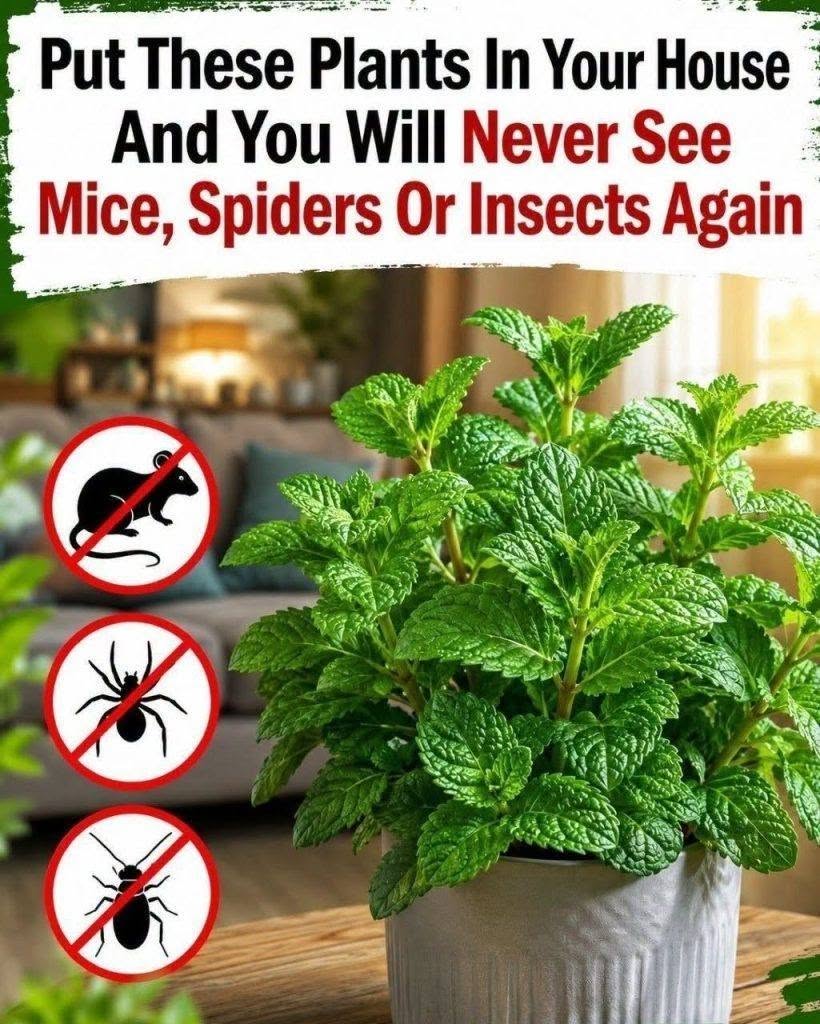
Nobody wants unwanted pests taking over the house or garden. Before reaching for chemical sprays, you might consider adding certain strongly scented plants around your home.
Plants won’t create an invisible force field that keeps every pest away, and they shouldn’t be relied on to control a serious infestation. But some aromatic plants contain natural compounds that may make certain areas less attractive to insects and other pests.
Here are eight worth knowing about.
1. Peppermint
Peppermint is one of the most popular plants associated with pest control because of its strong menthol-rich aroma.
Its scent may discourage some insects, and many people also use peppermint-based products around potential mouse entry areas. However, simply growing peppermint isn’t proven to keep mice out of an entire house.
Plant it in containers near doors, patios, or garden areas where you want its strong fragrance.
2. Lavender
Lavender is loved by people for its pleasant fragrance but is commonly used as a natural insect deterrent.
Its aroma may help discourage some flying insects, including mosquitoes and certain moths. Plant lavender near sunny windows, entrances, patios, or outdoor seating areas.
Bonus: you get attractive flowers and a pleasant-smelling garden.
3. Basil
Basil isn’t only useful in the kitchen.
Its aromatic oils may help discourage some insects, making it a practical plant for sunny windowsills, balconies, and outdoor areas.
Keep several pots near places where you spend time outdoors and harvest the leaves for cooking.
4. Rosemary
Rosemary has a strong scent and contains aromatic compounds that have insect-repellent properties in laboratory and product-form studies.
It grows particularly well in sunny, well-drained locations. Plant it near patios or pathways, where brushing against the plant releases more fragrance.
5. Mint
Like peppermint, other varieties of mint have a strong smell that some insects may avoid.
Mint is also extremely easy to grow—but it spreads aggressively. Growing it in a container is usually a better idea than planting it directly in the garden.
Use the leaves in cooking and drinks while enjoying the fresh scent around your outdoor space.
6. Marigolds
Marigolds are frequently recommended as companion plants for gardens because their strong scent and natural compounds may affect certain insects.
They can add bright color around vegetable beds, walkways, and containers.
However, don’t expect a row of marigolds to eliminate mosquitoes or prevent every garden pest. Their effect depends on the pest and growing conditions.
7. Catnip
Catnip contains nepetalactone, a compound that has demonstrated insect-repellent activity.
It can be particularly interesting for gardeners looking for plants with naturally occurring compounds that affect insects.
One important warning: if you have cats, catnip may attract them rather than repel them!
8. Lemongrass
Lemongrass has a fresh citrus-like scent and is often associated with mosquito-repellent products because it contains aromatic compounds such as citral.
Growing lemongrass can make a useful addition to patios and gardens, but the plant itself shouldn’t be considered a substitute for an effective mosquito repellent when mosquitoes are abundant.
What About Mice and Spiders?
This is where expectations matter.
Strong-smelling plants may make certain areas less appealing to some pests, but there is limited evidence that simply planting them around your home will reliably drive out mice or spiders.
For mice, sealing cracks and holes, removing food sources, and keeping garbage securely contained are much more dependable steps.
For spiders, reducing other insects around the home, sealing entry points, and keeping indoor areas clean can help reduce the conditions that attract them.
How to Get the Most From Pest-Repelling Plants
Place aromatic plants near patios, doors, windows, outdoor seating areas, and garden borders rather than expecting them to protect an entire property.
Also remember that essential oils are much more concentrated than the living plant. Don’t assume that a homemade essential-oil spray is automatically safe for children, pets, plants, or surfaces.
The Bottom Line
Peppermint, lavender, basil, rosemary, mint, marigolds, catnip, and lemongrass can all be useful additions to a garden, and several contain compounds associated with insect-repellent effects.
But plants are best viewed as one small part of pest management, not a guaranteed solution. For persistent mice, spiders, mosquitoes, or other infestations, focus on removing food and water sources, sealing entry points, and using proven pest-control methods.
A beautiful, fragrant garden is a great bonus—but it shouldn’t replace effective pest control when you actually have an infestation.