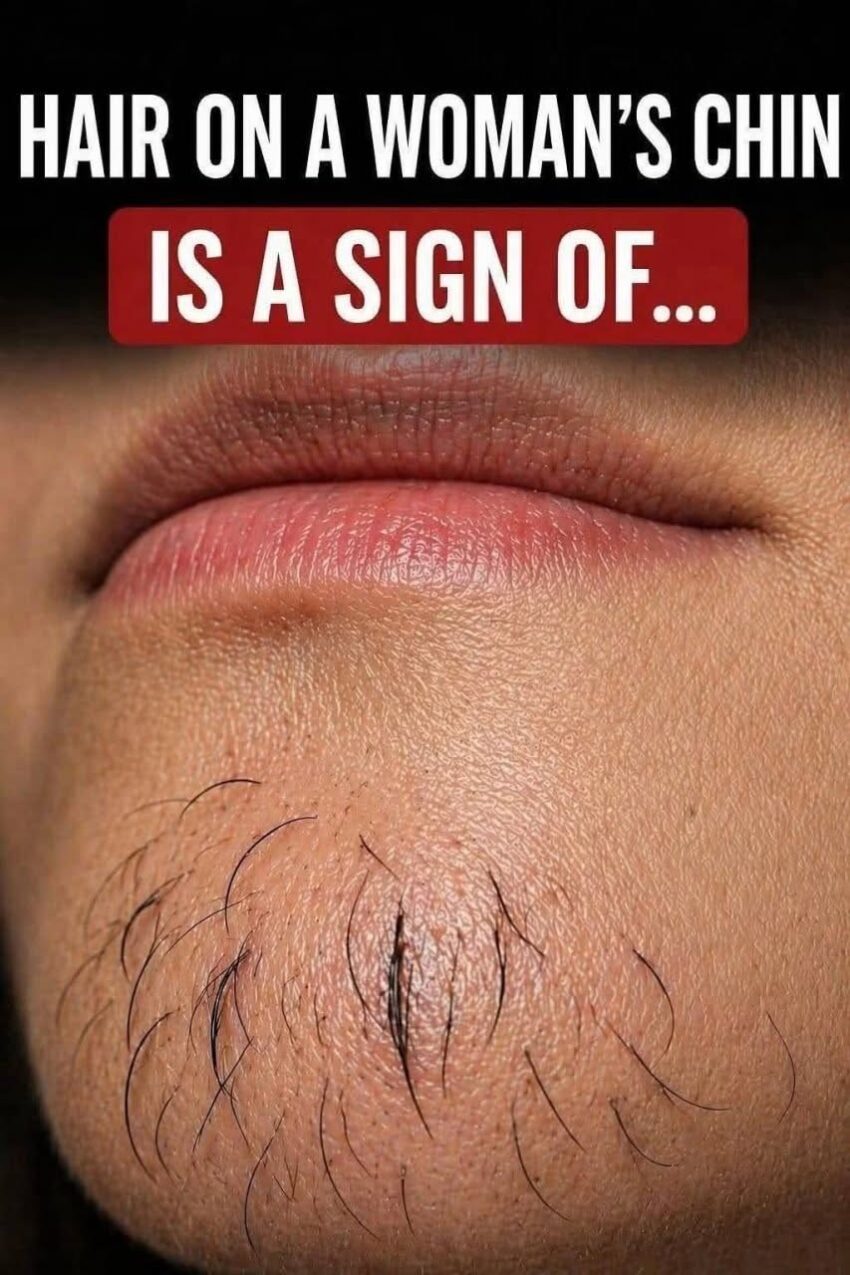
Chin hair in women is often a normal part of aging, but sudden or excessive facial hair can sometimes be linked to hormonal changes, PCOS, medications, or other health conditions.
Finding a few coarse hairs on your chin can be surprising, especially if you never had noticeable facial hair before. For many women, however, chin hair is a completely normal part of getting older.
But when facial hair becomes suddenly thicker, darker, or much more widespread, it can sometimes provide a clue about what is happening with your hormones.
The medical term for excessive coarse hair growth in areas where men typically grow hair—such as the chin, upper lip, chest, abdomen, or back—is hirsutism.
So when should chin hair simply be treated as a cosmetic issue, and when might it deserve a conversation with a doctor?
1. Aging Can Naturally Change Facial Hair
One of the most common explanations is simply aging.
As women get older, estrogen levels can change, particularly around and after menopause. At the same time, the relative influence of androgens—hormones such as testosterone—may become more noticeable.
This hormonal shift can cause some facial hairs to become:
- Thicker
- Darker
- Longer
- More noticeable
It is also possible for the hair on the scalp to become thinner while a few coarse hairs appear on the chin or upper lip.
Having several isolated chin hairs does not automatically mean something is wrong.
2. Hormonal Changes Can Cause Excess Facial Hair
When facial hair growth is excessive or develops relatively quickly, hormones become an important consideration.
Androgens stimulate hair follicles in certain areas of the body. If androgen levels are elevated—or if hair follicles are particularly sensitive to them—coarse facial hair may develop.
This is why doctors sometimes evaluate hormone levels when a woman develops significant new facial hair.
3. PCOS Is One Possible Cause
Polycystic ovary syndrome (PCOS) is a common hormonal condition that can cause increased androgen activity.
For some women, excessive facial or body hair is one of the noticeable symptoms.
Other possible signs of PCOS include:
- Irregular or unpredictable periods
- Acne
- Scalp hair thinning
- Difficulty with ovulation
- Weight changes
- Increased facial or body hair
Having chin hair alone does not mean you have PCOS. A doctor usually considers the overall pattern of symptoms, medical history, examination findings, and sometimes laboratory testing.
4. Certain Medications Can Affect Hair Growth
Some medications can influence hormone activity or hair growth.
Depending on the medication, this may include drugs that affect androgen levels or medications that can cause increased hair growth as a side effect.
If noticeable facial hair began after starting a new medication or changing its dose, don’t stop the medication on your own. Instead, ask your doctor or pharmacist whether the timing could be related.
5. Weight and Metabolic Changes May Play a Role
Hormonal and metabolic health can sometimes influence unwanted facial hair.
For example, insulin resistance can occur alongside PCOS and may contribute to increased androgen activity in some women.
However, chin hair should not be used by itself to diagnose insulin resistance or diabetes.
If facial hair is accompanied by other hormonal or metabolic symptoms, discussing the complete picture with a healthcare professional is more useful than focusing on the hair alone.
6. Sudden, Rapid Hair Growth Is More Important Than a Few Stray Hairs
The speed and pattern of change matter.
A few hairs that gradually appear over many years are usually much less concerning than facial hair that becomes noticeably thicker and more widespread over a short period.
Seek medical advice if you experience rapid new hair growth, particularly if it occurs along with other changes such as:
- A deeper voice
- Increasing muscle mass
- Severe or sudden acne
- Significant scalp hair loss
- Irregular or absent periods
- Increased hair growth on the chest or abdomen
These combinations can sometimes indicate a more significant hormonal imbalance and deserve evaluation.
7. Rarely, Excess Androgens Can Have a More Serious Cause
Most cases of unwanted facial hair are not caused by a dangerous disease.
However, very rapid or severe androgen-related changes can occasionally be associated with an ovarian or adrenal condition that produces excess hormones.
This is one reason doctors take sudden, dramatic changes more seriously than a handful of slowly developing chin hairs.
The goal isn’t to frighten women—it is simply to recognize when a change is unusual enough to warrant investigation.
8. What Tests Might a Doctor Consider?
Testing depends on the woman’s age, symptoms, menstrual history, medications, and examination.
When clinically appropriate, a doctor may consider hormone testing such as testosterone and other androgen-related tests. Additional testing may be recommended when symptoms suggest PCOS, thyroid problems, adrenal disorders, or another underlying condition.
Not every woman with chin hair needs blood tests.
A doctor may determine that the pattern is simply normal facial-hair variation, especially when growth is mild and has developed gradually.
9. What Can You Do About Chin Hair?
If the hair is simply unwanted cosmetically, there are several options.
Tweezing
For a few individual hairs, tweezing is inexpensive and straightforward.
Shaving
Shaving does not make hair grow back thicker or darker. It simply cuts the hair at the skin’s surface, which can make the short regrowth feel stubbly.
Waxing or Threading
These methods remove hair from the root and can provide longer-lasting results than shaving.
Some women may experience irritation, ingrown hairs, or pigmentation afterward.
Laser Hair Removal
Laser treatment can reduce unwanted hair growth over multiple sessions. Results vary according to hair color, skin type, hormonal factors, and the type of laser used.
Electrolysis
Electrolysis uses an electrical current to target individual hair follicles and can provide long-term hair removal. It generally requires multiple sessions.
10. Don’t Blame Yourself
Unwanted facial hair can be emotionally frustrating, but it isn’t a sign that a woman is unhealthy, unattractive, or doing something wrong.
Hormones, genetics, age, medications, and underlying medical conditions can all influence hair growth.
There is also considerable natural variation between women. Some women develop noticeable chin hairs relatively early, while others never do.
When Should You Talk to a Doctor?
Consider making an appointment if facial hair:
- Appears suddenly
- Becomes significantly thicker or darker
- Spreads to other areas
- Occurs alongside irregular periods
- Is accompanied by severe acne or scalp hair loss
- Develops together with voice changes or other signs of increased androgen activity
A medical evaluation can help determine whether the change is simply part of normal aging or whether an underlying hormonal issue should be investigated.
The Bottom Line
A few chin hairs are usually nothing to panic about. Aging and normal hormonal changes can make facial hair more noticeable over time.
However, sudden, excessive, or rapidly worsening facial hair should not automatically be dismissed as aging. Conditions such as PCOS, medication effects, and other hormonal disorders can sometimes contribute.
The important thing is to look at the bigger picture: how quickly the hair appeared, how much hair growth is occurring, and whether other symptoms are present.
Chin hair by itself rarely tells the whole story—but sometimes, a noticeable change in facial hair can be one small clue that your body is experiencing a hormonal change worth discussing with a healthcare professional.