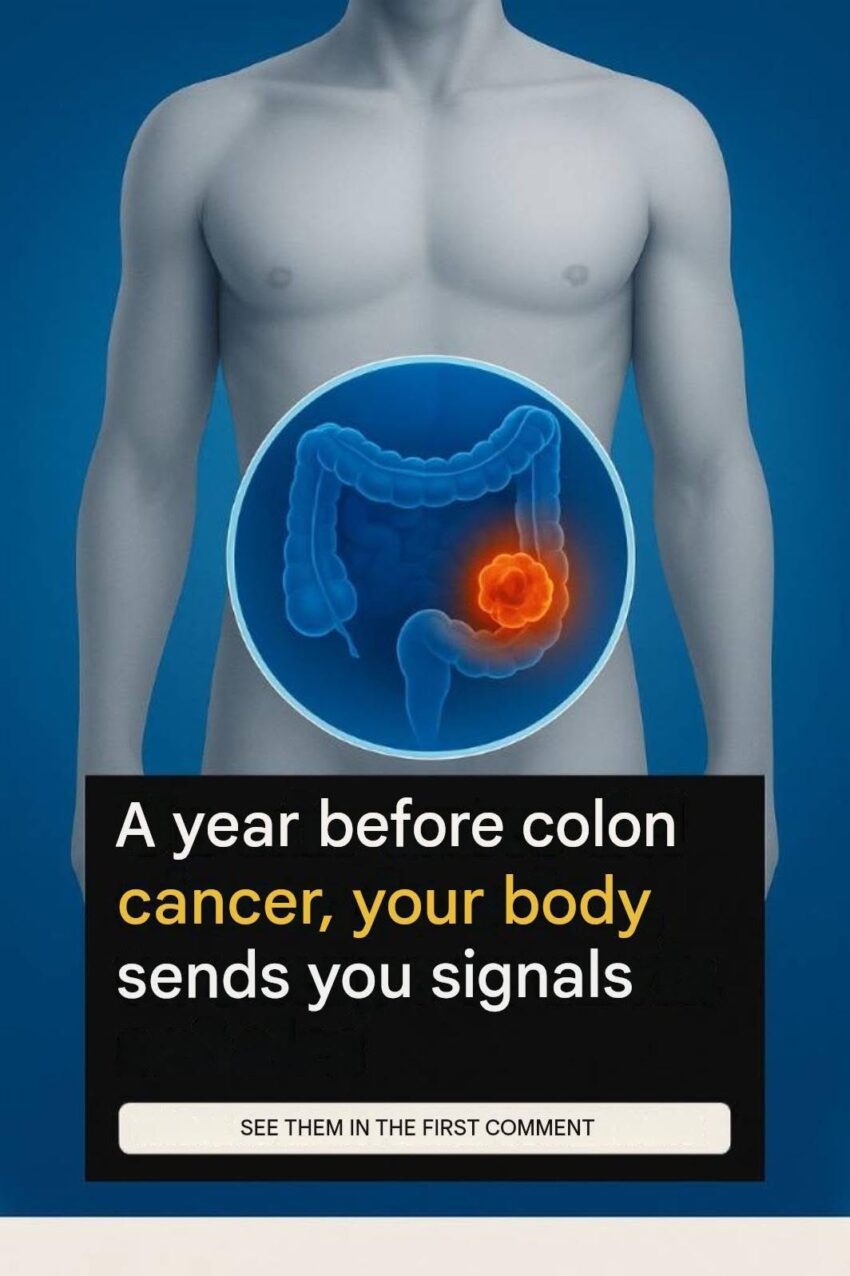
Sometimes, a person feels completely healthy while abnormal cells or polyps are developing inside the colon. In other cases, subtle changes—such as persistent bowel changes, blood in the stool, unexplained weight loss, abdominal discomfort, or iron-deficiency anemia—may appear before a diagnosis.
But there is an important point that often gets lost in sensational headlines:
There is no specific set of symptoms that can tell you that colon cancer will develop exactly one year later.
In fact, colorectal polyps and cancer may cause no symptoms at all, especially early on. That’s one reason regular screening is so important.
So what should you actually watch for?
1. A Persistent Change in Bowel Habits
One of the most important warning signs is a change in your normal bowel pattern.
You might notice:
- New or persistent constipation
- Frequent diarrhea
- Alternating constipation and diarrhea
- Stools becoming noticeably different from usual
- A persistent feeling that your bowel hasn’t completely emptied
Occasional changes are common and can result from diet, stress, infections, medications, or other digestive conditions.
The concern is a persistent or unexplained change, particularly when it occurs together with other symptoms.
2. Blood in Your Stool
Blood in or on the stool should not automatically be blamed on hemorrhoids.
Colorectal cancer can cause bleeding from the colon or rectum. The blood may be obvious, or bleeding may be small enough that it isn’t visible.
Blood in the stool can also result from hemorrhoids, anal fissures, inflammatory bowel disease, infections, and other conditions.
Nevertheless, unexplained rectal bleeding deserves medical evaluation.
Don’t wait for the bleeding to become severe
A small amount of blood doesn’t necessarily mean cancer—but it shouldn’t simply be ignored.
Your doctor can determine whether testing is appropriate.
3. Unexplained Iron-Deficiency Anemia
Sometimes colorectal bleeding is too small to see.
Over time, chronic blood loss can contribute to iron-deficiency anemia.
Possible symptoms of anemia include:
- Unusual tiredness
- Weakness
- Shortness of breath with activity
- Dizziness
- Pale skin
- Reduced exercise tolerance
Iron-deficiency anemia has many possible causes. But unexplained iron deficiency—particularly in adults—deserves investigation.
Research involving younger adults has also identified iron-deficiency anemia as one of several signs associated with colorectal cancer before diagnosis.
4. Abdominal Pain That Doesn’t Go Away
Occasional gas or stomach discomfort is extremely common.
But persistent or unexplained abdominal pain, cramping, aches, bloating, or discomfort can be a reason to speak with a healthcare professional.
Abdominal symptoms have many possible causes, including irritable bowel syndrome, infections, food intolerances, inflammatory bowel disease, and other digestive disorders.
That means abdominal pain doesn’t mean you have colon cancer.
The important point is that persistent unexplained symptoms should be assessed rather than repeatedly dismissed.
5. Unexplained Weight Loss
Losing weight without intentionally changing your diet or activity level can have many causes.
However, unexplained weight loss is among the symptoms that can occur with colorectal cancer.
If you are losing weight without trying—especially if the weight loss occurs together with bowel changes, abdominal symptoms, fatigue, or blood in the stool—make an appointment with a healthcare professional.
6. Persistent Fatigue
Everyone feels tired sometimes.
Poor sleep, stress, infections, nutritional deficiencies, medications, and many other conditions can cause fatigue.
But persistent or unusual fatigue can sometimes be associated with anemia or other underlying health problems.
In colorectal cancer, chronic blood loss can contribute to iron-deficiency anemia, which may leave a person feeling unusually tired or weak.
Fatigue alone is not a specific sign of colon cancer, but unexplained persistent fatigue deserves attention.
7. Feeling That Your Bowel Doesn’t Fully Empty
Another symptom worth paying attention to is a persistent sensation that you still need to have a bowel movement even after going.
This is sometimes called incomplete evacuation.
It can occur with many digestive conditions, including constipation and other bowel disorders, but it can also be associated with colorectal problems.
If this sensation is new and persistent, discuss it with your doctor.
8. Stools That Look Different From Your Normal Pattern
People sometimes focus on the idea of “pencil-thin stools” as a definitive sign of colon cancer.
That’s too simplistic.
Stool shape can change for many reasons, including constipation and changes in bowel function.
What matters more is a persistent change from your usual bowel pattern, particularly when accompanied by bleeding, abdominal discomfort, unexplained weight loss, or anemia.
9. Diarrhea or Constipation That Keeps Returning
An isolated episode of diarrhea or constipation usually isn’t a reason to assume cancer.
But persistent or recurrent changes that don’t have an obvious explanation should be evaluated.
Colorectal cancer can cause changes in bowel habits, including diarrhea, constipation, or a sensation that the bowel doesn’t empty completely.
10. Sometimes There Are No Warning Signs at All
This may be the most important point in the entire article.
You can have colorectal polyps or colorectal cancer without noticeable symptoms.
That’s why waiting until you feel something wrong is not a reliable approach to prevention.
Screening can detect abnormal growths before they become cancerous and can also detect colorectal cancer earlier, when treatment is generally more effective.
Why Screening Matters
Colorectal cancer often begins as a polyp, an abnormal growth in the colon or rectum.
Some polyps can eventually become cancer.
Screening can find certain polyps so they can be removed before they develop into cancer. It can also detect cancer at an earlier stage.
That’s why screening isn’t simply about finding cancer.
In some cases, screening can actually prevent cancer from developing.
When Should You Get Screened?
Screening recommendations depend on your age, personal history, family history, and other risk factors.
In the United States, the CDC reports that adults at average risk should generally begin colorectal cancer screening at age 45 and continue through age 75. Decisions about screening from ages 76 to 85 should be individualized.
People with increased risk may need screening earlier or more frequently.
Risk factors can include:
- A parent, sibling, or child with colorectal cancer or certain polyps
- Personal history of colorectal polyps or cancer
- Crohn’s disease or ulcerative colitis
- Certain inherited genetic conditions, including Lynch syndrome and familial adenomatous polyposis
If you have one of these risk factors, talk with your healthcare professional about when screening should begin.
What Screening Tests Are Available?
There isn’t just one screening method.
Depending on your age and risk profile, options can include:
Stool-based tests
These can look for hidden blood or other signs associated with colorectal cancer.
Some stool tests can be completed at home.
Colonoscopy
A colonoscopy allows a healthcare professional to examine the colon and remove many polyps during the procedure.
Flexible sigmoidoscopy
This examines the lower portion of the colon and rectum.
CT colonography
Also known as a virtual colonoscopy, this uses imaging to examine the colon.
Different tests have different advantages, limitations, preparation requirements, and schedules. Your healthcare professional can help determine which option is appropriate.
Don’t Confuse Screening With Diagnostic Testing
This distinction is important.
Screening is generally performed when you don’t have symptoms, to look for cancer or precancerous changes.
If you already have symptoms such as rectal bleeding or persistent bowel changes, your doctor may recommend diagnostic testing to determine what’s causing them.
So if you’re experiencing concerning symptoms, don’t simply wait until your next routine screening appointment. Talk to a healthcare professional.
What About Younger Adults?
Colorectal cancer is more common with increasing age, but younger adults can develop it too.
Research has found that abdominal pain, rectal bleeding, diarrhea, and iron-deficiency anemia were associated with an increased likelihood of early-onset colorectal cancer in the period from several months to two years before diagnosis.
This does not mean that having one of these symptoms means you have cancer.
It means persistent or unexplained symptoms shouldn’t automatically be dismissed because someone is young.
How Can You Reduce Your Risk?
There is no way to guarantee that you will never develop colorectal cancer.
However, several lifestyle measures can help reduce risk.
Stay physically active
Regular physical activity is associated with lower colorectal cancer risk.
Maintain a healthy weight
Maintaining a healthy weight can contribute to overall cancer prevention.
Avoid tobacco
Not using tobacco is an important part of reducing cancer and cardiovascular risk.
Limit alcohol
Reducing alcohol consumption can lower several health risks, including colorectal cancer risk.
Keep up with screening
This may be one of the most important preventive steps because screening can identify precancerous polyps and early cancers.
When Should You Contact a Doctor?
Make an appointment if you experience persistent or unexplained:
- Blood in your stool
- Changes in bowel habits
- Abdominal pain or cramping
- Unexplained weight loss
- Unusual fatigue
- Symptoms of anemia
- A persistent feeling that your bowel isn’t emptying completely
These symptoms can have causes other than cancer, but the only way to determine the cause is through appropriate medical evaluation.
If you have heavy rectal bleeding, severe abdominal pain, fainting, significant weakness, or other severe symptoms, seek urgent medical attention.
The Bottom Line
There isn’t a reliable “one-year warning signal” that tells you colon cancer is about to develop.
The reality is more important: colorectal cancer can develop without symptoms, while some people experience warning signs such as persistent bowel changes, blood in the stool, abdominal discomfort, unexplained weight loss, or iron-deficiency anemia.
Don’t panic if you experience one of these symptoms—many have causes unrelated to cancer.
But don’t ignore persistent or unexplained changes either.
And perhaps most importantly, don’t wait for symptoms before thinking about screening if you’re in an age or risk group where screening is recommended.
Early detection and finding precancerous polyps are major reasons colorectal cancer screening can make such a difference.