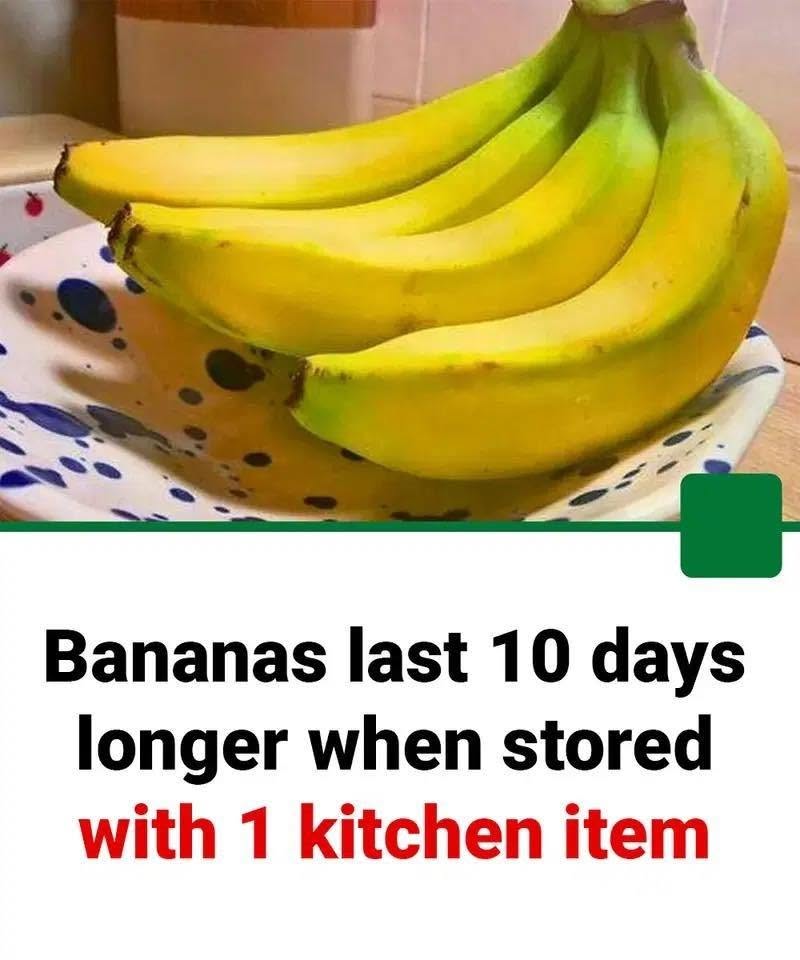
Have your bananas ever gone from perfectly yellow to brown and mushy seemingly overnight?
Bananas naturally produce ethylene, a plant hormone that promotes ripening. When ripe bananas are kept together in a fruit bowl—especially alongside other ethylene-producing fruits—their ripening can progress quickly.
But there’s a simple storage trick that may help slow the process:
The Kitchen Item? Plastic Wrap
Wrapping the banana stems with plastic wrap can help reduce the amount of ethylene escaping from the stem area.
This doesn’t stop ripening completely, and it won’t guarantee that your bananas will last exactly 10 extra days. However, it can be a useful way to slow ripening and give you more time to eat them.
Why Does Wrapping the Stems Help?
Bananas naturally release ethylene, particularly around the stem.
Ethylene acts as a signal that encourages fruit to ripen.
As bananas ripen, several changes occur:
- The green color changes to yellow.
- The fruit becomes softer.
- Starches are converted into sugars.
- The aroma becomes stronger.
- Brown spots eventually appear.
By covering the stem area, you may reduce ethylene release from that part of the bunch and potentially slow the ripening process.
That’s why you’ll sometimes see bananas sold with their stems wrapped.
How to Use the Plastic-Wrap Trick
It’s incredibly simple.
Step 1: Separate the bananas
Instead of leaving the entire bunch together, gently separate individual bananas if convenient.
Step 2: Cover the stems
Take a small piece of plastic wrap and wrap it securely around the top stem.
You don’t need to cover the entire banana.
Step 3: Store them at room temperature
Keep the bananas somewhere cool and dry, away from direct sunlight and sources of heat.
Step 4: Check them regularly
Once the bananas reach the ripeness you like, you can move them to the refrigerator.
What If Your Bananas Are Already Yellow?
That’s perfectly fine.
The stem-wrapping technique can still be used after bananas have started ripening.
However, don’t expect the trick to reverse ripening.
Once a banana is already very soft and heavily browned, wrapping the stem won’t make it firm again.
The goal is to slow the process, not stop it.
Should You Keep Bananas in the Fruit Bowl?
A fruit bowl isn’t necessarily a bad place for bananas.
It’s convenient, attractive, and perfectly suitable if you’re planning to eat the fruit within a few days.
The problem is that a fruit bowl can expose bananas to:
- Warm room temperatures
- Direct sunlight
- Other ripening fruits
- Physical damage
- Increased airflow around the fruit
If you want your bananas to stay yellow longer, storage conditions matter.
Keep Bananas Away From Certain Fruits
Bananas aren’t the only fruit that produces ethylene.
Apples, pears, avocados, peaches, and some other fruits can also produce ethylene as they ripen.
Keeping highly ethylene-producing fruits together can speed up ripening of nearby produce.
If your goal is to extend the life of your bananas, consider keeping them separate from other fruit.
What About Putting Bananas in the Refrigerator?
Here’s an important trick that many people don’t know.
Once bananas are ripe, refrigeration can help slow further ripening of the fruit.
The banana peel may turn brown or even very dark, but the flesh inside can remain usable.
So don’t automatically throw away a refrigerated banana just because the peel has become brown.
However, very unripe bananas generally don’t ripen normally in the refrigerator. If you want them to ripen naturally, allow them to ripen at room temperature first.
Keep Bananas Away From Heat
Temperature has a major influence on how quickly fruit ripens.
Avoid storing bananas:
- Beside a stove
- Near an oven
- In direct sunlight
- Next to a warm appliance
- In a hot, enclosed area
A cool, dry location away from direct heat is generally a better choice.
Don’t Wash Bananas Before Storage
There’s usually no need to wash bananas before storing them.
Moisture left on the peel can encourage deterioration.
Instead, keep them dry and wash the banana before eating if necessary.
What If You Have Too Many Ripe Bananas?
Don’t throw them away.
If your bananas are becoming too ripe, you have several options.
Freeze Them
Peel ripe bananas, cut them into pieces, and place them in a freezer-safe container or bag.
Frozen bananas work especially well in:
- Smoothies
- Banana bread
- Homemade frozen desserts
- Oatmeal
- Pancakes
Make Banana Bread
Very ripe bananas are actually excellent for baking.
Their increased sweetness means you can use them in recipes such as banana bread, muffins, or pancakes.
Mash Them
Mashed ripe bananas can be added to oatmeal, yogurt, or homemade baked goods.
Does the Stem-Wrapping Trick Really Make Bananas Last 10 Days Longer?
This is where it’s important not to overpromise.
You may see claims that wrapping banana stems makes bananas last “10 days longer.”
There isn’t a universal number of extra days that every household can expect.
How quickly bananas ripen depends on:
- Starting ripeness
- Banana variety
- Room temperature
- Humidity
- Storage conditions
- Whether the bananas are separated
- Exposure to other fruit
So think of stem wrapping as a simple ripening-management technique, not a guaranteed 10-day extension.
The Best Banana Storage Routine
Want to give your bananas the best chance of lasting longer?
Try this simple routine:
1. Buy bananas at the ripeness you actually need.
If you won’t eat them for several days, choose greener bananas.
2. Keep them away from heat.
Store them somewhere cool and dry.
3. Separate the bunch if convenient.
Individual bananas may be easier to manage as they ripen.
4. Wrap the stems.
Use a small piece of plastic wrap around the stem area.
5. Keep them away from other ripening fruit.
Especially if you’re trying to slow ripening.
6. Refrigerate ripe bananas.
Once they’re at your preferred ripeness, refrigeration can help preserve the flesh for longer.
Final Thoughts
Bananas are convenient, nutritious, and affordable—but their relatively quick ripening can be frustrating.
One simple trick worth trying is wrapping the banana stems with plastic wrap. By reducing ethylene release from the stem area, it may help slow ripening.
But don’t expect an exact number of extra days. Storage temperature, starting ripeness, and the surrounding fruit can all make a difference.
And if your bananas do become overripe, don’t waste them. Freeze them, bake with them, or add them to smoothies.
A few simple storage changes can help you enjoy your bananas longer—and throw fewer of them away.