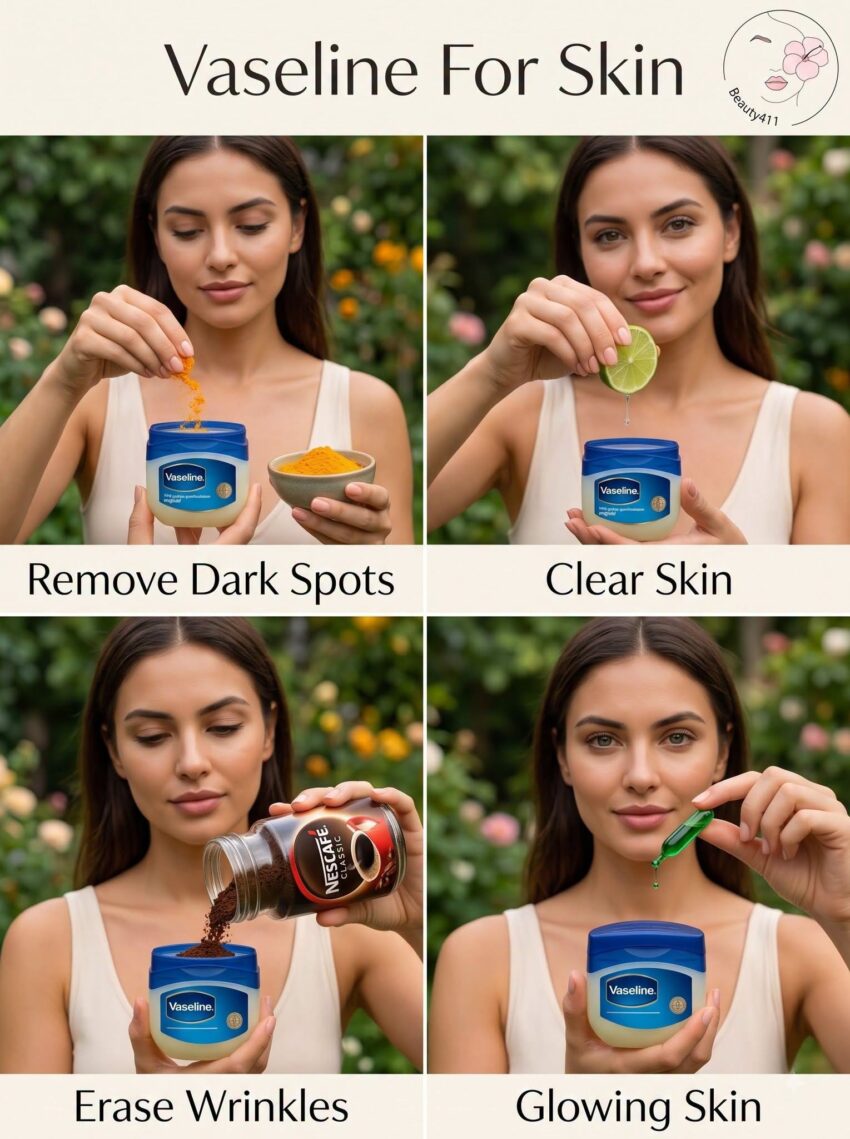
Petroleum jelly can be a surprisingly useful addition to a simple skincare routine. Rather than treating it as a miracle ingredient, think of it as a moisture-locking final step. It forms a protective layer that helps prevent water from escaping from the skin, making it particularly useful for dry, rough, or chapped areas.
1. Vaseline + Moisturizer for Extra Dry Skin
One of the simplest combinations is your regular moisturizer followed by a very thin layer of petroleum jelly.
How to use it:
- Gently cleanse your skin.
- Apply your usual fragrance-free moisturizer.
- While the skin is still slightly damp, apply a small amount of petroleum jelly.
- Leave it overnight.
This works because the moisturizer supplies hydration while petroleum jelly helps reduce moisture loss. The American Academy of Dermatology recommends creams or ointments for dry skin and notes that petroleum jelly can be applied to damp skin.
2. Vaseline + Hyaluronic Acid
If your skincare routine already contains hyaluronic acid, petroleum jelly can be used afterward to help keep moisture in the skin.
Apply the hyaluronic-acid product according to its directions, follow with moisturizer if needed, and finish with a very thin layer of petroleum jelly.
This combination is best thought of as hydration + moisture retention, rather than a treatment that permanently changes the skin.
3. Vaseline + Lip Balm for Dry Lips
Petroleum jelly can be especially useful for dry, chapped lips. Apply a small amount before bed to help protect the lips from drying overnight. The AAD specifically lists petroleum jelly as an option for keeping dry lips hydrated.
4. Vaseline for Rough Hands, Feet and Elbows
Dry hands, heels, elbows, and other rough areas can benefit from an occlusive layer.
For very dry feet, apply moisturizer first and then a thin layer of petroleum jelly. Wearing clean cotton socks overnight can help keep the product in place.
Petroleum jelly is also recommended by dermatologists for rough, cracked feet, elbows, and hands.
5. Vaseline + Gentle Skincare: The Simple Glow-Up
You don’t need a complicated routine to improve the appearance of dry, dull-looking skin.
A basic routine can be:
Morning:
Gentle cleanser → moisturizer → broad-spectrum SPF 30+
Night:
Gentle cleanser → moisturizer → small amount of petroleum jelly where needed
Daily sun protection is particularly important for maintaining healthier-looking skin and preventing further UV-related skin damage. Dermatologists recommend broad-spectrum sunscreen with SPF 30 or higher.
What Not to Mix With Vaseline
Avoid turning petroleum jelly into a DIY chemical treatment by mixing it with harsh ingredients such as lemon juice, baking soda, undiluted essential oils, or other irritating substances.
“Natural” does not necessarily mean gentle or safe for your skin.
Also remember that petroleum jelly is not an exfoliant, bleaching agent, acne treatment, or proven age-spot remover. Its primary skincare role is protecting and reducing moisture loss.
If you are prone to acne, be cautious about applying heavy occlusive products to acne-prone facial areas; the AAD recommends non-comedogenic products for people concerned about breakouts.
The Bottom Line
The smartest way to use Vaseline is not to look for a magical ingredient combination. Instead, use it strategically as the final moisture-locking step when your skin needs extra protection.
For dry skin, applying moisturizer to slightly damp skin and then using a small amount of petroleum jelly can be a simple, inexpensive approach to maintaining the skin barrier.
Important: If your skin is persistently itchy, painful, cracked, inflamed, or developing a rash, skincare alone may not address the underlying problem. Consider speaking with a dermatologist.