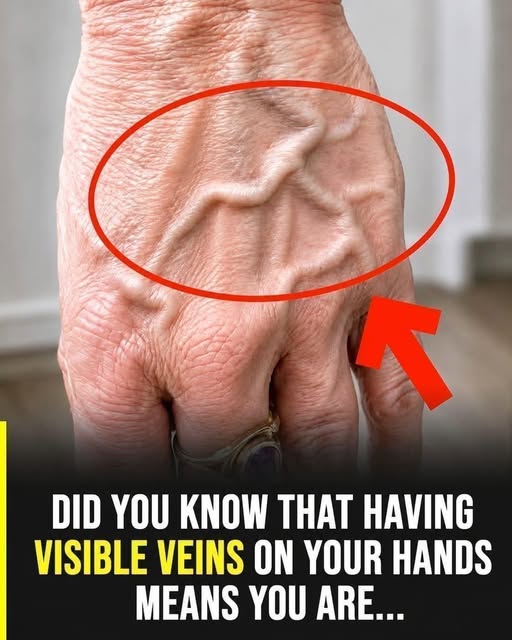
Visible veins are common, and in most cases, they are completely normal. You may notice blue or green veins on your hands, arms, legs, feet, or even your chest. But what do they actually mean? Are they a sign of good circulation, aging, or an underlying health problem?
The answer depends on where the veins appear, how they look, and whether you have any other symptoms.
1. You May Have Less Fat Under Your Skin
One of the most common reasons veins become visible is that the layer of fat beneath your skin is relatively thin. This makes veins easier to see, especially on the hands, wrists, and forearms. People who are naturally slim or have lost weight may notice this more often.
2. You May Be Experiencing Normal Age-Related Changes
As you grow older, your skin gradually becomes thinner and loses some of its elasticity. The protective layer beneath the skin may also decrease, making veins more noticeable.
Visible veins alone do not mean that your body is unhealthy or that you are aging faster than normal.
3. Exercise Can Make Your Veins More Prominent
During physical activity, blood flow to your muscles increases. Your veins may temporarily become more noticeable, particularly after lifting weights, running, or doing other strenuous exercises.
This is usually a normal response and does not automatically indicate a circulation problem.
4. Heat Can Make Your Veins Stand Out
In hot weather or after a warm shower, blood vessels near the surface of your skin may widen to help your body release heat. As a result, your veins may appear larger or more prominent than usual.
They often become less noticeable when your body cools down.
5. Some Visible Veins May Be Varicose Veins


Veins that appear twisted, swollen, raised, or rope-like, particularly in the legs, may be varicose veins. These can develop when the valves inside the veins do not work properly, allowing blood to collect in the affected area.
Possible symptoms include:
-
Aching or heaviness in the legs.
-
Swelling around the ankles.
-
Itching or discomfort around affected veins.
-
Symptoms that become worse after standing for long periods.
If these symptoms persist, a medical evaluation can help identify the cause.
6. Visible Veins Do Not Necessarily Mean Good Circulation
It is a common misconception that prominent veins always indicate excellent blood circulation. In reality, the appearance of veins alone cannot tell you whether your circulation is healthy.
Other symptoms, such as persistent swelling, skin discoloration, pain, or unusual temperature changes, are more important to consider.
When Should You Be Concerned?
Seek urgent medical attention if a vein suddenly becomes painful, red, warm, or swollen, especially in one leg. These symptoms can sometimes indicate a blood clot.
Sudden swelling of one leg accompanied by chest pain or difficulty breathing is an emergency.
The Bottom Line
Having visible veins usually means that your veins are close to the surface of your skin or that your skin and underlying tissues make them easier to see. Genetics, age, body composition, exercise, and temperature can all play a role.
Visible veins by themselves are generally not a reason to worry. What matters most is whether they have appeared suddenly or are accompanied by pain, swelling, or other unusual symptoms.
If you have noticed visible veins recently, pay attention to their location and any changes rather than assuming they indicate a particular disease.