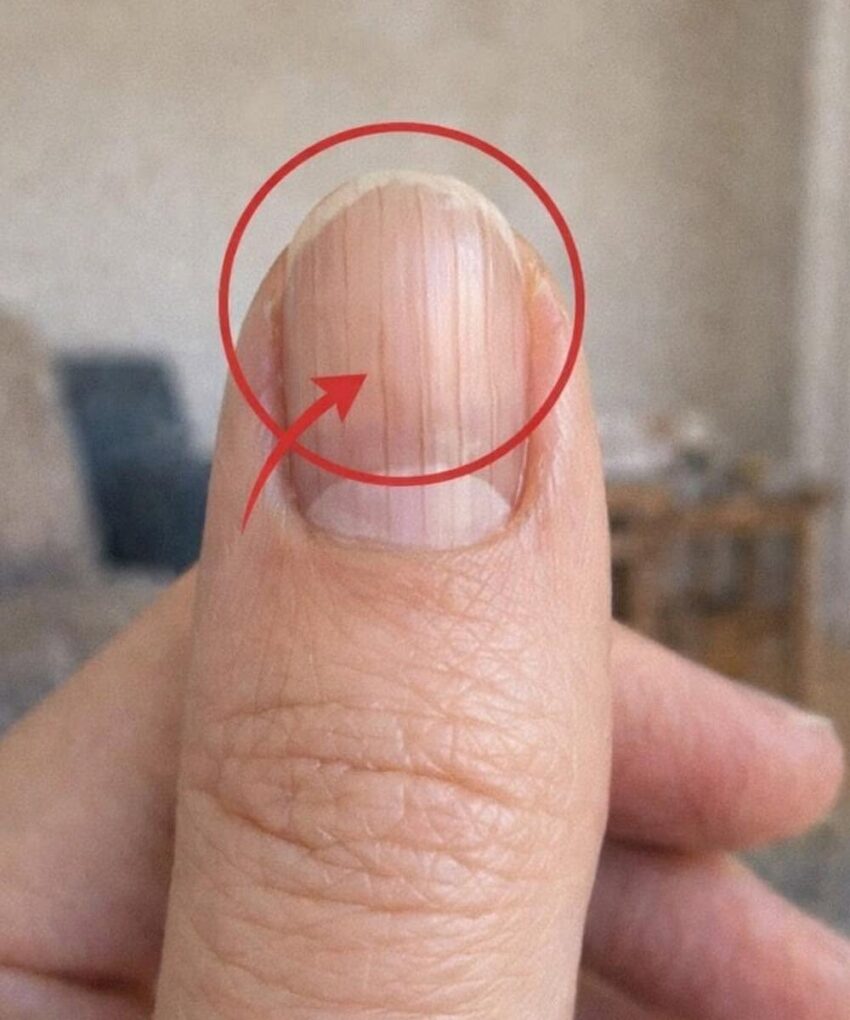
Your fingernails can sometimes provide clues about your overall health. Learn which nail changes deserve attention, what they may indicate, and when to see a doctor.
Your fingernails may seem like nothing more than a small part of your appearance, but they can occasionally provide clues about what is happening inside your body.
Changes in nail color, texture, thickness, or growth can sometimes occur alongside nutritional deficiencies, infections, skin conditions, circulation problems, or other medical issues.
That’s why doctors often pay attention to nails during a physical examination.
However, there is one important point to understand before believing dramatic headlines online:
No single fingernail sign can accurately predict how long a person will live.
Instead, nail changes should be viewed as possible health clues that may sometimes deserve further investigation.
Why Do Doctors Look at Fingernails?
Nails are made primarily of a protein called keratin and grow continuously from the nail matrix.
Because nail growth can be affected by illness, injury, nutrition, medications, and other factors, changes may sometimes reflect something that happened weeks or months earlier.
But nail appearance alone cannot diagnose most medical conditions.
A doctor considers nail changes alongside symptoms, medical history, medications, examination findings, and—when necessary—laboratory tests.
A Nail Sign Worth Knowing About: Clubbing
One of the more medically significant changes doctors may look for is nail clubbing.
Clubbing occurs when the fingertips become enlarged and the nails curve more prominently around the fingertips.
The angle between the nail and surrounding skin can also change.
This isn’t the same as simply having naturally curved nails.
When genuine clubbing develops, it can sometimes be associated with underlying medical conditions, particularly certain lung or heart disorders.
What Can Cause Nail Clubbing?
Clubbing has a number of possible causes.
It can occur in association with conditions such as:
- Certain chronic lung diseases
- Some heart conditions
- Inflammatory bowel diseases
- Certain liver or gastrointestinal disorders
- Some cancers
However, clubbing does not automatically mean someone has a serious disease.
Some people have inherited forms of clubbing that aren’t associated with an underlying illness.
That’s why a new or unexplained change should be evaluated rather than interpreted from an internet checklist.
Other Nail Changes That Deserve Attention
Clubbing isn’t the only nail change that can be important.
A New Dark Streak
A dark or brown-black line under a nail can have several explanations.
Sometimes it is related to pigmentation, injury, medication, or other harmless causes.
However, a new or changing dark streak—especially one affecting a single nail—should be examined by a healthcare professional because, in uncommon cases, it can be associated with melanoma of the nail unit.
Don’t assume every dark line is cancer, but don’t automatically ignore a new or changing one either.
Yellow, Thickened Nails
Yellow or thickened nails are commonly associated with fungal infections.
Other causes are possible, including certain skin conditions and nail trauma.
If several nails become thick, brittle, discolored, or painful, a medical assessment can help determine the cause.
Brittle or Splitting Nails
Nails that repeatedly split or break can result from frequent exposure to water and cleaning products, aging, trauma, or certain medical or nutritional issues.
Occasionally, persistent changes can be associated with conditions such as thyroid problems or iron deficiency.
The appearance of the nails alone isn’t enough to determine the cause.
White Spots
Small white spots on nails are common and are often caused by minor trauma to the nail.
Contrary to a popular myth, ordinary white spots don’t automatically mean that you’re calcium deficient.
They generally grow out as the nail grows.
Spoon-Shaped Nails
Nails that become unusually thin and curve inward, creating a spoon-like appearance, are called koilonychia.
This can sometimes be associated with iron deficiency, although other causes exist.
If this change develops without an obvious explanation, it’s worth discussing with a healthcare professional.
Can Your Nails Really Tell You How Long You’ll Live?
No.
There is no scientifically reliable nail test that can tell you your exact life expectancy.
Life expectancy is influenced by a huge number of factors, including genetics, age, cardiovascular health, smoking, blood pressure, cholesterol, physical activity, nutrition, medical conditions, healthcare access, and many other factors.
A nail abnormality may sometimes point toward a health condition that needs attention, but it cannot provide a countdown of someone’s lifespan.
Why These Claims Become Viral
Health headlines often take a small piece of legitimate medical information and turn it into a dramatic promise.
For example:
“Doctors look for nail clubbing.”
can become:
“Your fingernails reveal how long you will live.”
Those statements are very different.
The first reflects a genuine clinical observation.
The second overstates what the observation can tell us.
Understanding this difference is especially important when reading health information online.
Your Nails Are Clues, Not a Diagnosis
If your nails suddenly look different, don’t panic.
Many nail changes are harmless or have simple explanations.
Instead, consider the bigger picture.
Ask yourself:
- Did the change appear suddenly?
- Is it affecting one nail or several?
- Is there pain, swelling, or bleeding?
- Has the nail changed color or shape?
- Is the change getting worse?
- Did you recently injure the finger?
- Are there other symptoms?
These details can help a healthcare professional determine whether further evaluation is needed.
When Should You See a Doctor?
Consider getting a nail change checked if it is:
- New and unexplained
- Rapidly changing
- Associated with pain or swelling
- Accompanied by skin changes
- A persistent dark streak
- Associated with significant nail distortion
- Occurring alongside unexplained weight loss, breathing problems, persistent fatigue, or other concerning symptoms
Early evaluation doesn’t necessarily mean something serious is wrong.
It simply gives you a better chance of finding the correct explanation.
Final Thoughts
Your fingernails can occasionally provide useful clues about your health, and doctors do pay attention to certain changes.
But there is no single fingernail sign that can predict your life expectancy.
Changes such as clubbing, unusual pigmentation, persistent thickening, or significant alterations in nail shape can sometimes warrant medical evaluation, but they should never be used to diagnose yourself.
Think of your nails as one small part of the bigger health picture.
Rather than worrying about what a nail change might mean for your lifespan, use it as a reason to pay attention to your health—and speak with a healthcare professional when something unusual persists or changes.