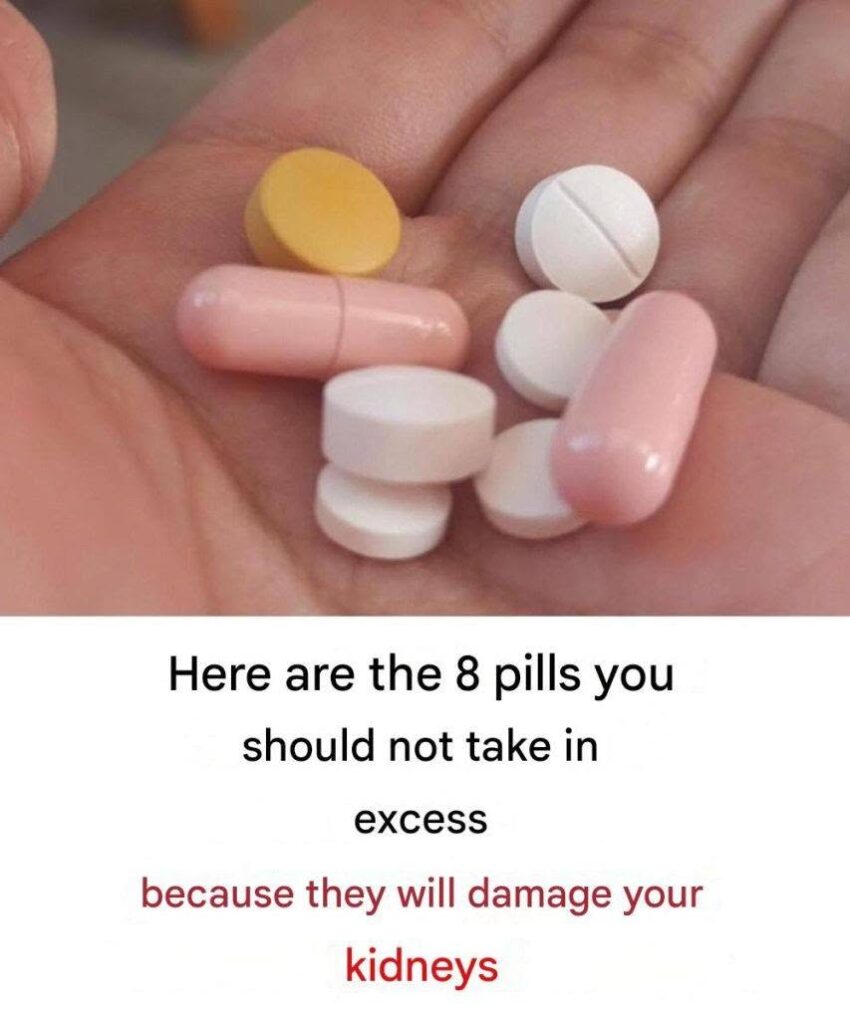
Some common medicines can increase the risk of kidney damage, especially with long-term use, high doses, dehydration, or existing kidney disease. Learn which eight medicines deserve extra caution.
Eight Pills You Shouldn’t Take Carelessly Because They Can Harm Your Kidneys
Your kidneys work continuously to filter waste from your blood, regulate fluids and electrolytes, and help control blood pressure. Many medicines are processed or removed through the kidneys, which means certain drugs can put additional stress on these organs.
That does not mean you should stop prescribed medication on your own.
In fact, some medicines that appear on “kidney danger” lists can actually protect the kidneys when used appropriately. The real issue is understanding which medicines require caution, who is most vulnerable, and when a dose needs to be adjusted.
Here are eight categories of medicines that deserve particular attention.
1. Ibuprofen and Other NSAID Painkillers
Nonsteroidal anti-inflammatory drugs, commonly called NSAIDs, are among the best-known medicines associated with kidney problems.
Examples include:
- Ibuprofen
- Naproxen
- Diclofenac tablets or capsules
- Indomethacin
- Ketorolac
- Meloxicam
- Celecoxib
NSAIDs can reduce blood flow through the kidneys. At high doses or with prolonged use, they can contribute to acute kidney injury or worsen existing chronic kidney disease.
The risk becomes particularly important if someone is dehydrated or already has kidney disease, heart failure, high blood pressure, or certain other medical conditions.
Important: An occasional recommended dose is very different from taking an NSAID repeatedly for weeks or months.
2. High-Dose Aspirin
Aspirin is a special case because its effects depend heavily on the dose and the reason it is being taken.
Low-dose aspirin may be prescribed for certain people with cardiovascular disease and is not automatically harmful to the kidneys. However, at higher doses, aspirin acts more like an NSAID and can reduce blood flow to the kidneys.
Never stop prescribed low-dose aspirin suddenly without discussing it with your healthcare professional, particularly if it was prescribed to reduce cardiovascular risk.
3. Certain Antibiotics
Antibiotics can be extremely important and sometimes lifesaving, but some antibiotics can cause kidney-related problems or accumulate in people whose kidney function is reduced.
The National Kidney Foundation notes that many antibiotics are eliminated through the kidneys, meaning their dose or frequency may need adjustment in people with chronic kidney disease. Some can also directly contribute to kidney injury.
This does not mean you should avoid antibiotics when you need them.
Instead, make sure your doctor or pharmacist knows if you have reduced kidney function so the appropriate medicine and dose can be selected.
4. Certain Antiviral and Antifungal Medicines
Some antiviral and antifungal medicines can also require special consideration when kidney function is impaired.
The issue is often not that the medicine is inherently “bad for the kidneys.” Rather, the kidneys may be responsible for removing the medication from the body. If kidney function is reduced, the drug can accumulate unless the dose is adjusted.
This is one reason prescription medicines should not be shared between family members, even when two people appear to have the same infection.
5. Some Diuretics or “Water Pills”
Diuretics are medicines that help the body remove excess salt and water through urine. They are commonly prescribed for conditions such as high blood pressure and heart failure.
They are not simply “kidney-damaging pills.” In many patients, they are an important part of treatment.
However, excessive fluid loss or dehydration can contribute to kidney problems, particularly when combined with other medicines that affect kidney blood flow. The National Kidney Foundation lists diuretics among medications that can increase the risk of acute kidney injury in certain circumstances.
For this reason, people taking diuretics should follow their prescribed dose and ask their healthcare professional what to do during severe vomiting, diarrhea, fever, or other situations that may cause dehydration.
6. ACE Inhibitors and ARBs — A Complicated One
This category is frequently misunderstood.
ACE inhibitors and ARBs — medicines such as lisinopril or losartan — can cause changes in kidney function in some situations. But they are also considered kidney-protective medicines for many people with chronic kidney disease, particularly when protein is present in the urine.
So it would be misleading to tell everyone to avoid them.
The risk of acute kidney injury can increase when an ACE inhibitor or ARB is combined with an NSAID and a diuretic, particularly in the setting of dehydration.
This combination is sometimes informally referred to as the “triple whammy.”
The lesson is not to stop your blood-pressure medicine. It is to make sure your healthcare professional knows about all the medications you take.
7. Some Medicines Used for Cancer or Other Serious Conditions
Certain medicines used in cancer treatment and other serious diseases can affect the kidneys.
The National Kidney Foundation lists some cancer and HIV medicines among substances that can contribute to acute kidney injury in particular circumstances.
These medications are generally used under medical supervision, where doctors can monitor kidney function and adjust treatment when necessary.
If you are receiving one of these treatments, regular blood testing may be an important part of making sure the kidneys are tolerating the medication.
8. Some Medicines Can Build Up When Kidney Function Is Low
Not every kidney-related medication problem comes from direct kidney damage.
Some medicines are normally removed from the body through the kidneys. When kidney function declines, these medicines can remain in the body longer and reach higher levels than expected.
The National Kidney Foundation explains that many pain medicines, antibiotics, antifungals, and antivirals may require a lower dose or less frequent dosing when eGFR is reduced.
This is why having chronic kidney disease can change the “right” dose of a medication.
Who Is Most at Risk?
Medication-related kidney problems are more concerning in people who already have:
- Chronic kidney disease
- Diabetes
- High blood pressure
- Heart failure
- Older age
- Dehydration
- A history of acute kidney injury
- Multiple medications that affect kidney function
Taking several medicines together can also increase risk because some drug combinations place additional stress on the kidneys.
Warning Signs That Should Not Be Ignored
Kidney problems do not always produce obvious symptoms in the beginning.
However, seek medical advice if you develop symptoms such as:
- A major reduction in urine output
- New swelling in the legs, ankles, feet, or around the eyes
- Unusual shortness of breath
- Persistent nausea or vomiting
- Severe weakness or unusual fatigue
- Confusion
- Sudden changes in urination
- Blood in the urine
A person with possible acute kidney injury may need blood and urine tests to determine what is happening.
Never Stop a Prescription Medicine Just Because of a Headline
This may be the most important point.
Seeing a medicine on a “kidney danger” list does not automatically mean you should stop taking it.
Some medications have important benefits that outweigh their risks when prescribed and monitored correctly. ACE inhibitors and ARBs are a good example: they can help protect kidney function in appropriate patients even though they can contribute to kidney problems under certain circumstances.
The safest approach is to ask:
“Is this medicine appropriate for my kidney function, and does my dose need adjustment?”
That question is much more useful than simply asking whether a medication is “bad for the kidneys.”
How to Protect Your Kidneys When Taking Medication
A few simple habits can reduce avoidable medication-related problems:
- Keep a complete medication list. Include prescriptions, over-the-counter medicines, vitamins, and supplements.
- Tell your doctor if you have kidney disease.
- Don’t routinely take NSAID painkillers without medical advice if you have kidney disease.
- Avoid taking multiple products containing the same ingredient.
- Ask before combining painkillers with blood-pressure or water medicines.
- Follow the prescribed dose rather than assuming more medicine will work better.
- Ask whether kidney-function testing is needed.
- Tell your healthcare professional if you become significantly dehydrated from vomiting or diarrhea.
The Bottom Line
There is no simple list of eight pills that everyone must completely avoid.
Instead, several medication categories — particularly NSAID painkillers, certain antibiotics, antivirals, antifungals, and some combinations of blood-pressure and diuretic medicines — can require special caution when kidney function is reduced or when dehydration and other risk factors are present.
The safest rule is simple: don’t stop an important prescription medicine on your own. If you’re concerned about your kidneys, ask your doctor or pharmacist to review every medication and supplement you take and determine whether any dose needs to be changed.