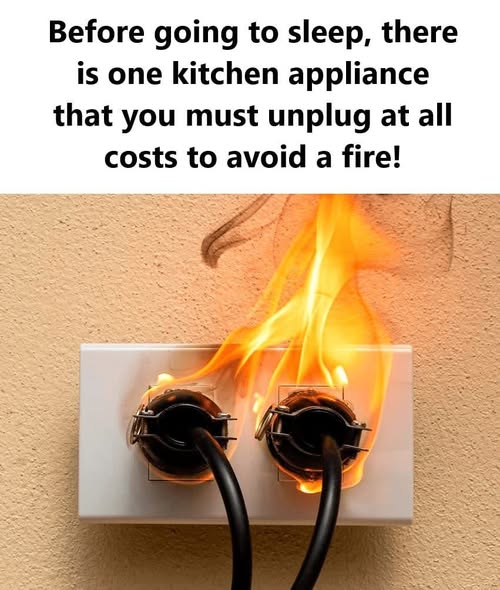
Learn which kitchen appliances can pose a fire risk when left plugged in overnight and why unplugging small heat-producing appliances is a simple safety habit worth following.
Your kitchen may look completely safe when you go to bed, but several appliances remain connected to electricity long after you’ve finished cooking.
Most modern appliances are designed with safety features, and simply leaving an appliance plugged in does not mean a fire will happen. However, electrical faults, damaged cords, overheating, poor ventilation, and malfunctioning components can create hazards.
One appliance deserves particular attention: the toaster.
Why Toasters Deserve Extra Attention
A toaster uses heating elements that become extremely hot during operation.
Even though the heating cycle is normally brief, crumbs and food particles can accumulate inside the appliance. If a fault occurs or combustible material comes into contact with a hot component, there is a potential fire hazard.
That’s why many fire-safety experts recommend making sure a toaster is switched off and unplugged when it isn’t being used, particularly overnight.
The important point isn’t that every plugged-in toaster will cause a fire. Rather, unplugging it removes one unnecessary electrical and heat-related risk while you’re asleep and unable to respond quickly.
Crumbs Can Become a Problem
Toasters naturally collect crumbs.
Small pieces of bread can fall into the bottom of the appliance and build up over time. If the appliance malfunctions or becomes excessively hot, accumulated food debris can contribute to a fire.
Regular cleaning can reduce this risk.
Always allow the toaster to cool completely before cleaning it, and follow the manufacturer’s instructions.
Don’t Put a Toaster Near Flammable Materials
Location matters too.
Keep your toaster away from:
- Paper towels
- Curtains
- Dish towels
- Wooden items
- Plastic packaging
- Cardboard boxes
- Other heat-sensitive materials
A little extra space around the appliance can also help with ventilation.
What About Other Kitchen Appliances?
The toaster isn’t the only appliance worth thinking about.
Small appliances that generate heat deserve particular attention when they aren’t needed for extended periods.
These may include:
- Toaster ovens
- Countertop grills
- Electric kettles
- Portable cooking appliances
- Some coffee makers
- Air fryers
Whether an appliance should remain plugged in depends on its design, condition, manufacturer’s instructions, and how it is being used.
For appliances that don’t need to remain powered, unplugging them when finished is a simple precaution.
Appliances You Should Never Ignore
A damaged electrical cord is more concerning than whether an appliance is simply plugged in.
Stop using an appliance if you notice:
- Frayed or exposed wires
- A cracked plug
- Burn marks
- A burning smell
- Sparks
- Repeated tripping of a circuit breaker
- Unusual buzzing or overheating
Don’t continue using an appliance just because it still appears to work.
A damaged cord or malfunctioning appliance should be repaired or replaced appropriately.
Never Cover a Heat-Producing Appliance
Another common mistake is covering an appliance while it is still warm.
Don’t place towels, clothing, paper, or other materials over a toaster, toaster oven, air fryer, or other heat-producing appliance.
Allow it to cool naturally and keep combustible materials away.
Don’t Overload Kitchen Outlets
Kitchen appliances can draw significant electrical power.
Avoid plugging multiple high-power appliances into the same outlet or using questionable extension cords and adapters.
If an outlet becomes hot, smells burnt, sparks, or repeatedly trips the breaker, stop using it and have the electrical problem checked by a qualified professional.
A Simple Nighttime Kitchen Check
Before heading to bed, take 30 seconds to look around your kitchen.
Step 1: Check the stovetop
Make sure every burner is completely switched off.
Step 2: Check the oven
Confirm that the oven is off unless you are intentionally using a properly designed cooking or warming function.
Step 3: Check small appliances
Switch off appliances that aren’t needed and unplug heat-producing countertop appliances such as the toaster.
Step 4: Look for damaged cords
Check for obvious signs of damage, overheating, or burning.
Step 5: Keep the counters clear
Move paper towels, bags, cloths, and other combustible materials away from heat-producing appliances.
Step 6: Never ignore unusual smells
If you notice a persistent burning or electrical smell, investigate safely rather than assuming it will disappear.
Should You Unplug Everything?
Not necessarily.
Modern appliances can have different designs, standby functions, and manufacturer recommendations. Some appliances are specifically designed to remain connected to power.
The goal isn’t to create unnecessary inconvenience. It’s to identify appliances that produce heat, are damaged, aren’t needed overnight, or have a reasonable reason to be disconnected.
Always follow the manufacturer’s safety instructions.
Why This Small Habit Matters
Unplugging a toaster takes only a few seconds.
It doesn’t guarantee that your home will never experience an electrical fire—no single precaution can do that—but it can eliminate one potential source of trouble.
More importantly, it encourages a broader habit of checking your kitchen before bed.
A few seconds spent checking burners, appliances, cords, and combustible materials can be much more valuable than discovering a problem after it has already become serious.
Final Thoughts
The toaster is one kitchen appliance worth switching off and unplugging when you’re finished using it, especially before going to sleep.
Don’t panic if you’ve occasionally left yours plugged in. The important thing is to develop a safer routine from now on.
Turn it off, unplug it when appropriate, keep it clean, and give it plenty of space from anything flammable.
That simple habit can make your nighttime kitchen routine a little safer.