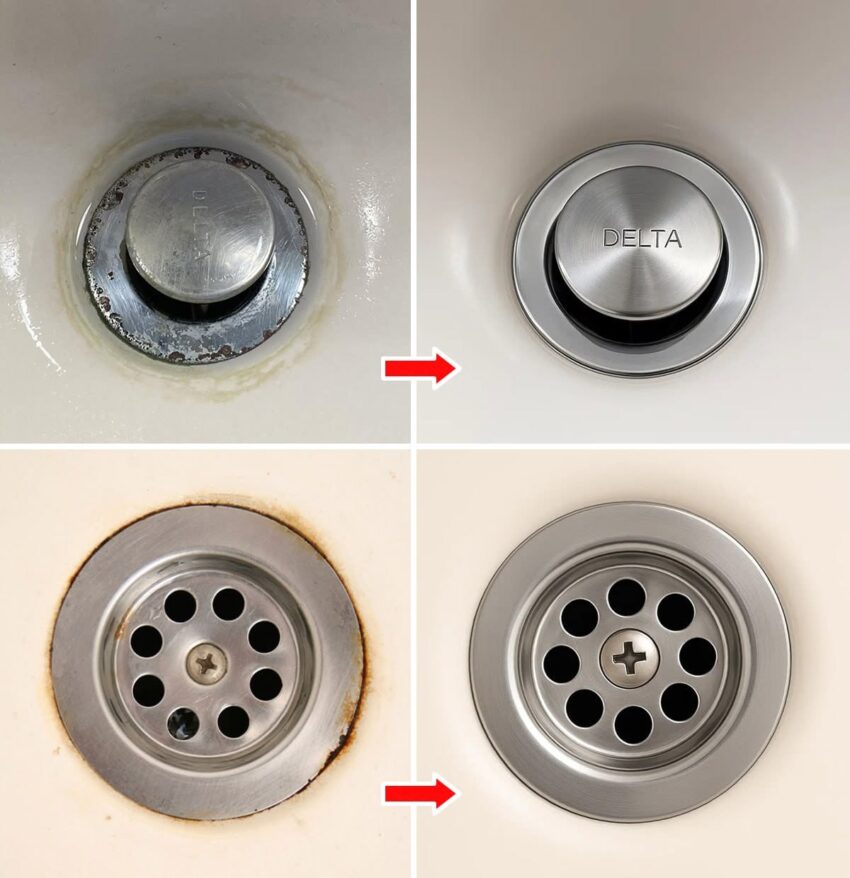
Learn how to remove the dark circle around faucets using simple cleaning methods. Discover how to remove hard-water stains, soap buildup, rust, and grime without damaging your sink or faucet finish.
How to Remove the Dark Circle Around Faucets
A dark circle around the base of a faucet can make an otherwise clean sink look dirty and neglected. These dark marks are commonly caused by hard-water deposits, soap scum, dirt, rust, mold, or moisture trapped around the faucet base. Fortunately, most stains can be removed with simple household cleaning methods.
What Causes the Dark Circle Around a Faucet?
Before cleaning the stain, it helps to understand what is causing it. Common reasons include:
- Hard-water buildup: Minerals such as calcium and magnesium can leave a dark or chalky ring.
- Soap and grime: Soap residue can collect around the faucet base and attract dirt.
- Mold or mildew: Constant moisture can encourage mold growth around the faucet.
- Rust: Metal components or rusty water can leave brown, orange, or dark stains.
- Old sealant: Deteriorated caulk or plumber’s putty can become discolored over time.
- Water trapped underneath the faucet: Persistent moisture can create staining and buildup.
How to Remove the Dark Circle Around the Faucet
1. Clean the Area With Dish Soap
Start with the gentlest cleaning method.
Mix a small amount of dish soap with warm water. Dip a soft cloth or non-abrasive sponge into the solution and wipe around the faucet base.
Use an old soft toothbrush to clean the narrow area where the faucet meets the sink. Rinse with clean water and dry the area completely.
If the dark circle remains, move on to a stronger cleaning method.
2. Use White Vinegar for Mineral Deposits
White vinegar can help dissolve many types of hard-water and mineral buildup.
Soak a clean cloth or paper towel in white vinegar and place it around the stained area. Leave it for approximately 15–30 minutes.
Remove the cloth and gently scrub the area with a soft toothbrush or sponge. Rinse thoroughly with water and dry with a clean microfiber cloth.
Important: Vinegar is acidic and may damage some natural-stone surfaces or certain faucet finishes. If you are unsure, test it on a small, inconspicuous area first.
3. Try a Baking Soda Paste
For stubborn grime, make a paste using baking soda and a small amount of water.
Apply the paste to the dark ring and allow it to sit for several minutes. Gently scrub with a soft toothbrush or microfiber cloth, then rinse thoroughly.
Avoid aggressive scrubbing because abrasive particles can scratch polished metal and other delicate finishes.
4. Remove Rust Stains Carefully
If the circle is brown, orange, or reddish, rust may be responsible.
Use a cleaner specifically designed for rust stains and follow the manufacturer’s instructions. Avoid using harsh chemicals without first checking whether they are compatible with your sink and faucet material.
Never mix different cleaning products, particularly products containing bleach with acidic cleaners such as vinegar.
5. Check the Faucet Base and Seal
If the dark ring keeps coming back after cleaning, the problem may not simply be surface dirt.
Carefully inspect the area around the faucet base. Look for:
- Cracked or deteriorated sealant
- Loose faucet fittings
- Water collecting underneath the faucet
- Signs of leakage
- Corrosion around the faucet base
If water is getting underneath the faucet, cleaning alone may not solve the problem. The faucet may need to be tightened, resealed, or professionally repaired.
How to Prevent Dark Circles Around Faucets
Once the stain has been removed, prevention is much easier.
Keep the area dry: Wipe around the faucet base after using the sink to prevent moisture from sitting there.
Clean regularly: Give the faucet and surrounding area a quick wipe several times a week.
Remove mineral deposits early: Hard-water stains become more difficult to remove when they are allowed to build up.
Fix leaks promptly: Even a small leak can create persistent moisture and staining around the faucet.
Use gentle cleaning products: Avoid abrasive pads and harsh chemicals that can damage the faucet’s protective finish.
When Should You Replace the Seal?
If the dark circle is underneath the faucet or continues returning shortly after cleaning, the seal may have deteriorated. A damaged seal can allow water and grime to collect underneath the faucet.
In this situation, removing the faucet, cleaning the surface, and installing a new appropriate seal may be necessary. If you are not comfortable removing the faucet, consider contacting a qualified plumber.
Final Thoughts
Removing a dark circle around a faucet usually starts with gentle cleaning using dish soap and warm water. For hard-water deposits, white vinegar can be effective when it is safe for the surface. Baking soda can help with stubborn grime, while rust stains may require a specialized rust remover.
The key is to avoid excessive scrubbing and harsh chemicals that could damage the sink or faucet finish. If the stain repeatedly returns, check for leaks, trapped moisture, corrosion, or a damaged seal rather than simply cleaning it again.