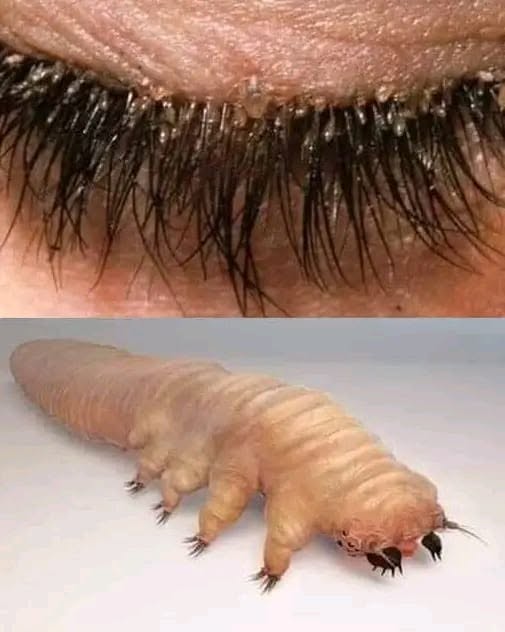
The concern arises when there are unusually large numbers of mites or when they contribute to inflammation around the eyelids. This can be associated with a condition called Demodex blepharitis.
If your eyes frequently feel irritated, itchy, or unusually gritty, understanding the possible symptoms can help you decide when it’s time to see an eye-care professional.
What Are Eyelash Mites?
The term “eyelash mites” usually refers to Demodex folliculorum and Demodex brevis.
They are extremely small and cannot normally be seen with the naked eye.
Demodex folliculorum tends to live around hair follicles, including eyelash follicles, while Demodex brevis is more commonly associated with oil glands in the skin.
Having Demodex mites is not automatically a sign of poor hygiene. They are common, and their numbers tend to increase with age.
8 Possible Signs of Eyelash Mite Overgrowth
Symptoms can overlap with dry eye, allergies, blepharitis, conjunctivitis, and other eye conditions. Therefore, symptoms alone cannot confirm that you have Demodex.
1. Persistent Itchy Eyelids
One of the symptoms people may notice is itching around the eyelid margins or eyelashes.
The itching may be particularly noticeable around the roots of the lashes.
2. Red or Irritated Eyelids
The edges of the eyelids may appear red, inflamed, or irritated.
This can happen when inflammation develops around the eyelash follicles.
3. Burning or Stinging
Some people experience a burning, stinging, or uncomfortable sensation around the eyes.
These symptoms are not specific to Demodex and can also occur with dry eyes or allergies.
4. Gritty or “Something in My Eye” Feeling
Your eyes may feel as though there is sand or a tiny particle in them.
This sensation can occur with inflammation of the eyelids or problems with the tear film.
5. Crust or Debris Around the Eyelashes
One of the more characteristic findings associated with Demodex blepharitis is cylindrical dandruff.
This appears as small, sleeve-like or cylindrical deposits surrounding the base of individual eyelashes.
If you repeatedly notice unusual debris around the roots of your eyelashes, an eye-care professional can examine the area.
6. Dry Eyes
Demodex-associated inflammation may affect the eyelid’s oil-producing glands and contribute to an unstable tear film.
This can result in symptoms such as:
- Dryness
- Burning
- Irritation
- Watery eyes
- Sensitivity to wind or screens
7. Excessive Tearing
Interestingly, irritated or dry eyes can sometimes produce more tears, rather than fewer.
If your eyes frequently water while also feeling dry or irritated, an eye examination can help determine the cause.
8. Eyelash Changes
In more significant cases of eyelid inflammation, eyelashes may become brittle, fall out, grow abnormally, or become misdirected.
However, eyelash loss has many possible causes and should not automatically be blamed on mites.
Can You Actually See Eyelash Mites?
Usually, no.
Demodex mites are microscopic. Seeing tiny particles or “worms” on your eyelashes does not necessarily mean you have mites.
An eye-care professional can examine your eyelashes and eyelid margins using magnification. In some cases, eyelashes may be examined under a microscope to look for Demodex.
Who Is More Likely to Have Demodex Problems?
Demodex mites are common in adults, and their prevalence generally increases with age.
Having mites does not necessarily mean you will develop symptoms.
Problems are more likely when there is significant mite overpopulation or an inflammatory response around the eyelids.
Is It Caused by Poor Hygiene?
Not necessarily.
Demodex mites are naturally present on many people’s skin.
However, maintaining good eyelid hygiene can be an important part of managing blepharitis and reducing the buildup of oils and debris around the eyelashes.
This does not mean aggressively scrubbing your eyes.
What Can You Do at Home?
If you have mild eyelid irritation, general eyelid-care measures may help.
Keep the Eyelids Clean
Gently clean the eyelid margins using an appropriate eyelid cleanser or another product recommended by your eye-care professional.
Avoid getting irritating products directly into the eyes.
Use a Warm Compress
A comfortably warm compress placed over closed eyelids for several minutes may help loosen eyelid debris and oils.
The compress should be warm rather than hot.
Avoid Eye Makeup During Flares
If your eyelids are irritated, temporarily avoiding eye makeup may reduce additional irritation.
Replace old eye makeup according to the manufacturer’s recommendations, particularly mascara and eyeliner.
Don’t Scrub Your Eyelashes Aggressively
Aggressive scrubbing can irritate the delicate skin around the eyes and potentially make symptoms worse.
Be Careful With “Natural” Mite Treatments
You may find online recommendations for putting essential oils, vinegar, alcohol, tea tree oil, or other substances directly around the eyes.
Do not put undiluted essential oils, vinegar, alcohol, or other irritating substances into or directly around your eyes.
The eye is extremely sensitive, and chemical irritation or injury can be serious.
If you suspect Demodex, an eye-care professional can recommend an appropriate treatment.
How Are Eyelash Mites Treated?
Treatment depends on whether Demodex is actually causing symptoms.
An eye-care professional may recommend specific eyelid hygiene measures and, when appropriate, an approved treatment for Demodex blepharitis.
Treatment should be individualized because similar symptoms can be caused by:
- Dry-eye disease
- Allergies
- Bacterial blepharitis
- Contact dermatitis
- Meibomian gland dysfunction
- Other eyelid disorders
Trying to treat the wrong condition can make irritation worse.
When Should You See an Eye Doctor?
Make an appointment if you have persistent:
- Eyelid redness
- Itching
- Crusting
- Burning
- Dryness
- Eyelash loss
- Recurrent eyelid inflammation
- Eye discomfort
You should seek urgent medical attention for significant eye pain, sudden vision changes, marked swelling, severe light sensitivity, an eye injury, or symptoms suggesting an eye infection.
Final Thoughts
Eyelash mites are real, but they’re also common microscopic organisms that many people have without symptoms.
The presence of Demodex does not automatically mean your eyes are infested or that you have poor hygiene.
Persistent itching, red eyelids, cylindrical debris around the lash roots, dryness, and irritation can be associated with Demodex blepharitis, but these symptoms can have many other causes.
The best way to determine what’s happening is to have your eyelids and eyes examined by an optometrist or ophthalmologist rather than attempting to diagnose or treat mites yourself.
Medical Disclaimer
This article is for general educational purposes and is not a substitute for professional eye-care advice, diagnosis, or treatment. Avoid putting homemade remedies, essential oils, vinegar, or other unapproved substances in or around the eyes.