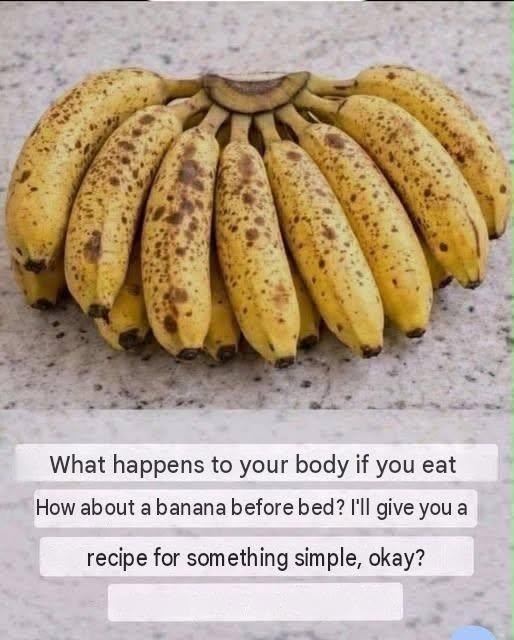
Eating a banana at night may support better sleep, muscle relaxation, digestion, and overall nutrition. Learn what happens when you eat a banana before bed and whether it can affect your weight.
If You Eat Bananas at Night, You May Increase Your Sleep Quality — Here’s What to Know
Bananas are one of the simplest fruits to add to your daily diet, but many people wonder whether eating one at night is a good idea. Some claims suggest that having a banana before bed can improve sleep, relax the muscles, or even affect body weight.
So, what actually happens when you eat a banana at night?
The answer depends on your overall diet, portion size, and individual health needs. A banana provides carbohydrates, potassium, magnesium, fiber, and vitamin B6, making it a nutrient-rich snack. For some people, eating a small banana in the evening can be a convenient and satisfying option.
1. It May Support Better Sleep
One reason bananas are often recommended as a nighttime snack is their vitamin B6 content.
Vitamin B6 is involved in several processes related to neurotransmitters and the body’s production of compounds involved in sleep regulation. Bananas also contain magnesium and potassium, minerals that are important for normal muscle and nerve function.
However, it is important not to think of a banana as a sleeping pill. Eating one does not guarantee that you will fall asleep faster or sleep more deeply.
Your sleep is influenced by many factors, including stress, caffeine intake, screen exposure, your sleep schedule, and your overall health.
2. It Can Help Satisfy Evening Hunger
Going to bed hungry can be uncomfortable, especially if you have not eaten enough during the day.
A banana contains carbohydrates and fiber, which can make it a more satisfying choice than many highly processed nighttime snacks.
Instead of reaching for cookies, chips, or sugary desserts, a banana can provide natural sweetness along with useful nutrients.
3. It Provides Potassium
Bananas are well known for their potassium content.
Potassium is an essential mineral that helps support normal muscle contraction, nerve function, and fluid balance in the body.
Getting enough potassium from foods such as fruits and vegetables is an important part of a balanced diet.
However, eating a single banana at night should not be viewed as a treatment for muscle cramps or other medical problems.
4. It Contains Magnesium
Bananas contain some magnesium, another mineral needed for normal muscle and nerve function.
Magnesium is involved in hundreds of processes in the body, including energy production and normal muscle function.
Although bananas contribute to your daily magnesium intake, they are not among the richest dietary sources of magnesium. Nuts, seeds, legumes, and whole grains can provide substantially more.
5. It May Help With Digestion
Bananas contain dietary fiber, which supports normal digestive health.
Depending on the banana’s ripeness, it contains different types of carbohydrates and fiber. Less-ripe bananas contain more resistant starch, while ripe bananas contain more readily available carbohydrates.
For many people, a banana can be an easy-to-digest snack. But everyone’s digestive system is different. If you experience bloating or discomfort after eating bananas, especially close to bedtime, you may prefer eating them earlier in the day.
6. Will Eating a Banana at Night Make You Gain Weight?
This is one of the biggest myths surrounding nighttime bananas.
Eating a banana at night does not automatically make you gain weight.
Weight changes are influenced primarily by your overall calorie intake, activity level, metabolism, and eating patterns over time—not simply by eating one particular food after a certain hour.
A medium banana can fit comfortably into a balanced diet. The bigger issue is what you eat throughout the entire day.
For example, replacing a high-calorie dessert with a banana may actually reduce your overall calorie intake.
7. Can Bananas Help With Weight Loss?
Bananas can be part of a weight-management diet because they are naturally sweet and provide fiber and nutrients.
However, bananas are not a fat-burning food.
If your goal is weight loss, focus on your overall eating pattern: adequate protein, vegetables, fruits, whole grains, healthy fats, appropriate portions, and regular physical activity.
8. What Is the Best Time to Eat a Banana?
There is no universally “best” time to eat a banana.
You can eat one in the morning, before exercise, as part of lunch, or as an evening snack.
If you enjoy bananas at night and they do not cause digestive discomfort, having one a few hours before bed can be perfectly reasonable.
9. What Can You Pair With a Banana?
If you want a more filling nighttime snack, you can combine a banana with a source of protein or healthy fat.
Some options include:
- Banana with plain yogurt
- Banana with a small amount of peanut butter
- Banana with unsweetened Greek yogurt
- Banana with a few nuts
- Banana added to oatmeal
These combinations can provide a more balanced snack than eating a banana alone.
10. Who Should Be Careful?
Most healthy people can enjoy bananas as part of a normal diet.
However, people with certain medical conditions—particularly conditions requiring potassium restriction—may need to monitor their intake of potassium-rich foods. If your doctor has advised you to limit potassium, follow their individualized dietary guidance.
People with diabetes can also generally include bananas in their diet, but portion size and total carbohydrate intake matter.
The Bottom Line
Eating a banana at night may be a nutritious and convenient snack. Its potassium, magnesium, vitamin B6, carbohydrates, and fiber can contribute to a healthy diet, and some people may find it satisfying before bedtime.
But there is no strong reason to believe that simply eating a banana at night will dramatically improve sleep, burn fat, or cause weight gain.
The most important factor is your overall diet and lifestyle, not the clock.
If you enjoy bananas in the evening and they agree with your digestion, there is generally no need to avoid them simply because it is nighttime.