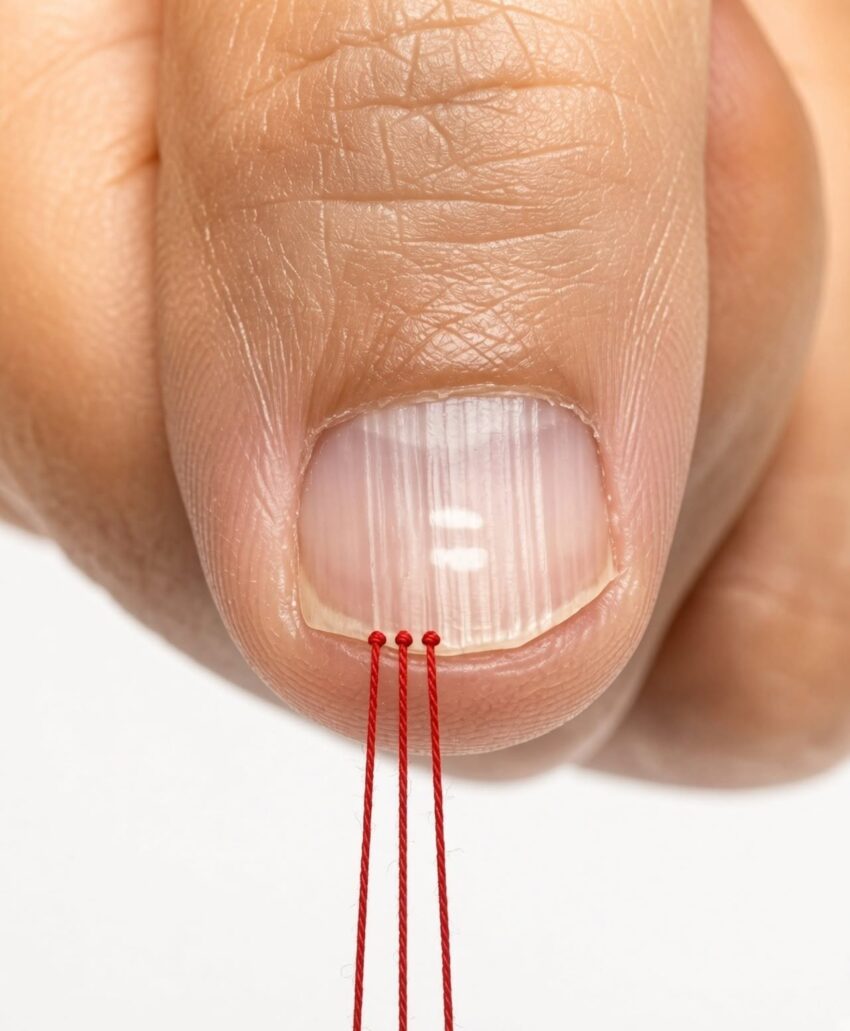
Notice lines or ridges on your nails after 40? Learn which nail changes are usually harmless, what they can sometimes indicate, and when unusual nail changes deserve medical attention.
Have you ever looked closely at your fingernails and noticed small lines running from the base toward the tip?
After 40, these changes can become more noticeable, and it’s easy to assume they must be a warning sign of a serious health problem.
But there’s an important distinction to make: not every nail ridge or line means something is wrong with your health.
Vertical Lines Are Often a Normal Part of Aging
Lines that run from the cuticle toward the tip of the nail are called longitudinal ridges or vertical ridges.
They can become more prominent as people get older because nail growth and the structure of the nail can change with age.
If the ridges are mild, appear on several nails, and haven’t developed suddenly, they are often not a cause for concern.
In other words, seeing a few vertical lines after 40 does not automatically mean you have a vitamin deficiency or serious illness.
But Not All Nail Lines Are the Same
The direction, color, depth, and pattern of a nail change matter.
A line running lengthwise is different from a groove running across the nail.
Horizontal Grooves
Lines running across the nail are sometimes called Beau’s lines.
They can occur when nail growth is temporarily interrupted. This may happen after certain illnesses, significant physical stress, injury to the nail, or other circumstances that affect nail growth.
Because fingernails grow slowly, a groove may appear weeks or months after the event that affected the nail.
What About White Lines?
White marks on nails are also common.
Small white spots are frequently caused by minor trauma to the nail and usually grow out as the nail grows.
They aren’t automatically evidence of calcium deficiency.
However, widespread or unusual discoloration involving many nails can have different causes and may deserve professional assessment.
When Nail Changes Shouldn’t Be Ignored
Although ordinary vertical ridges are often harmless, pay attention if you notice a new, rapidly changing, or unusual nail abnormality.
See a healthcare professional if you develop:
- A dark or brown streak under one nail that is new or changing
- A dark streak that becomes wider
- Pigment extending onto the surrounding skin
- Significant nail lifting or separation
- Persistent pain, swelling, or bleeding
- Major changes in nail shape or thickness
- Repeated nail changes affecting only one nail
- A nail that becomes severely discolored without an obvious explanation
A new dark streak under a nail is particularly important to have evaluated because, although uncommon, certain forms of skin cancer can develop in or around the nail.
Can Nail Ridges Mean a Vitamin Deficiency?
Sometimes nutritional problems can affect the nails, but it’s a mistake to assume that every ridge is caused by a lack of vitamins.
Iron deficiency and other nutritional deficiencies can produce particular nail changes, but nail appearance alone usually cannot tell you which nutrient you’re lacking.
Taking high-dose supplements simply because you notice ridges isn’t necessarily helpful.
If you have other symptoms or have a reason to suspect a deficiency, a healthcare professional can decide whether testing is appropriate.
Don’t Pick or Buff the Ridges Aggressively
If your nail ridges are mainly cosmetic, avoid aggressively filing or buffing the nail surface.
Repeatedly thinning the nail can make it weaker and more vulnerable to splitting.
Instead, keep nails trimmed, moisturize the nails and surrounding skin, and protect your hands from excessive exposure to harsh chemicals.
A Simple Nail-Care Routine
Healthy nail care doesn’t have to be complicated.
Keep nails clean and dry: This helps reduce the chance of infection.
Moisturize regularly: Apply hand cream or a simple moisturizer to the nails and cuticles.
Avoid biting or picking: Repeated trauma can damage the nail.
Wear gloves for household cleaning: Detergents and prolonged water exposure can irritate the surrounding skin.
Don’t aggressively remove cuticles: The cuticle helps protect the area where the nail grows.
The Bottom Line
If you notice vertical lines running from the base of your nails toward the tips after 40, don’t panic. These ridges are often a normal change associated with aging.
The important thing is to look at the overall pattern.
A sudden dark streak, major change in one nail, painful swelling, significant nail separation, or rapidly changing appearance deserves more attention than a few mild vertical ridges.
Your nails can provide useful clues about your health, but they aren’t a diagnostic test on their own. If a nail change is new, persistent, or unusual, getting it checked is safer than trying to diagnose the cause from its appearance alone.