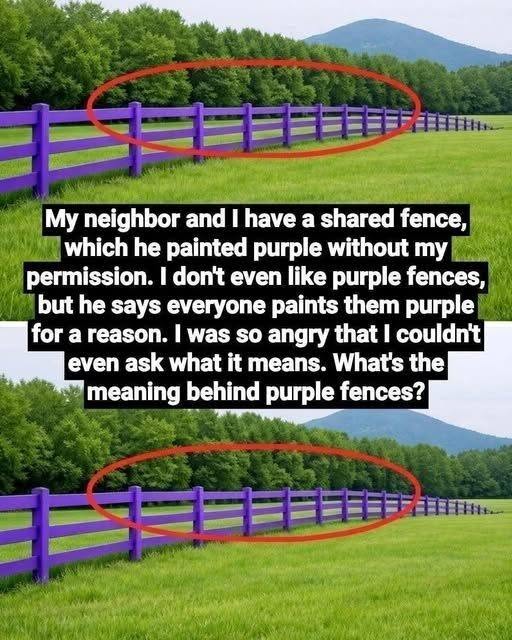
Discover what a painted purple fence or tree means, why landowners use purple paint to mark private property, and how purple paint trespassing laws vary across the United States.
Have you ever been walking along a country road, driving through a rural area, or exploring a wooded trail when you noticed a bright purple stripe painted on a fence post or tree? At first glance, it might seem like an unusual decorating choice. However, in certain parts of the United States, that simple purple mark can communicate an important legal warning.
A purple-painted fence post or tree may indicate that the land is private and that entering the property without permission is prohibited. This practice is commonly known as the purple paint law, and it gives property owners an alternative to posting traditional “No Trespassing” signs.
But there is more to this unusual marking than many people realize. Its meaning depends on where you are, how the paint is applied, and the local laws governing private property.
What Does a Purple Fence Actually Mean?
In states that recognize purple paint markings under their trespassing laws, a properly placed purple stripe can serve as notice that people should not enter or cross the marked property without authorization.
Landowners may paint vertical purple lines on trees, fence posts, or other permitted boundary markers. These markings help identify restricted areas without requiring a separate sign at every entrance.
For hikers, hunters, campers, and people traveling through rural communities, recognizing this signal can help prevent accidental trespassing.
However, not every purple fence carries this legal meaning. A fence may simply be painted purple for decoration, identification, or another local purpose. The location and circumstances matter.
Why Do Landowners Use Purple Paint Instead of Signs?
There are several practical reasons why property owners choose this method.
1. Purple Paint Can Be Easier to Maintain
Traditional signs can become damaged by rain, snow, wind, or falling branches. They may also fade over time or become difficult to read when vegetation grows around them.
Painted markings can provide a relatively durable alternative when applied and maintained correctly. Property owners still need to ensure that the markings remain visible and comply with applicable laws.
2. It Can Clearly Mark Long Property Boundaries
Rural properties, forests, farms, and hunting grounds can cover large areas. Installing signs along every section of a boundary may be expensive and time-consuming.
Where permitted, painted markings allow landowners to identify restricted areas using trees or fence posts already present along the property line.
3. The Color Is Designed to Stand Out
Purple can be noticeable against common natural backgrounds, including brown tree bark and green vegetation. A bright marking may catch the attention of someone approaching a property boundary.
The purpose is not to decorate the landscape but to communicate a warning that should not be ignored.
4. It Can Reduce Dependence on Written Signs
A painted stripe does not need to contain words such as “Private Property” or “No Trespassing.” In states where the law recognizes the system, the color itself can communicate the warning when the marking meets the required legal standards.
This can be especially useful in remote locations where signs may be difficult to install or maintain.
Where Is the Purple Paint Law Used?
Purple paint trespassing laws exist in several US states, but they do not operate identically everywhere. States have different requirements concerning the permitted surfaces, dimensions, spacing, visibility, and placement of markings.
For example, states such as Texas and Missouri recognize purple paint as a way to provide notice against trespassing under specified conditions.
The important point is that a purple stripe does not automatically have the same legal status in every state or country. Anyone relying on these markings should check the law applicable to the exact location.
How Is Purple Paint Supposed to Be Applied?
Where purple paint is legally recognized, the markings generally must meet specific requirements. These may include:
- Color: The mark must use the designated purple color.
- Placement: It may need to appear on trees, posts, or other surfaces authorized by state law.
- Visibility: The marking must be visible to people approaching the property.
- Dimensions: The stripe may need to meet minimum height and width requirements.
- Spacing: Markings may have to appear at specified intervals along the boundary.
These requirements vary by jurisdiction. A small purple spot, a decorative fence, or an isolated mark should not automatically be assumed to satisfy the law.
What Should You Do If You See a Purple Mark?
If you encounter a purple-painted fence post or tree while walking, hiking, hunting, or exploring, take a moment to consider your surroundings.
First, respect the possible property boundary. Do not cross into the marked area unless you have permission or another lawful basis to enter.
Second, look for additional information. There may be property signs, trail markers, gates, or other indications explaining where public access ends.
Third, check local rules if you are uncertain. The meaning of the marking depends on local law, and private-property restrictions differ from one place to another.
If you are following a public trail, remain on the designated route and check official trail information rather than assuming that every painted mark refers to trespassing.
Does a Purple Fence Mean the Property Is Dangerous?
No. Purple paint is not generally a warning that a property contains dangerous animals, hazardous chemicals, or hidden traps.
In jurisdictions where the purple paint system is recognized, its purpose is to communicate a property-access restriction. It should not be interpreted as a universal danger symbol.
Likewise, a purple mark does not necessarily mean that the owner is hostile toward visitors. The owner may simply be trying to establish a clear boundary and prevent unauthorized entry.
What Does Purple Paint Mean Outside the United States?
This is an important distinction for international readers.
The purple paint law is associated with certain US jurisdictions. In countries such as Pakistan, the United Kingdom, Canada, and Australia, a purple-painted fence does not automatically carry the same standardized legal meaning.
A purple fence in another country may be decorative, part of a local marking system, or used for a completely different purpose. Its significance must be understood within the local context.
If you see a purple fence in your own community, avoid assuming that it has the same meaning as a purple stripe on a rural property in Texas or Missouri.
Can You Be Charged With Trespassing After Crossing a Purple Line?
Potentially, yes, depending on the location and circumstances.
In a state that recognizes purple paint as legally sufficient notice, crossing a properly marked boundary without authorization may contribute to a trespassing violation. However, the exact legal consequences depend on the relevant law, the person’s conduct, and any applicable exceptions.
The paint itself does not create identical legal consequences everywhere, and the absence of purple paint does not necessarily mean that land is open to the public.
Property owners may have other legally recognized ways to communicate that access is restricted.
Why This Small Detail Is Worth Knowing
Many people assume that property restrictions will always be communicated through signs, gates, or fences. The purple paint system demonstrates that a simple visual marking can also have a specific legal purpose.
For people who enjoy outdoor activities, understanding local boundary markings can help prevent misunderstandings and encourage responsible use of private and public land.
It is also a reminder that colors do not have universal meanings. A marking that has legal significance in one jurisdiction may have no standardized meaning in another.
Final Thoughts
If you spot a purple-painted fence or a purple stripe on a tree, do not automatically assume it is decorative. In certain US states, properly applied purple paint can serve as a legally recognized warning that the property is private and that unauthorized entry is prohibited.
The most important lesson is to respect property boundaries, pay attention to local signs and markings, and check the rules that apply to the area you are visiting.
A simple stripe of paint may seem insignificant, but in the right location, it can communicate a message that is well worth understanding.