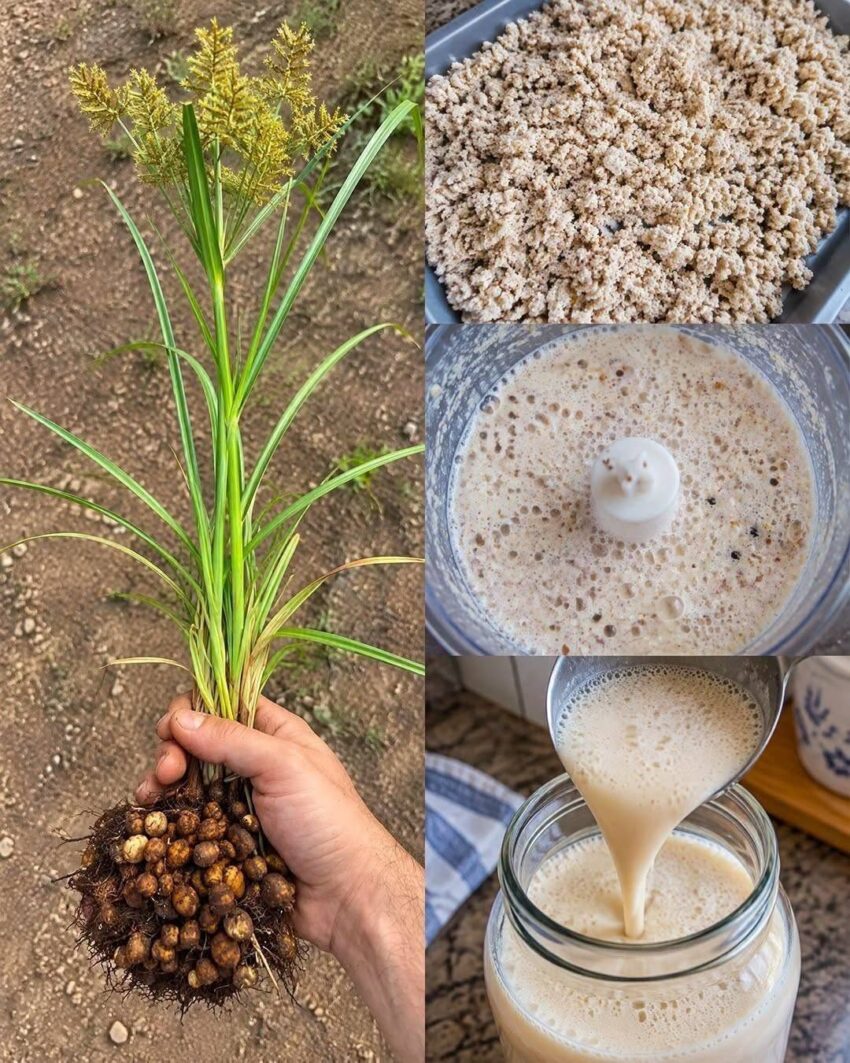
At first glance, this plant may look like an ordinary grass or weed. But hidden beneath the soil is a surprisingly nutritious crop that has been eaten for centuries: tiger nuts.
Despite their name, tiger nuts aren’t actually nuts. They are small edible tubers produced by the plant Cyperus esculentus, commonly known as yellow nutsedge. The small, wrinkled tubers can be eaten dried, soaked, or processed into drinks and flour.
What Are Tiger Nuts?
Tiger nuts are small, naturally sweet tubers that grow underground along the plant’s roots.
They have a slightly chewy texture when dried and a flavor often compared with almonds, coconut, or other mildly sweet foods.
They are also known by names such as chufa and earth almonds in different regions.
Why Are Tiger Nuts Considered Nutritious?
Tiger nuts contain several nutrients and naturally occurring compounds that make them an interesting addition to a varied diet.
1. They’re a source of dietary fiber
Tiger nuts contain considerable dietary fiber. Fiber is important for normal digestive function and can help support regular bowel movements as part of an overall fiber-rich diet.
2. They contain beneficial fats
Tiger nuts contain mostly unsaturated fats, including oleic acid. Unsaturated fats can be part of a heart-conscious eating pattern when they replace some sources of saturated fat.
3. They provide minerals
Tiger nuts provide minerals such as magnesium, phosphorus, potassium, and iron, although the amount you consume and the specific product can vary.
4. They are naturally sweet
One reason tiger nuts have become popular is their naturally sweet taste. They can be eaten as a snack or incorporated into recipes without requiring much added sugar.
Tiger Nut Milk Is a Traditional Favorite
One of the best-known ways to use tiger nuts is to make a plant-based beverage often called tiger nut milk or horchata de chufa.
The traditional process generally involves:
- Cleaning and soaking the dried tiger nuts.
- Blending them with water.
- Straining the mixture.
- Serving the resulting drink chilled.
Depending on the recipe, additional ingredients such as cinnamon or a small amount of sweetener may be added.
The resulting beverage is naturally creamy and has a distinctive sweet, nutty flavor.
Tiger Nuts Aren’t Actually Nuts
This is one of the most interesting things about them.
Despite their name and nut-like taste, tiger nuts are tubers, not tree nuts. That means the botanical classification is completely different from almonds, walnuts, cashews, and similar foods.
However, anyone with food allergies should still check product labels and preparation conditions, particularly with commercially prepared tiger-nut products.
How Can You Eat Tiger Nuts?
There are several ways to enjoy them:
- Eat dried tiger nuts as a snack.
- Soak them to soften their texture.
- Blend them into homemade tiger-nut milk.
- Grind them into flour.
- Add tiger-nut flour to baked goods.
- Mix chopped tiger nuts into oatmeal or yogurt.
- Use them as an ingredient in homemade energy bites.
Because dried tiger nuts can be quite hard and chewy, soaking them before eating can make them considerably easier to consume.
Are Tiger Nuts a “Superfood”?
The word “superfood” is mainly a marketing term rather than a scientific classification.
Tiger nuts certainly have an interesting nutritional profile, particularly because they provide fiber and unsaturated fats. But they aren’t a miracle food, and eating them doesn’t automatically prevent disease, detoxify the body, or replace a balanced diet.
Their greatest value is as one nutritious food that can contribute to dietary variety.
An Ancient Food With Modern Appeal
Tiger nuts have a long history as a food crop and have been consumed in different parts of the world for generations.
Today, they’re attracting renewed attention because they fit several modern dietary preferences. Tiger-nut milk, flour, and snacks are increasingly used as alternatives to some conventional ingredients.
And perhaps the most surprising part is where the food comes from: the edible tubers are hiding underground while the plant above the soil looks relatively ordinary.
Final Thoughts
What looks like a simple grass-like plant can produce a surprisingly useful crop beneath the soil.
Tiger nuts are small edible tubers that provide fiber, unsaturated fats, and several minerals, and they can be enjoyed in many different forms—from a chewy snack to traditional tiger-nut milk and flour.
They may not be a magical “superfood,” but they are certainly an unusual and nutritious plant food worth knowing about.