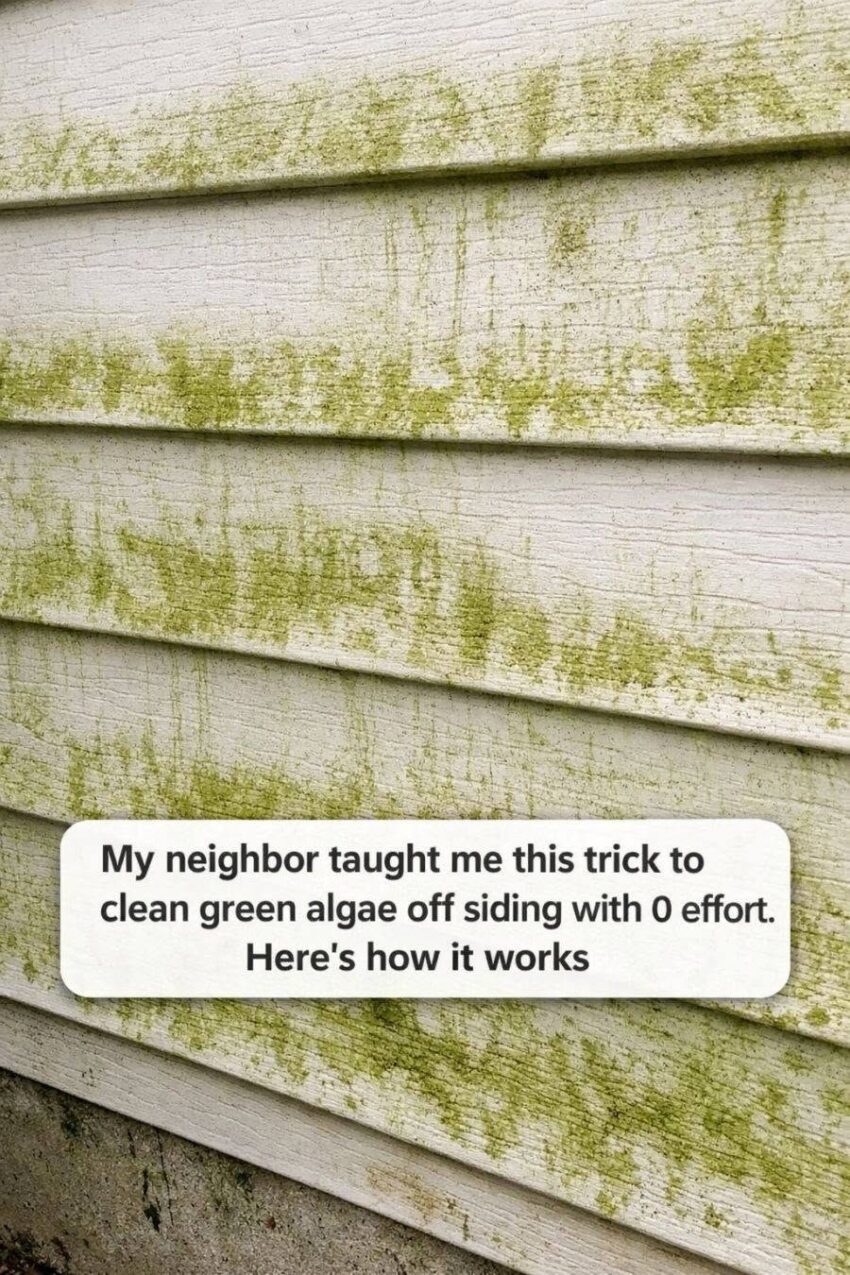
Discover how to remove green algae from house siding with a simple, low-effort cleaning method. Learn which cleaners work, how to protect plants, and how to prevent algae from returning.
Have you ever looked at the outside of your house and noticed green streaks spreading across the siding? What begins as a few faint patches can gradually turn into a stubborn layer of green algae, especially on the shady side of a home.
The good news is that you usually don’t need hours of scrubbing or an expensive pressure washer to tackle the problem. A gentle cleaning solution, a little patience, and the right technique can make a noticeable difference.
The trick is to let the cleaning solution do the work instead of trying to scrub every green patch away by hand.
Why Does Green Algae Grow on House Siding?
Green algae commonly develop on exterior surfaces that remain damp for long periods. Shaded walls, areas beneath gutters, and siding surrounded by trees are particularly susceptible.
Several factors contribute to the problem:
- Moisture: Rain, leaking gutters, and water splashing against walls create favorable conditions.
- Shade: Walls that receive little direct sunlight tend to dry more slowly.
- Poor airflow: Dense shrubs and plants near the house can trap moisture.
- Dirt buildup: Dust and organic debris can help algae and other growth become established.
Algae may appear on vinyl, painted wood, fiber-cement, and other siding materials, but the safest cleaning method depends on the surface.
The Low-Effort Method for Cleaning Green Algae
<AsyncImageGroup query={[“green algae on white vinyl house siding exterior close up”,”person gently cleaning exterior vinyl house siding with garden hose soft brush”]} aspectRatio=”5:4″ layout=”bento”/>
What You’ll Need
- A garden hose with a gentle spray setting
- A bucket of warm water
- A small amount of mild dish soap
- A soft-bristled brush or nonabrasive sponge
- Protective gloves
- A tarp or water for protecting nearby plants
Step 1: Wet the Siding
Rinse the affected area gently with a garden hose to remove loose dirt and dust.
Avoid directing water upward beneath the siding panels, because trapped water can damage the wall or encourage moisture problems.
Step 2: Apply Mild Soapy Water
Mix a small amount of mild dish soap into a bucket of warm water. Apply the solution to a small, inconspicuous section of siding first to check for discoloration or other damage.
Work in manageable sections, applying the solution with a soft sponge or brush.
Step 3: Let the Solution Sit Briefly
Allow the soapy water to loosen surface dirt for a few minutes, but do not let it dry on the siding.
For heavier algae growth, ordinary dish soap may not be sufficient. Use a siding-compatible exterior cleaner according to its label rather than increasing the concentration of household chemicals.
Step 4: Gently Brush the Green Areas
Use a soft-bristled brush to loosen any remaining growth. You should not need aggressive scrubbing on most washable surfaces.
Avoid abrasive pads, stiff wire brushes, and harsh scouring products, which may scratch vinyl or damage painted finishes.
Step 5: Rinse Thoroughly
Rinse from the top downward with clean water until all soap and loosened residue have been removed.
Inspect the area after it dries. If green patches remain, repeat the process or choose a suitable exterior cleaner for your particular siding material.
Can You Make the Algae Disappear Without Scrubbing?
Sometimes, yes. A cleaner formulated specifically for exterior siding may loosen or remove algae with minimal brushing. However, no single household trick works on every surface or every level of growth.
Some exterior cleaners contain bleach or other active ingredients. These may be effective when appropriate for the material, but they require careful handling and strict adherence to the product label.
Never mix bleach with vinegar, ammonia, acids, or other cleaning products. Dangerous gases can be released. Protect your eyes and skin, keep children and pets away from the work area, and protect nearby plants from runoff.
If you have painted wood siding, old paint, delicate finishes, or an unknown siding material, check the manufacturer’s cleaning instructions before applying a chemical cleaner.
What About Pressure Washing?
A pressure washer can seem like the fastest solution, but excessive pressure may force water behind siding, damage paint, or crack fragile surfaces.
For routine algae removal, a garden hose and a soft brush are often a safer starting point. If pressure washing is permitted for your siding, follow the manufacturer’s recommendations and avoid spraying directly into seams, vents, and openings.
How to Keep Green Algae From Returning
Cleaning the siding solves the visible problem, but addressing moisture helps prevent it from returning.
Keep gutters clear. Overflowing gutters can repeatedly wet the same wall.
Trim nearby shrubs. Allowing air to circulate around the house helps siding dry faster.
Check for leaks. Inspect downspouts, outdoor taps, and areas where water collects near the wall.
Reduce unnecessary shade and moisture. Where practical, remove debris and improve drainage around the house.
Inspect the siding periodically. Cleaning small patches early is generally easier than removing extensive growth later.
When Green Growth May Be More Than an Appearance Problem
Green discoloration is often algae, but exterior growth can sometimes include moss, mildew, or other organisms. If the wall remains damp, the paint is peeling, the siding is soft, or the interior wall shows signs of moisture, investigate the underlying problem instead of repeatedly washing the surface.
Extensive growth on damaged wood or recurring dampness may require professional assessment.
Final Thoughts
The easiest way to clean green algae off siding is to use a gentle, material-appropriate cleaning solution, allow it a short time to loosen the buildup, and rinse thoroughly. A soft brush can handle the patches that remain.
The real secret isn’t a magical ingredient or a powerful machine. It’s choosing a suitable cleaner, avoiding surface damage, and preventing the moisture that allows algae to grow in the first place.
With the right approach, you can often restore the appearance of your home’s exterior without spending an entire afternoon scrubbing.