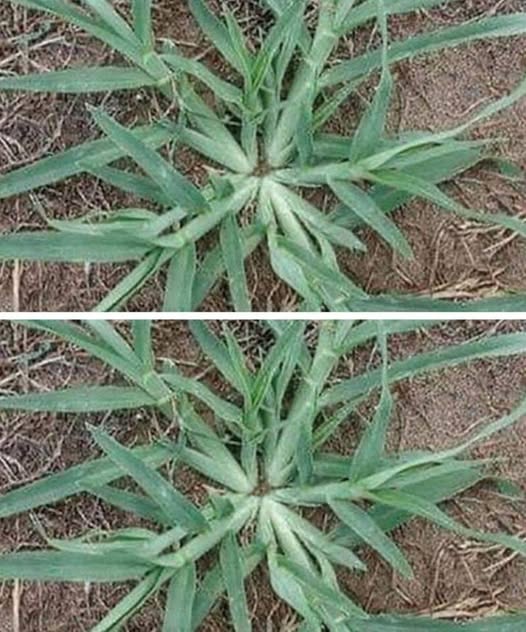
A surprising plant growing naturally in your garden may be more useful than you think. Learn why some volunteer plants should be identified before you pull them out and how to tell whether they belong in your garden.
Have you ever noticed a plant suddenly appearing in your garden without remembering that you planted it?
Many gardeners immediately assume it is a weed and pull it out. But sometimes, a plant that arrives on its own can turn out to be useful, attractive, edible, or valuable to local pollinators.
That is why experienced gardeners often follow one simple rule: identify an unfamiliar plant before removing it.
One plant frequently discussed in this context is purslane, a low-growing succulent with small fleshy leaves. In some areas, purslane is considered a weed, while in others it is intentionally grown as an edible plant.
But there is an important catch: not every plant that looks like purslane is safe to eat. Correct identification matters.
Why Some “Weeds” Deserve a Second Look
A plant growing between your vegetables isn’t automatically harmful.
Some naturally occurring plants can:
- Provide food for pollinators
- Offer habitat for small insects
- Help cover bare soil
- Reduce exposed soil and erosion
- Become useful culinary herbs or greens
- Add biodiversity to the garden
Of course, some weeds really can compete aggressively with vegetables for water, nutrients, sunlight, and space.
The key is knowing what you are looking at.
The Plant Many Gardeners Mistake for a Weed
Purslane is one of the plants that can appear unexpectedly in gardens, cracks, paths, and disturbed soil.
It typically has:
- Smooth, fleshy leaves
- Reddish or reddish-green stems
- A low, spreading growth habit
- Small yellow flowers
- Thick, succulent-looking foliage
Its ability to survive in hot and relatively dry conditions is one reason it can appear in places where other plants struggle.
Is Purslane Edible?
Common purslane (Portulaca oleracea) is used as a food in many cultures.
The leaves and tender stems can be eaten when the plant has been correctly identified and harvested from a clean, appropriate location.
People commonly use it in:
- Salads
- Soups
- Stews
- Stir-fries
- Omelets
- Vegetable dishes
It has a slightly tangy, refreshing flavor and a crisp texture when eaten raw.
However, never eat an unknown plant simply because someone online says it is purslane.
Several plants can resemble one another, and incorrect identification can have serious consequences.
Why Identification Is So Important
A photograph on social media isn’t always enough to identify a wild plant safely.
Before consuming anything that grows naturally in your garden, consider:
- The plant’s leaves and stem
- Flower shape and color
- Growth pattern
- Location and growing conditions
- Whether the plant produces milky sap or unusual odors
- Whether a reliable plant identification source confirms the species
When in doubt, don’t eat it.
A local extension service, botanist, experienced horticulturist, or reputable plant-identification resource can help confirm an unfamiliar species.
Don’t Automatically Remove Every Volunteer Plant
Even if you don’t want purslane in your vegetable beds, you don’t necessarily have to eliminate every naturally occurring plant immediately.
You can first decide whether it is:
- Beneficial
- Neutral
- Invasive
- Competing with your crops
- Potentially edible
- Attractive to wildlife or pollinators
If a plant isn’t causing a problem, some gardeners simply allow it to remain in a designated area.
This approach can make a garden feel more natural and can support greater plant diversity.
When You Should Remove It
There are situations where removing an unexpected plant makes sense.
Consider removing it when it:
- Is crowding vegetables
- Spreads rapidly into unwanted areas
- Competes heavily for water
- Shades smaller plants
- Is known to be invasive in your region
- Has been treated with pesticides or other chemicals
- Cannot be safely identified
If you remove weeds, try to do so before they produce large numbers of seeds. This can make future weed control easier.
Be Careful About Where You Harvest
Even an edible plant shouldn’t automatically be harvested from anywhere.
Avoid consuming plants growing:
- Along roadsides
- Near areas treated with herbicides
- Where pesticides may have been sprayed
- In contaminated soil
- Around animal waste
- In places exposed to unknown chemicals
Garden plants should also be washed thoroughly before eating.
A Better Rule for Gardeners
Instead of saying, “Never uproot this plant,” a safer gardening rule is:
“Never uproot an unfamiliar plant before identifying it.”
That small change can prevent you from accidentally removing something useful while also protecting you from keeping a potentially harmful or invasive plant.
Your garden may contain more surprises than you realize.
A plant that looks like an ordinary weed could be an edible green, a pollinator-friendly species, a beautiful wildflower—or simply a weed that needs to go.
The difference is identification.
Final Thoughts
Finding an unexpected plant in your garden doesn’t always mean you need to reach for the gardening gloves and pull it out immediately.
Take a moment to observe it.
Look at its leaves, stems, flowers, growth pattern, and surroundings. Identify it using a reliable source before deciding what to do.
And if you think you’ve found purslane or another edible wild plant, make absolutely sure of its identity before eating it.
Sometimes the most interesting plants in a garden are the ones you never planned to grow.