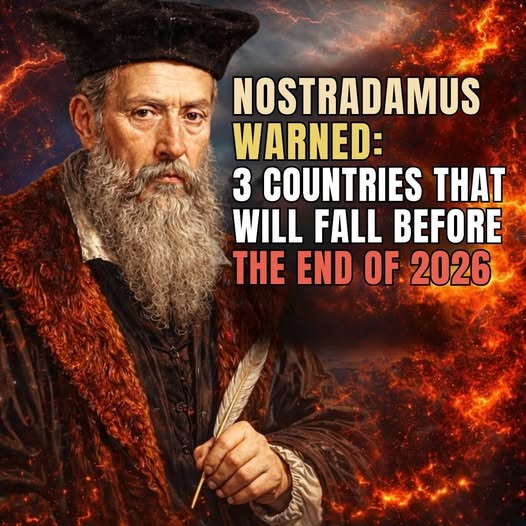
Explore three famous interpretations of Nostradamus’s predictions that some people connect to the near future, from global conflicts to climate concerns and technological change. Discover the history behind these claims and what the evidence really shows.
Introduction
For centuries, the writings of Nostradamus have fascinated readers who believe that his poems may contain clues about future events. From wars and political upheaval to natural disasters and dramatic changes in society, his cryptic verses have inspired countless interpretations.
Nostradamus, whose full name was Michel de Nostredame, was a French astrologer, physician, and writer who lived from 1503 to 1566. His best-known work, Les Prophéties, was first published in 1555. It contains hundreds of short, four-line poems known as quatrains, many of which use symbolic language, historical references, and obscure wording.
Today, some readers revisit these writings and connect them to modern headlines or events they believe could occur in the near future. However, these connections are interpretations rather than verified predictions. Nostradamus’s verses rarely provide clear dates, identifiable locations, or specific details that can be tested objectively.
Here are three themes that people sometimes associate with his writings and the reasons these interpretations continue to attract attention.
1. Global Conflicts and Political Upheaval
One of the most common themes associated with Nostradamus is the possibility of war, political instability, and conflict between powerful nations.
Several of his quatrains contain references to battles, rulers, invasions, and periods of suffering. Modern readers sometimes interpret these images as warnings about international tensions, military confrontations, or changes in global leadership.
Because the language is often symbolic, different commentators can connect the same passage to entirely different historical or contemporary events.
Why do people connect these verses to the near future?
Periods of international tension naturally encourage people to search for explanations and possible warnings in historical texts. When a poem mentions conflict, a powerful leader, or widespread destruction, it can appear relevant to current events.
However, relevance is not proof of prediction. Unless a passage identifies an event clearly and was interpreted correctly before that event occurred, it is difficult to establish that Nostradamus actually foresaw it.
What the evidence says: Nostradamus’s writings do not provide a reliable, independently verified method for predicting future wars or political developments. Claims connecting individual verses to modern conflicts should be treated cautiously.
2. Natural Disasters and Environmental Changes
Another theme sometimes attributed to Nostradamus involves destructive natural events. Readers have linked descriptions of fire, floods, earthquakes, unusual weather, and devastation to modern concerns about environmental change.
Some interpretations suggest that his writings anticipate periods of widespread disruption caused by natural forces. Others associate the imagery with contemporary discussions about climate change and increasingly visible extreme-weather events.
Why does this interpretation attract attention?
Natural disasters can cause enormous damage and uncertainty. When a historical poem describes destruction, unusual conditions, or suffering across a region, readers may see similarities to a recent disaster.
Yet many such descriptions are broad enough to fit numerous events across different centuries. Words such as fire, water, and devastation also have metaphorical meanings and may refer to war, social turmoil, or personal suffering rather than literal natural disasters.
What the evidence says: There is no dependable evidence that Nostradamus accurately predicted specific modern natural disasters through his quatrains. Climate change and disaster risks are better understood through scientific observations, historical records, and research than through centuries-old poetic interpretations.
3. Technological Change and a Transforming World
A third modern interpretation connects Nostradamus to dramatic technological and social changes.
Some commentators suggest that descriptions of strange inventions, unfamiliar forces, or transformations in human life could refer to developments such as artificial intelligence, advanced machines, new communication technologies, or changes in how people work and interact.
These claims are especially appealing during periods when technology appears to be changing society at an extraordinary pace.
How are the writings interpreted?
Readers may compare unfamiliar phrases in Nostradamus’s poems with modern inventions. However, these comparisons often depend on translating old words into contemporary concepts without clear evidence that the original author intended those meanings.
A description that sounds mysterious today may have reflected the beliefs, fears, or political circumstances of sixteenth-century Europe.
What the evidence says: There is no strong historical basis for claiming that Nostradamus specifically predicted artificial intelligence or other modern technologies. Such connections are contemporary interpretations, not established facts.
Why Do Nostradamus’s Predictions Seem Accurate to Some Readers?
Several factors help explain the lasting appeal of Nostradamus.
His language is often ambiguous
Many quatrains are difficult to interpret precisely. Without clear dates, places, and descriptions, readers can apply them to different events.
Interpretations often come after events occur
A prediction can seem remarkably accurate when a commentator selects a historical event first and then searches for a verse that resembles it. This is different from identifying a specific event in advance using an unambiguous passage.
People naturally look for patterns
When an event is frightening or unusual, people often seek explanations that make it feel less unpredictable. Historical prophecies can provide a compelling story, even when the connection is not supported by evidence.
Translations can change the meaning
Nostradamus wrote in an older form of French and used unusual expressions, wordplay, and references to the world around him. Translations and modern paraphrases can introduce meanings that are not obvious in the original text.
Did Nostradamus Predict Specific Events Accurately?
Nostradamus is frequently credited online with predicting major historical events, including wars, political assassinations, and disasters. However, many popular claims rely on vague wording, disputed translations, or quotations that are presented without sufficient historical context.
A strong prediction would need to identify an event with enough detail to distinguish it from many other possible events. Ideally, the interpretation would also be documented before the event took place.
Many claims about Nostradamus do not meet these standards. His writings remain an important subject of historical and literary interest, but they have not been established as a dependable forecasting system.
Should We Be Worried About Predictions for the Near Future?
There is no sound reason to treat online interpretations of Nostradamus as evidence that a particular disaster, war, or technological crisis is about to happen.
It is reasonable to be interested in historical prophecies, especially when they appear to resemble modern events. The key is to distinguish curiosity from certainty.
For real-world concerns, reliable journalism, scientific research, official public-safety guidance, and expert analysis offer more useful ways to understand potential risks.
Final Thoughts
Nostradamus remains one of history’s most discussed prophetic writers. His cryptic quatrains continue to inspire debate because their imagery can be interpreted in many different ways.
Three themes frequently associated with his writings are global conflict, natural disasters, and technological transformation. Some modern commentators connect these themes to events they believe may occur in the near future, but these connections have not been established as reliable predictions.
The enduring fascination with Nostradamus says as much about humanity’s desire to understand an uncertain future as it does about the writings themselves.
The most important takeaway: Read these interpretations as historical and cultural curiosities, not as confirmed warnings about events that are destined to happen.